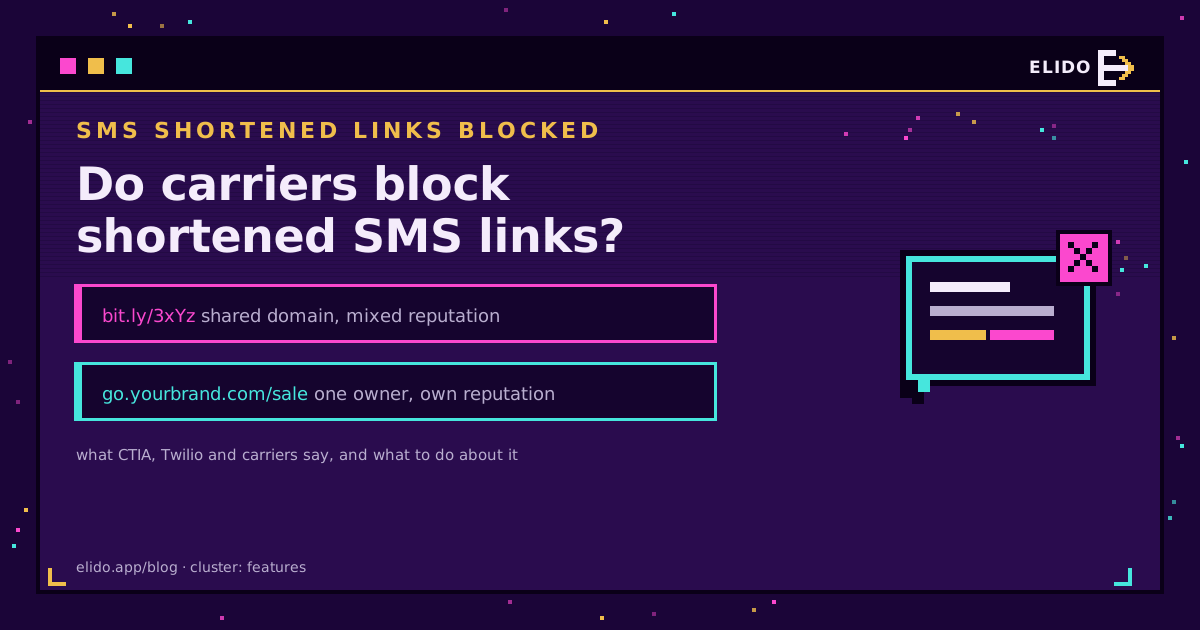
Yes, carriers filter shortened links in SMS, but the target is narrower than "all shortened links." The documented problem is the shared public shortener: bit.ly, TinyURL and anything else where thousands of unrelated senders use one domain. CTIA's messaging principles tell senders to use a shortener dedicated to their own exclusive use, and Twilio says plainly that shared ones raise your risk of filtering. A short link on a domain you own sits on the other side of that line.
That distinction matters because most "sms shortened links blocked" advice online flattens it into "never shorten." Shortening isn't the issue. The shared reputation is. This guide separates what's documented by CTIA, The Campaign Registry and providers from what's practitioner folklore, and then covers the fixes. If you want the broader playbook for texting campaigns (character budgets, tracking, consent), our guide to a URL shortener for SMS marketing covers it. This piece goes deeper on the filtering itself.
What Carriers and CTIA Actually Say About Shorteners
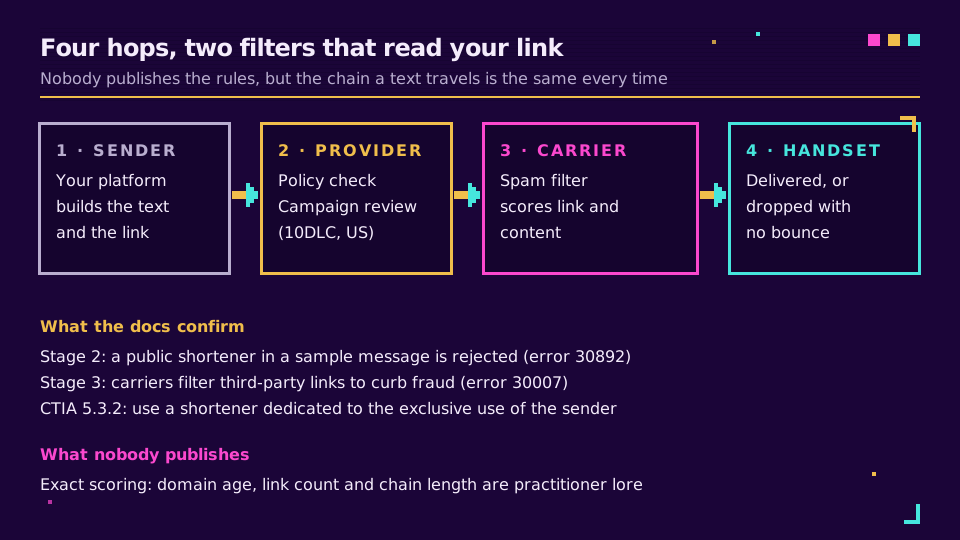
The clearest primary source is CTIA, the US wireless industry association. Section 5.3.2 of its Messaging Principles and Best Practices (May 2023 edition) says that where a URL shortener is used, senders "should use a shortener with a web address and IP address(es) dedicated to the exclusive use of the Message Sender." It also says links, and the sites they redirect to, should unambiguously identify the website owner.
Two things are worth noticing. First, this is a "should" in an industry handbook, not a statute. Carriers enforce it through their own codes of conduct and filters. Second, it isn't aimed at shortening as a practice. It's aimed at who else is using the domain.
Providers translate that into harder rules. Twilio's A2P 10DLC campaign guidance says that if you show a shortened URL in a campaign submission, "you must use a dedicated, branded short domain that belongs to your business," and that a free service like bit.ly or TinyURL leads to rejection by The Campaign Registry (error 30892). Twilio's own marketing guidance goes further on delivery: if marketers used shared public URL shortening, "they may have experienced filtering as carriers frequently filter 3rd party links in an attempt to curb fraud."
What isn't documented
I couldn't find a carrier that publishes its scoring rules, and that's deliberate on their side. Anything beyond "shared public shorteners are risky" about exact thresholds, domain-age cutoffs or link counts comes from sender experience, not a spec. I'll mark those points as unverified below.
Why Shared Public Shorteners Get Filtered
A filter can't look inside a link it hasn't seen before, so it scores what it can: the domain, its history and where the traffic comes from. A shared shortener's history is the combined history of everyone who has ever used it. Marketers, fraudsters and bots all create links on the same hostname, so no single link earns trust from the domain's name alone.
The outcome shows up in Twilio's message filtered error, 30007. Twilio describes it as a message blocked either by Twilio's own filtering or by a wireless carrier for violating carrier rules, and the error doesn't tell you which rule you tripped.
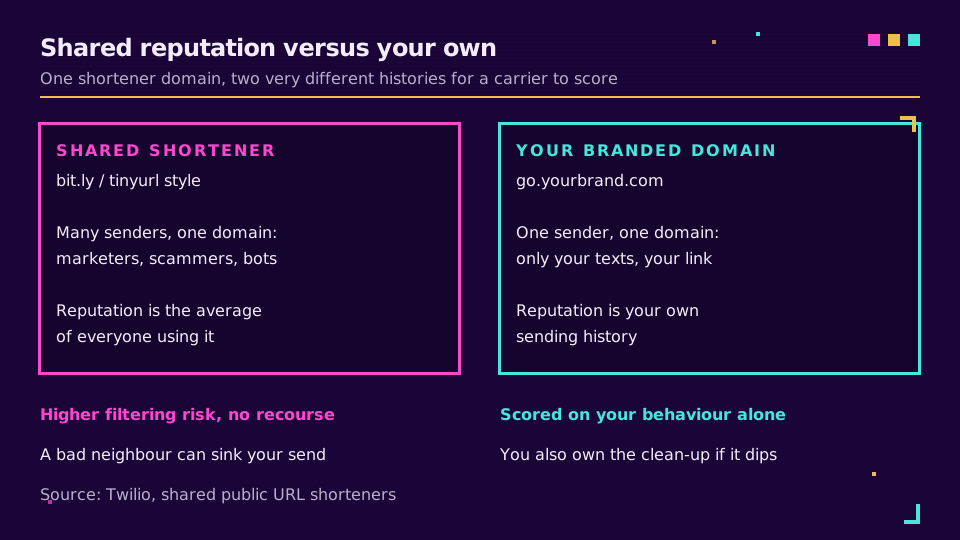
A dedicated domain flips that. Its reputation is built only from your own traffic, which is the whole reasoning behind CTIA's wording. It also puts the work on you: if your sending is sloppy, there's nobody else to blame. We explain the ownership side in what a branded link is.
What Else Triggers Filtering (And How Sure We Are)
Links are one signal among several. Here's how I'd sort the commonly cited triggers by how well they're backed.
- Documented: shared public shorteners (CTIA 5.3.2, Twilio), and third-party links in general, which Twilio says carriers frequently filter to curb fraud.
- Documented in principle, no numbers: unidentified senders. In the US, 10DLC registration exists so carriers can tell who's sending, and CTIA wants links to identify their owner.
- Widely reported, not published by any carrier: a newly registered domain, a long redirect chain, several links in one message, and a sudden spike from a sender with no history.
That last group is plausible. A domain registered yesterday has no history, a chain of three hops looks like cloaking, and a burst of identical texts looks like a blast. But I can't point you to a carrier document that sets a threshold, so don't treat "two links is fine, three is not" as fact. The safe reading is behavioural: look like a sender with a stable identity.
For redirects, our redirect chains guide shows why one hop is better for users and crawlers anyway. It's also the easiest part of the setup to get right.
Europe and the UK: What We Could Verify
CTIA is a US body, and 10DLC is a US framework. For Europe and the UK, I couldn't find a published rule equivalent to CTIA 5.3.2. Twilio's UK SMS guidelines cover consent, STOP and HELP handling, sender ID restrictions and protected brand allowlisting, but they don't mention shorteners.
So the honest summary is: no public EU or UK rule we can cite, but operators and the providers that route to them still filter, and each applies its own policy. If you send in those markets, ask your provider for the per-country rules, and for GDPR questions about the click data a shortener collects, see GDPR for URL shorteners. Using a branded domain costs nothing extra in those markets and removes the shared-reputation variable.
How to Keep Shortened Links Deliverable
Start with what you control, in the order that changes the most.
- Use a domain you own. Point a short subdomain such as
go.ortxt.at your link platform. The custom domain setup walkthrough covers DNS and the certificate, and the custom domains feature page covers the product side. - Keep the chain to one hop. Short link, then final page. No intermediate tracking redirect, no second shortener behind the first.
- Make the domain recognisable. CTIA says links and their destinations should identify the owner. A domain that matches the brand in the message, landing on a page with your name and contact details, does that.
- Warm up the domain. Don't launch a new domain at full volume on day one. Start with small sends to people who opted in, then ramp. The exact ramp isn't something any carrier specifies, so treat it as a precaution, not a rule.
- Send consistently. A steady cadence from a registered sender looks like a business. Large bursts from a quiet sender look like a blast.
- One link per message. This isn't a documented limit. It's the cleanest message to read and the easiest to debug when something is filtered.
If you're picking the hostname, choosing a domain for short links covers length and trust trade-offs, and whether branded links get more clicks covers the engagement side.
Once your domain is verified, create a workspace on Elido, attach the domain, and send a test campaign to handsets on each carrier before you scale.
How to Monitor Whether Links Are Being Filtered
Filtering rarely announces itself. A filtered text usually fails with a status code, not an explanation. So monitor from three angles.
- Provider errors. Watch status callbacks and error codes. With Twilio, 30007 is the filtered-message code, and you should collect several examples before opening a ticket, since one failure tells you little.
- Delivery rate by carrier. If one carrier's delivery rate drops while the others hold, that's a filtering signal rather than a content or list problem.
- Sends versus clicks. Compare messages delivered with clicks recorded. A short link on your own domain gives you that number in your click analytics, and what to measure in short-link analytics covers which metrics deserve a dashboard.
Add a canary habit. Before every large send, text the real message to a few handsets on different carriers and check it arrives with the link intact. It takes five minutes and catches the failure before a list sees it.
If your links also bounce in chat tools, the same reputation logic applies, as in why short links get blocked in Slack and Teams. And for email, where the stakes are similar, see whether short links hurt email deliverability. RCS changes the link rules again, covered in links in RCS business messaging.
Related on the Blog
Frequently asked questions
Do carriers block shortened links in SMS?
Not all of them, but shared public shorteners like bit.ly and TinyURL are the ones that get filtered. US carrier policy discourages them and the industry's CTIA guidance says to use a shortener dedicated to the sender. A short link on your own domain isn't treated the same way, though it can still be filtered if the message or the sending pattern looks like spam.
Can I use bit.ly links in text messages?
You can send them, but you shouldn't count on delivery. Twilio tells senders not to use links from shared public shorteners such as Bitly or TinyURL, and its campaign review rejects registrations that show one in a sample message. If your messages already carry bit.ly links, move them to a branded domain before you scale the volume.
Why was my text message with a link filtered?
The usual causes are a shared shortener domain, content that resembles known spam, a sudden jump in volume, or a sender that isn't registered. Twilio reports a filtered text as error 30007 and says it can come from its own filtering or from a carrier. Check the link first, since it's the easiest thing to change.
What is a branded short domain for SMS?
It's a short domain your business owns, such as go.yourbrand.com, that redirects to your destination page. Only you send traffic through it, so its reputation reflects your messages alone. Twilio's own link shortening feature also requires that you own the domain.
Do UK and EU carriers block shortened links too?
There is no public, CTIA-style rule for the UK or EU that we could verify. Operators and messaging providers there still run their own filters, and aggregators apply their own policies, so treat shared shorteners as risky in Europe as well. Check your provider's rules for each destination country before a send.
How do I know if my SMS links are being blocked?
Watch delivery receipts and error codes from your messaging provider, then compare sends against link clicks. Filtered messages often fail without a visible bounce, so a delivery rate that drops for one carrier or one campaign is the signal. Send a test to handsets on each major carrier before a big campaign.
Try Elido
Paste a URL, get a working short link
No signup. Link lives for 30 days. Sign up to keep it forever.
Free, no signup required · 2 per day