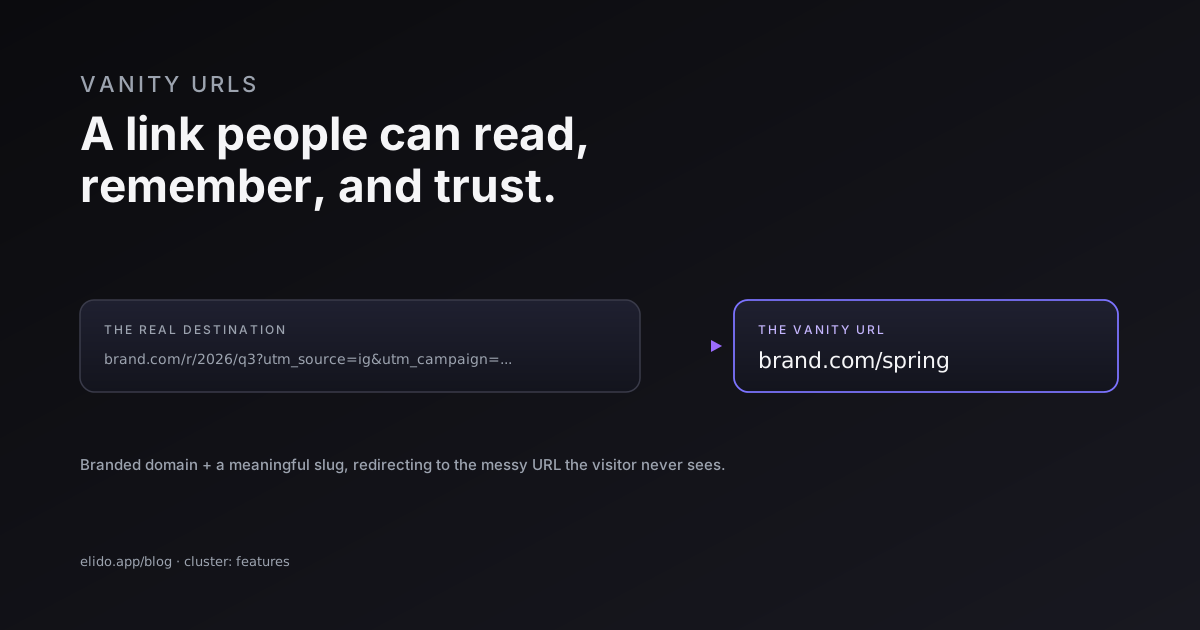
A vanity URL is a short, readable web address you choose - like brand.com/careers or go.brand.com/spring - that redirects a visitor to a longer or messier destination. The whole point is that a person can read it, remember it, and trust it. A random string like sh.rt/aZ9x2 works, but it tells the reader nothing; a vanity URL carries your brand and a meaningful word, so it earns the click before anyone taps it.
That readability is why vanity URLs show up exactly where links are hardest to use: a billboard, a podcast ad, a conference slide, the back of a business card. Anywhere a link has to be spoken or typed rather than clicked, the clean branded version wins. As Nielsen Norman Group put it years ago, a URL is part of your user interface - and a vanity URL is that interface done deliberately.
This is a features post, so I will keep it practical: what a vanity URL actually is, how it differs from the terms people confuse it with, and how to set one up on a domain you control.
What a Vanity URL Is
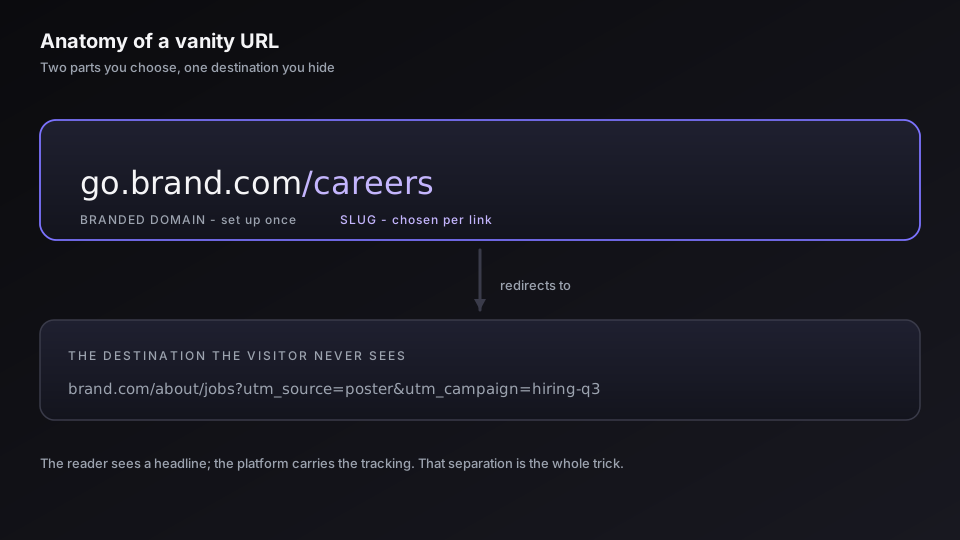
Strip it to the definition. A vanity URL is a custom, human-readable link built from two parts you decide on: a branded domain and a meaningful path. go.elido.app/docs is a vanity URL - go.elido.app is the brand, /docs is the meaning. Behind it sits a redirect to wherever the real content lives, which might be a long URL stuffed with campaign parameters.
The redirect is the quiet half. A visitor sees and types the clean link; the platform sends them on to the messy destination without them ever seeing it. That separation is the magic trick - you get a link that reads like a headline while still carrying the tracking and routing the destination needs. The reference definitions agree on this: the TechTarget glossary entry on vanity URLs frames it the same way, as a memorable address that points somewhere less memorable.
If you have ever typed nflx.co or lnkd.in and arrived somewhere useful, you have used a vanity URL. The format is everywhere precisely because it does not look like a tool - it looks like a brand.
Vanity URL vs Vanity Domain vs Branded Short Link
These three terms get used as if they mean the same thing, and the muddle causes real confusion when you go to set one up. They are related but distinct.
| Term | What it is | Example |
|---|---|---|
| Vanity domain | The branded hostname on its own | go.brand.com |
| Vanity URL | The full readable address, domain plus path | go.brand.com/careers |
| Branded short link | A short link issued on a branded domain | go.brand.com/9fK2 or /careers |
The cleanest way to hold it: the vanity domain is the house, the vanity URL is the full street address, and a branded short link is any letter delivered to that house. You configure the vanity domain once, and then every vanity URL and branded short link you create lives on it. The Wikipedia entry on vanity domains covers the domain side in more depth if you want the history.
The practical upshot is that you do not choose between these - you stack them. Set up a branded domain, then mint readable vanity URLs on it, and what you have is branded short links that also communicate. Our white-label and branded link guide goes further for agencies who do this across many client domains.
Why Vanity URLs Work
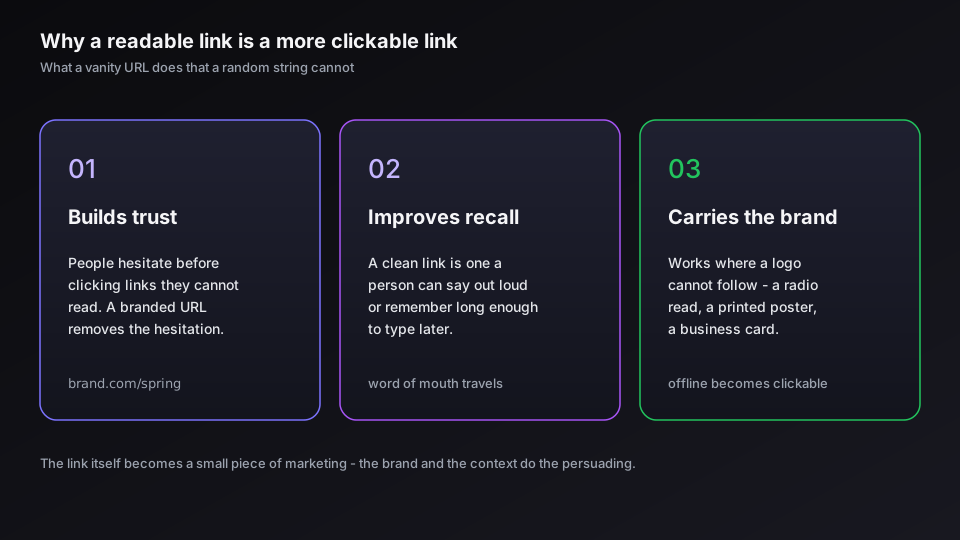
A vanity URL changes the link from a black box into a promise. brand.com/spring-sale tells the reader where they are going; a random hash does not. That shift does three useful things.
It builds trust. People hesitate before clicking links they cannot read, and a branded, readable URL removes that hesitation - the destination is implied, the brand is right there. It improves recall and word of mouth, because a clean link is one a person can say out loud or remember long enough to type later. And it carries your brand into spaces where a logo cannot follow, like a radio read or a printed poster, turning the link itself into a small piece of marketing.
The effect is well documented in marketing circles: branded links consistently see higher click-through than generic ones, because the brand and the context do the persuading. I would not over-claim a specific percentage - the lift depends on your audience and channel - but the direction is reliable. A readable link is a more clickable link.
If you want links that carry your brand and stay measurable, create a free workspace and connect your domain to start minting vanity URLs of your own.
How to Create a Vanity URL
Setting up vanity URLs is a one-time domain step, then a per-link choice. Here is the shape of it.
- Pick a branded domain or subdomain. Most teams use a subdomain like
go.orl.on a domain they already own, which keeps the links separate from the main site and avoids buying a new domain. Some register a dedicated short domain for a punchier look. - Connect it to your link platform. Add the DNS record the platform gives you, and it issues a TLS certificate so the links serve over HTTPS. The full walkthrough, including the exact records, is in custom domains for short links.
- Create the link and choose the slug. With the domain live, make a link and type your own readable ending - the back-half - instead of the random one.
/careers,/spring,/q3-report: whatever a human would expect.
After that, every link inherits your domain automatically, and the only per-link decision is the slug. If you are brand new to the creation flow itself, how to shorten a URL covers the basics, and setting up branded short links covers the branded variant end to end.
Vanity URL Best Practices
A few habits keep vanity URLs working as your library grows past a handful.
- Keep slugs short and guessable.
/pricingbeats/our-2026-pricing-page-v2. The whole value is readability, so do not undo it with a long path. - Decide on a casing and stick to it. Lowercase with hyphens is the safe default, and consistency means people can guess your links without checking.
- Do not silently reuse a slug. Repointing
/salefrom last spring's campaign to this one is fine and powerful; quietly reusing it for an unrelated destination confuses anyone who saved the old link. - Mind the redirect type. An editable vanity URL should use a redirect you can change later - the tradeoff between a permanent and a temporary redirect is exactly what 301 vs 302 redirects unpacks.
Treated this way, your set of vanity URLs becomes a small, legible namespace for your brand - a thing people can navigate by intuition.
Are Vanity URLs Good for SEO
Short answer: a vanity URL is a redirect, so it does not compete with your destination in search - it hands off to it. The page you point at is what ranks. As long as the redirect is clean and the domain has a good reputation, the SEO impact is neutral to positive, and the trust and click-through gains can help indirectly.
The risks are the ordinary redirect risks, not anything special to the vanity format: a service that goes down takes its links with it, a short domain with a spammy history drags on trust, and the wrong redirect type can delay signal transfer. We cover the whole question in whether URL shorteners hurt SEO, and the redirect mechanics in smart links, which run on the same tier and can route a vanity URL by country, device, or language before it resolves. Used sensibly, a vanity URL is one of the lowest-risk, highest-readability upgrades you can make to a link.
Related on the Blog
- Smart links explained: edge routing without an extra service
- Custom domains for short links: the DNS and TLS walkthrough
- How to set up branded short links on your domain
- How to shorten a URL: free, branded, or in bulk
- 301 vs 302 redirects: which one for short links
- Link cloaking and URL masking: what's safe for SEO
Frequently asked questions
What is a vanity URL?
A vanity URL is a short, readable web address you customize to feature your brand and a meaningful word, like brand.com/careers or go.brand.com/spring, that redirects a visitor to a longer or messier destination URL. The point is human readability: a vanity URL is easy to remember, type, and trust, which is why it outperforms a random string of characters in print, on stage, and anywhere a link has to be read rather than clicked.
What is the difference between a vanity URL and a vanity domain?
A vanity domain is the whole branded hostname - the bit.ly, lnkd.in, or go.brand.com part. A vanity URL is the complete readable address including the path you chose after it, such as go.brand.com/careers. Think of the vanity domain as the house and the vanity URL as the full street address. You set up the domain once, then create many vanity URLs on it.
Is a vanity URL the same as a short link?
They overlap but are not identical. Every vanity URL is a short link, but not every short link is a vanity URL. A plain short link can be a random string on a shared domain; a vanity URL is deliberately readable and branded - a domain you control plus a slug you chose. The difference is intent: a short link just shortens, a vanity URL also communicates.
How do I create a vanity URL?
Connect a custom domain or subdomain to a link platform by adding the DNS record it gives you and letting it issue a TLS certificate. Then create a link on that domain and type your own readable ending - the slug - in place of the random characters. From then on, every link you make uses your branded domain, and you choose the word after the slash each time.
Are vanity URLs good for SEO?
A vanity URL itself is a redirect, so it does not rank in place of your destination - the page it points to does. Used correctly, with a clean redirect on a reputable domain, the SEO impact is neutral to positive: branded links earn more trust and clicks, and a proper 301 or 302 sends signals to the right place. The risks are the same as any redirect - a flaky service or a bad-reputation domain - not the vanity format itself.
Do vanity URLs cost money?
The vanity URL is free to create once you have a domain; the cost is the branded domain itself. You register a domain or subdomain through a registrar for a yearly fee, and most link platforms require a paid tier to connect a custom domain. After that, creating individual vanity URLs on it carries no extra per-link cost on most plans.
Try Elido
Paste a URL, get a working short link
No signup. Link lives for 30 days. Sign up to keep it forever.
Free, no signup required · 2 per day