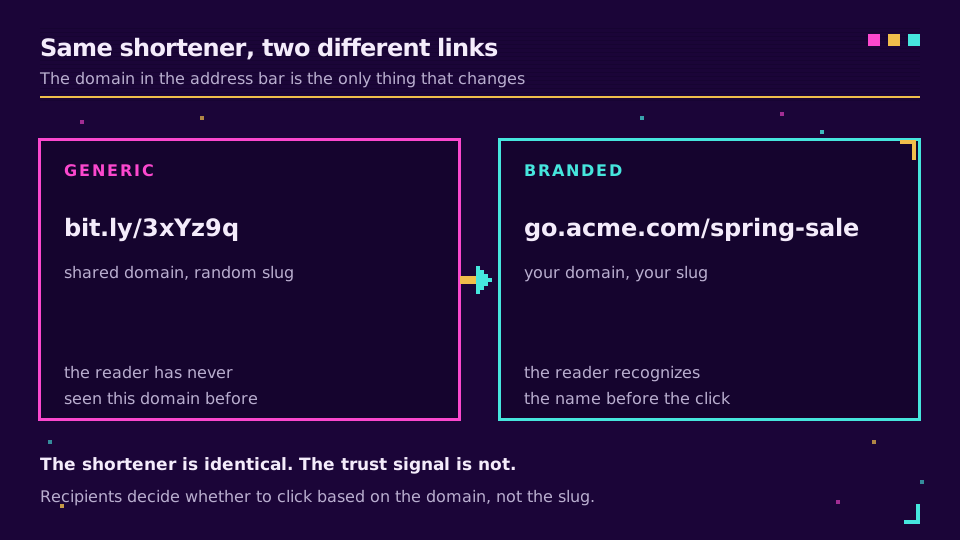
A branded link is a short link built on a domain you own, instead of a generic shortener's domain. Put go.acme.com/spring-sale next to bit.ly/3xYz9q: both redirect to the same place, but the first one tells the reader whose link it is before they click. That is the whole point of branding a link, and it is the difference between a tool's name in your URL and your own.
Branded links are one piece of a bigger toolkit (your own domain, a readable slug, analytics, routing), so this piece defines the branded link specifically and shows where it fits. For the full system around it, the what is link management cornerstone is the map.
What a Branded Link Is
A short link has two parts you can own: the domain and the slug. A branded link is one where the domain is yours.
- Generic:
bit.ly/3xYz9q- shared domain, random slug. - Branded:
go.acme.com/spring-sale- your domain, your custom back-half.
The domain is the part that does the branding work. go.acme.com is a subdomain of a domain Acme controls, pointed at the shortener so links resolve there. You will also see the term "vanity URL" for the same idea. Rebrandly's own primer frames it the same way: a branded link is a short link on your domain, not a generic one.
Why Branded Links Matter
The effect is mostly about trust, and trust converts. When the domain in a link matches the sender people expect, the link reads as legitimate rather than suspicious.
- Click-through rate. Recognisable links get clicked more. In SMS, email, and social feeds the raw URL is visible, and a branded domain reassures the reader it is safe to tap. How much it lifts clicks is less settled than vendor percentages suggest; what the evidence supports traces those claims to their sources. A marketer's comparison of branded vs plain short links makes the same case.
- Recognition. Every shared link repeats your name. Over a campaign, that repetition builds association the way a logo does, for free.
- Control. Links on your domain are yours to keep. If a shortener shuts down or starts injecting interstitials, generic links break; branded links can be repointed because the domain is under your control - a real lesson from the Bitly ad interstitials episode.
What branded links do not do is rank your pages. That is worth stating plainly because the SEO myth is sticky: the short link is a redirect, and the destination URL is what search engines index.
How Branded Links Work
Setting one up is a domain step and a link step. First you point a domain (or a dedicated subdomain like go.acme.com) at the shortener with a DNS record, and the shortener issues an SSL certificate for it. After that, every link you create on that domain is branded by default.
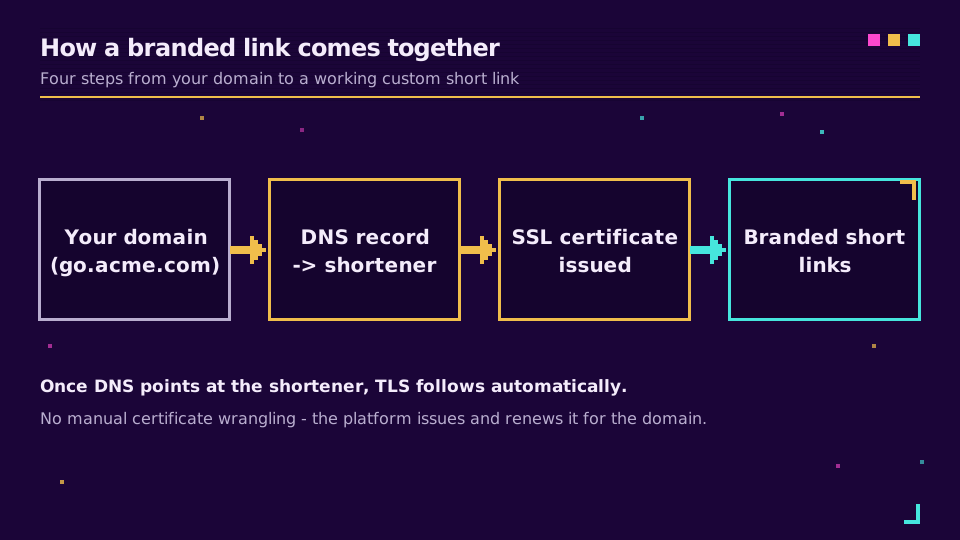
Two practical notes. You do not need your main website; a domain is enough, and many teams register a short one purely for links. And branding is a paid feature almost everywhere, because DNS and certificate handling cost the provider something. Custom domains is the feature that owns this half, and the step-by-step branded short links guide walks the DNS record and verification. Once the domain is live, start creating branded links and the slug is a field on each one.
Branded Link Best Practices
A branded link is only as good as the habits around it. Keep the domain short and obviously yours, keep the slug readable, and keep the scheme consistent.
- Use a short, on-brand domain -
acme.linkorgo.acme.com, not a five-word phrase. How to choose a short link domain name covers the trade-offs. - Give the slug a descriptive custom back-half, lowercase with hyphens.
- Keep one domain per brand so the recognition compounds instead of splitting.
Do that and the link stops being plumbing and starts being a small, repeated ad for your name.
Read the Cornerstone Series
This sits in the features cluster. The cornerstone is what is link management, which puts branded domains, back-halves, routing, and analytics together. From there, setting up branded short links is the hands-on next step.
Related on the Blog
Frequently asked questions
What is a branded link?
A branded link is a short link built on a domain you own instead of a generic shortener domain. Compare go.acme.com/spring-sale with bit.ly/3xYz9q: same redirect, but the branded version carries your name, so a person can see who the link belongs to before they click.
What is the difference between a branded link and a short link?
Every branded link is a short link, but not every short link is branded. A plain short link uses the shortener's shared domain (bit.ly, tinyurl.com). A branded link swaps that for your own domain, so the brand, not the tool, is what the reader sees.
Do branded links improve click-through rate?
Usually yes. A recognisable domain reads as legitimate, and people click links they trust more often, so branded links tend to lift click-through rate versus a generic shortener, especially in SMS, email, and social where the raw URL is visible. The size of the lift depends on how well known your brand is to that audience.
Do I need my own website to use a branded link?
You need a domain, not a full website. A branded link runs on a domain or subdomain you control (often a dedicated one like go.acme.com), pointed at the shortener with a DNS record. You can buy a short domain just for links without touching your main site.
Are branded links good for SEO?
Not directly. The branded short link is a redirect; search engines rank the destination page, not the short URL. The value is trust and click-through rate with humans, plus cleaner tracking, rather than a ranking boost.
Try Elido
Paste a URL, get a working short link
No signup. Link lives for 30 days. Sign up to keep it forever.
Free, no signup required · 2 per day