RCS gives a brand a verified name, a logo and a rich message inside the default inbox, next to messages from friends. The links inside it behave like any other links, which is the part most guides skip, and it means the two things that decide your results are the SMS fallback and your own attribution.
The channel does not measure your business for you. Your aggregator will report delivered, read, and tapped; it will not report that the tap became a signup. That gap is filled the same way it is in every other channel, with a link you own and a tagging convention you apply everywhere. If you are coming from text campaigns, URL shorteners for SMS marketing is the sibling that covers the plain-text side.
What Actually Changes for a Link
Three things, and only one of them is about the link itself.
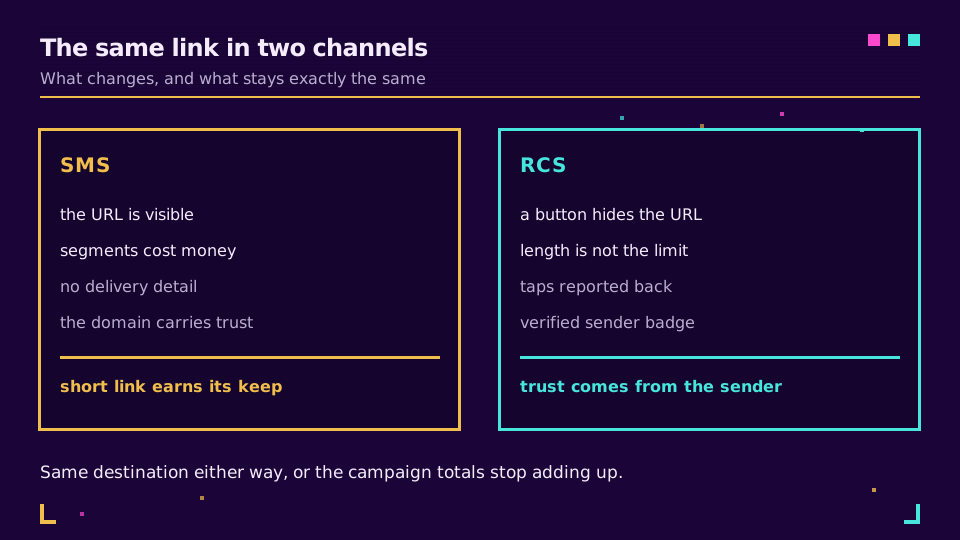
The character economics disappear. RCS carries long text, images, carousels and buttons, so shortening a URL to save characters is no longer the point. Google's RCS Business Messaging documentation describes the message types, and none of them are constrained the way a 160-character segment was.
The URL often becomes invisible. Put a link behind a suggested action and the reader sees a button that says "Track my order", not a domain. The trust that used to come from a recognisable short domain now comes from the verified sender badge above the message. When the URL does appear in the body, the old rule still applies and a branded domain still reads better than a generic one.
Structure replaces persuasion. A rich card has a title, a description, an image and its actions, so the message is a small layout rather than a sentence. That is a copy change, not a link change, but it affects how many links a single message can reasonably carry. Two is usually the ceiling before the card becomes a menu.
The Fallback Decides the Link
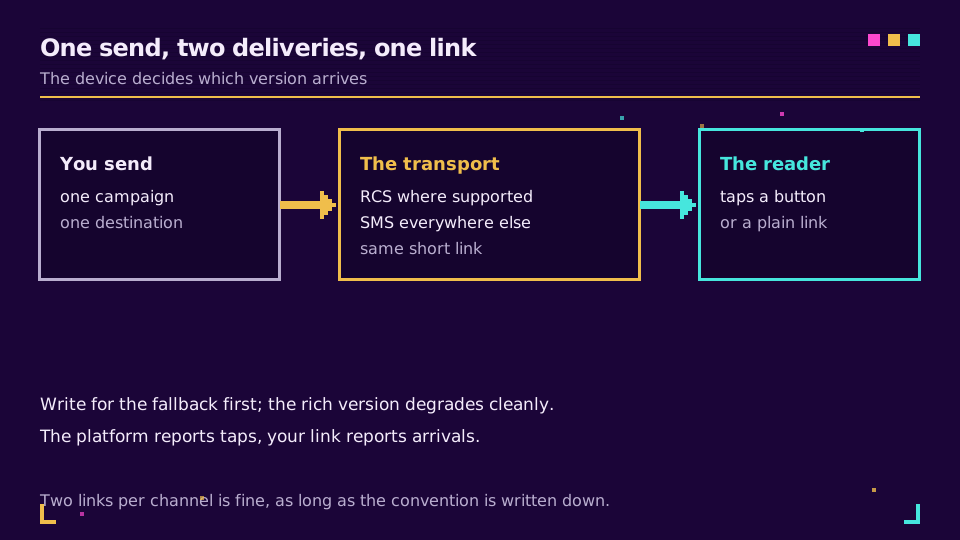
Every RCS campaign is also an SMS campaign, because delivery depends on the device, the carrier and the messaging app. Apple's addition of RCS to Messages widened the reach considerably, and Apple's own guidance on sending messages still describes a world where the transport can drop back to a text message.
So write for the degraded case first. The link that goes in the rich card has to be the same link that survives in a plain message, which means it has to be short enough to sit in a text segment, readable when spoken aloud, and stable enough that a person who opens it three days later still lands somewhere sensible.
That is where a link you control earns its place. One short link, one destination, repointable if the campaign target moves, and identical in both versions of the message.
What the Platform Reports, and What It Does Not
Messaging platforms report the transport: sent, delivered, read, and taps on a suggested action. That is genuinely more than SMS ever gave you, and it is still upstream of everything a marketing team is measured on.
What it cannot tell you is which recipients reached the page, how long they stayed, whether they converted, or how the channel compares with your newsletter. Those questions live on your side of the click. A tagged short link answers them because the arrival is a request you own, with the campaign attached, feeding the same reports as everything else. Short-link analytics: what is worth measuring covers which of those numbers deserve a place on a dashboard.
One caveat carried over from every other channel: the click count and your web analytics session count will not agree, for reasons that are structural rather than faults. Clicks versus GA4 sessions has the full ledger.
Running the same campaign across RCS, SMS and email? Elido's link analytics reports each channel against the same click definition, so a comparison between them means something.
Consent, Opt-Out, and Why Trust Still Has to Be Built
Verified sender identity solves the impersonation problem in one direction: the recipient can see the message really is from you. It does not solve the other direction, where a customer has been trained by years of smishing to distrust any link that arrives on a phone.
Two habits help. Keep every campaign on one branded short domain, so the domain becomes familiar rather than novel; setting up branded short links covers the setup. And never send a link that lands somewhere unexpected, because a message about a delivery that opens a promotional page is exactly the pattern fraud uses. Are URL shorteners safe covers how domain reputation is actually built and lost.
The regulatory side is unchanged from SMS: you need a lawful basis for the send, a working opt-out, and a record of consent. RCS being prettier does not make it a different legal object.
A Tagging Convention That Survives the Fallback
The goal is one row per channel in your reports, not a mystery bucket called mobile.
- Set
utm_mediumto the transport, not the campaign type.rcsandsmsare two mediums, and the same message delivered both ways should be distinguishable. - Keep
utm_campaignidentical across both, so the campaign totals still add up. - If your platform substitutes variables at send time, let it fill the medium and leave everything else static. Fewer moving parts, fewer mismatched tags.
- Decide once whether you use one link with a channel parameter or two links, and write it down. Mixed conventions inside one team are worse than either choice.
UTM naming conventions has the vocabulary rules, and deep links without an SDK covers the case where the button should open your app rather than the web page, which on a messaging channel is more often than not.
Where It Fits Right Now
Being honest about maturity: RCS reach is real but uneven, aggregator features differ, and brand verification takes time that a two-week campaign does not have. Treat it as an upgrade to a channel you already run rather than a new channel to launch, keep the SMS version as the baseline, and measure both against the same link definition.
The teams getting value from it early are the ones with transactional messages worth enriching, where a delivery notification with a tracking button beats the same information as a sentence. Promotional blasts benefit least, because the thing holding them back was never the formatting.
Read the Cornerstone Series
This post sits in the tutorials cluster. The measurement chain from tag to report is in track UTM parameters end to end, and what a deep link is covers the app-versus-browser routing that messaging buttons run into constantly.
Related on the Blog
Frequently asked questions
Do I still need a short link in RCS?
Yes, for two reasons that have nothing to do with character counts. The same message falls back to SMS on any device that cannot receive RCS, and there the length matters again. And the click itself is only yours to measure if it passes through a link you control, because the messaging platform reports delivery and taps, not what happened on your site afterwards.
Does RCS have a character limit like SMS?
Not in the same way. RCS carries long text, images, carousels and buttons, so the 160-character pressure that shaped SMS copy is gone. The constraint that replaces it is the fallback: whatever you write has to degrade into something readable when the same campaign is delivered as an ordinary text message.
Can I track clicks inside an RCS message?
You can count taps on a suggested action through the messaging platform, and you can count arrivals on your own side if the button points at a link you own. The second one is what connects to sessions, conversions and revenue. Use a tagged short link as the button target and the click lands in the same reporting as every other channel.
Does the recipient see the URL in an RCS message?
Often not. When the link sits behind a suggested action the reader sees a button label, so the domain is invisible and the trust signal comes from the verified sender instead. When you put the URL in the message body it is visible exactly as in SMS, which is where a branded short domain still earns its keep.
How do I tell RCS clicks apart from SMS clicks?
Either send a different link per channel, or tag the same link with a channel parameter that your platform substitutes at send time. Separate links are simpler to read and harder to keep in sync; a single tagged link keeps one destination and relies on the parameter being right. Pick one convention and apply it to every campaign.
Is RCS available on iPhone?
Yes. Apple added RCS to Messages, which is what turned it from an Android channel into a mainstream one, though the exact feature set depends on the carrier and the device. Plan for a mixed audience: some recipients get the rich version, some get the text one, and both need to work.
Try Elido
Paste a URL, get a working short link
No signup. Link lives for 30 days. Sign up to keep it forever.
Free, no signup required · 2 per day