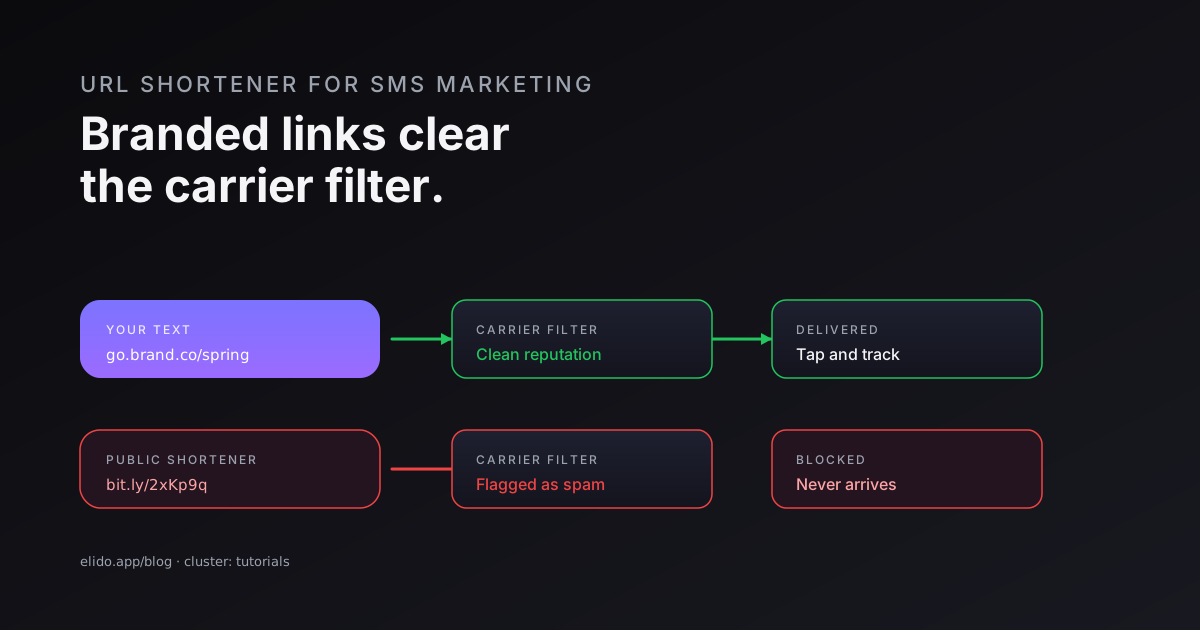
A URL shortener for SMS marketing does two jobs at once: it fits a link into the tight character budget of a text message, and - the part most teams discover the hard way - it keeps that message from being filtered out by mobile carriers. Get the second part wrong and your campaign does not convert badly. It never arrives.
Here is the short version. Use a branded short link on a domain you own. Public shorteners like bit.ly and tinyurl are treated as spam signals by US carriers and get messages blocked, while a branded link clears the filter, uses fewer characters, and makes every tap trackable. The rest of this guide is the why and the how, because the difference between a deliverable text and a silently dropped one comes down to choices you make before the first send.
If you are new to how a redirect works under the hood, how URL shorteners work covers the mechanics. This piece is about the one channel where those mechanics decide whether your message is seen at all.
Why Public Shorteners Get Your Texts Blocked
Application-to-person texting in the US runs through a registration framework called A2P 10DLC. Carriers use it to verify who is sending and to filter spam before it reaches a handset. Links are one of the strongest signals they look at, and a link from a shared public shortener is close to a red flag.
The reason is reputation. Anyone can mint a bit.ly or tinyurl link in seconds, which means scammers do too, constantly. The domain ends up carrying everyone's behavior at once, good and bad, so carriers cannot trust it on a per-link basis. Amazon's own messaging guidance is blunt about it: "generic URL shorteners e.g. 'bit.ly/LONGLINK' will be rejected," and senders are told to use a branded shortener instead. Twilio's A2P 10DLC documentation makes the same point from the delivery side: registered, clean traffic gets lower filtering and higher throughput, and shared-shortener links push you the wrong way on both.
A branded short link flips this. Because the domain has one owner - you - its reputation reflects only your sending. Carriers can score it cleanly, and your messages land. This is not a nice-to-have for texting the way it is for social posts. It is the price of entry.
The Character Math That Decides Your Per-Send Cost
A standard SMS holds 160 characters. That number is not arbitrary: the GSM-7 encoding most texts use packs 160 seven-bit characters into the 140-byte limit defined by the GSM messaging standard. Go one character over and the message splits into segments of 153 characters each, and you pay for every segment. Add a single emoji or a curly quote and the whole message switches to UCS-2 encoding, which drops the limit to 70 characters per part.
A raw destination URL wrecks that budget fast. A campaign link with UTM parameters can run 80, 100, 120 characters on its own, which alone can tip a message into a second or third segment. A short link fixes this, but how short depends on the domain. A link on a shared public shortener still costs you 26 to 36 characters. The same link on your own branded domain - something like go.brand.co/spring - can come in under 20. Those saved characters are real money at scale and real space for a clearer call to action.
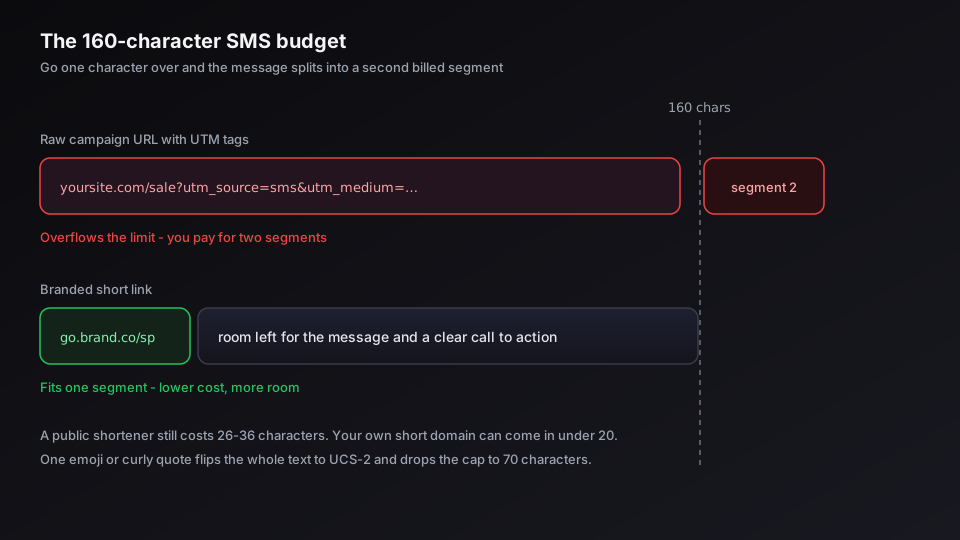
So the link length question is really a cost-and-clarity question. Every character the link does not use is a character the message can, and every segment you avoid is a fee you do not pay. A short branded domain wins on both, which is why texting programs that started on a generic shortener almost always move once they see the segment math on a six-figure send. That maths disappears on RCS, where the message is not billed in 160-character chunks, and links in RCS business messaging covers what becomes the constraint instead.
Tracking Clicks and Attribution in an SMS Campaign
A link you paste raw into a text is invisible to you the moment it sends. The carrier delivers it, the recipient taps it, and you learn nothing. There is no pixel in a text message and no referrer you control. The only way to measure an SMS link is to route it through a shortener that logs the redirect.
Once the link is shortened, every tap becomes a row of data: when it happened, the device class, the coarse location, the campaign it belonged to. Layer UTM parameters onto the destination and that tap shows up in your analytics as an SMS-sourced session, so you can compare the channel against email and paid on the same dashboard. We walk through the full tagging flow in track UTM campaigns end to end, and the encoding details for the link builder live in the UTM builder guide.
The practical payoff is attribution you can act on. A texting program without click data is a guess about what worked. With it, you can see that the 11am send beat the 7pm one, that the offer link outpulled the content link, and that a particular segment of your list never taps at all. That last fact is as useful as the wins, because in SMS every send to a dead segment is a cost and a small compliance risk. Our rundown of what to measure in short-link analytics maps the metrics worth a dashboard tile.
If you are running texts alongside other channels and want one place where SMS, email, and QR clicks line up, start a free Elido workspace and point your first branded SMS link at a campaign you are about to send.
Staying Deliverable: Consent, Opt-Out, and Link Trust
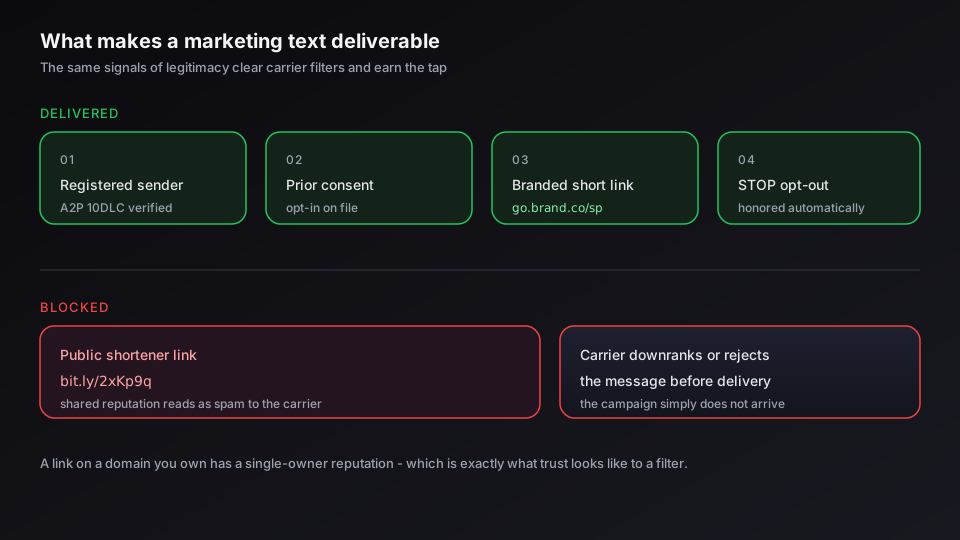
Deliverability in SMS is two problems, not one. Links are half of it. Permission is the other half, and the two feed each other. Carriers and regulators expect that every recipient gave prior consent to be texted and can stop the messages at any time by replying STOP. Honoring that is not optional, and platforms enforce it because their own carrier relationships depend on it.
Branded links feed directly into trust here. A recipient who sees a link on a domain that matches the brand that asked for their number is far likelier to tap than one staring at a string of random characters on a shared domain. The link looks like it belongs to the sender, because it does. That recognition is part of why branded links convert better and part of why they survive carrier filtering - the two are the same underlying signal of legitimacy.
There is an EU dimension too if you text customers in Europe: consent, data minimization, and where click data is stored all fall under GDPR, the same way they do for any tracked link. We cover the link side of that in GDPR for URL shorteners. Keep the texting consent records with your messaging platform and the link analytics on a provider that stores click data in your region, and the two halves of compliance stay tidy.
Setting Up Branded SMS Short Links
The setup is short and front-loaded. You do it once, then every campaign inherits it.
- Point a subdomain at the shortener. Pick something tight -
go.,txt.,m.- because every character counts in a text. Add the DNS record and let TLS issue automatically. The custom domains walkthrough covers the DNS and certificate steps end to end, and custom domains for short links is the feature page. - Build the link with UTM parameters baked in so attribution is automatic, not an afterthought. Save a template per campaign type to keep naming consistent - the conventions are in UTM naming conventions.
- If the link opens an app, set up deep linking so the tap lands inside the app instead of a mobile web fallback. Deep links without an SDK shows how, and the deep-links feature is the product side.
- Where the offer is regional, route by location so a single short link sends each recipient to the right page. Geo-targeting short links explains the routing.
None of this changes per send. Once the domain is verified and a template exists, creating a campaign link is a five-second job, which matters when you are sending weekly.
A Pre-Send Checklist for SMS Links
Run every SMS campaign through this before it goes out:
- The link is on your own branded domain, not a public shortener.
- The full message, link included, fits 160 GSM-7 characters - or you have priced the extra segments deliberately.
- No stray emoji or curly quote silently flipped the message to the 70-character UCS-2 limit.
- The destination loads fast on mobile and the link is a single hop, not a redirect chain.
- UTM parameters are attached so the click lands in analytics as SMS traffic.
- Consent is on file for the list and a STOP opt-out is honored automatically.
The first two items are where most deliverability problems and surprise costs come from, and both are settled before you ever hit send. SMS punishes improvisation. A branded link, a fixed character budget, and clean consent turn it back into the highest-engagement channel most teams own.
Related on the Blog
Frequently asked questions
Can you use a URL shortener for SMS marketing?
Yes, but it has to be a branded shortener on your own domain. A short link saves characters and makes every click trackable, which is exactly what SMS needs. The catch is that US carriers filter or block messages that contain links from public shorteners like bit.ly or tinyurl, because spammers abuse them. A short link on a domain you control passes the same filters and keeps your texts deliverable.
Why are bit.ly and other public shorteners blocked in SMS?
Carriers treat links from shared public shorteners as a spam signal. Because anyone can create a bit.ly or tinyurl link, those domains carry a mixed reputation, and under the US A2P 10DLC framework carriers downrank or reject messages that contain them. AWS, Twilio, and most messaging platforms explicitly tell senders to use a branded shortener instead. A link on your own short domain has a clean, single-owner reputation and clears the filter.
How many characters does a short link use in a text message?
A short link on a shared public domain typically eats 26 to 36 characters. On your own branded domain the link can be much shorter - often under 20 characters - which matters because a standard SMS is capped at 160 characters before it splits into a second billed segment. The shorter your link domain, the more room you keep for the message and the lower your per-send cost.
Do I need a custom domain for SMS short links?
For SMS marketing, effectively yes. A custom short domain is what keeps your links off carrier blocklists, builds recipient trust so more people tap, and uses fewer characters than a generic shortener. It is the single highest-impact setup step for a texting program, and it takes about ten minutes to point a subdomain at the shortener and issue TLS.
Can you track clicks on SMS links?
Only if the link is shortened through a service that logs the redirect. A raw URL pasted into a text gives you no click data at all - the carrier just delivers it. Route the link through a shortener and every tap is recorded with timestamp, device, and location, and you can append UTM parameters so the click shows up in your analytics as an SMS-sourced visit.
Try Elido
Paste a URL, get a working short link
No signup. Link lives for 30 days. Sign up to keep it forever.
Free, no signup required · 2 per day