NFC tags and QR codes do the same job, opening a URL from a physical object, and the difference is how the phone reads it and what it costs you. A QR code is a free printed image any camera can scan, even from across a room. An NFC tag is a tiny chip the phone reads on a tap, which feels premium but costs money per unit and only works on NFC-enabled phones when the person knows to tap. For most campaigns QR wins on reach and price; NFC wins for high-end, close-range touchpoints. The smartest move is to point both at the same trackable short link so you are not really choosing at all.
This sits in the same family as short link vs QR code, which compares the digital side. Here the question is the physical trigger: tap or scan, and when each is worth it.
NFC Tags vs QR Codes at a Glance
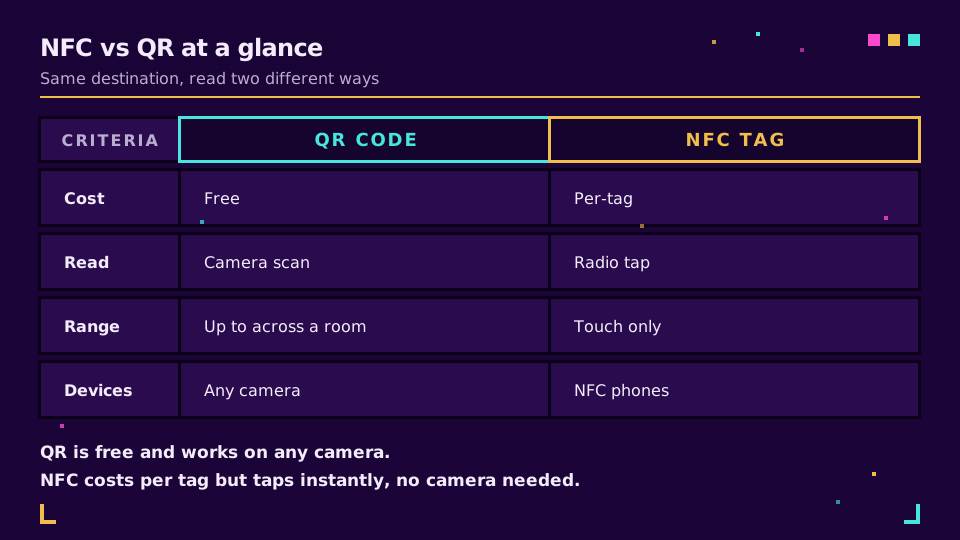
The trade-offs line up cleanly once you separate reach, cost, and experience.
| Dimension | QR code | NFC tag |
|---|---|---|
| Cost per unit | Free to generate, cheap to print | Per-chip hardware cost, scales with volume |
| Read method | Optical scan by any phone camera | Radio tap within a few centimetres |
| Range | Close up to across a room (large prints) | Touch only |
| Device support | Any phone with a camera | NFC-enabled phones, tap gesture known |
| Visibility | Visible printed image | Invisible chip |
| Best fit | High-volume, print, distance, low budget | Premium, tactile, close-range experiences |
Where QR Codes Win
QR codes, an open ISO standard, carry most marketing because the economics and reach are hard to beat.
- Cost. A static QR code is free to make and costs only ink. At a thousand touchpoints, that gap against NFC hardware is the whole budget conversation.
- Distance. A camera reads a QR code from far away, so it works on billboards, shelf-edge labels, TV, and posters where a tap is physically impossible.
- Universality. Every modern phone scans a QR code from the native camera, no app and no special chip. NFC needs an NFC-capable phone and a user who knows to tap.
If your campaign is print-heavy, high-volume, or budget-conscious, QR is the default. The mechanics of doing it well, static versus dynamic, are covered in dynamic vs static QR codes.
Where NFC Tags Win
NFC, the tap-to-read radio standard maintained by the NFC Forum, earns its cost when the touchpoint is premium and the friction of scanning is the thing you want to remove.
One tap, no aiming, no camera app. For a product you hold, NFC feels like magic in a way a QR code does not: tap a bottle, a business card, a museum plaque, or an event badge and the page just opens. There is no visible code cluttering the design, which matters for luxury packaging and considered industrial design. NFC is also the right tool for genuinely interactive physical experiences, smart posters, tap-to-enter, tap-to-pay adjacent flows, where the tag is embedded and reused.
The catch is always the same: you pay per tag, and a chunk of your audience either lacks NFC or will not think to tap without a printed prompt, which often means printing a QR code next to it anyway.
The Trick: Point Both at One Trackable Link
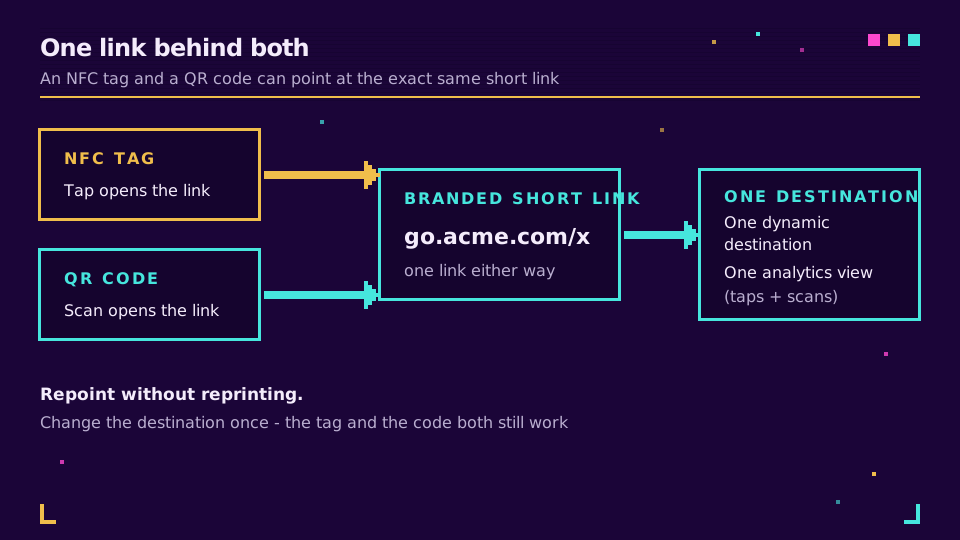
You rarely have to pick. An NFC tag stores a URL and a QR code encodes a URL, so write the same short link to both. Now the tag and the code resolve to one destination, you get a single analytics view of taps and scans together, and, crucially, you can change where that link goes without reprinting a single QR code or rewriting a single chip.
That last point is the real payoff of a branded short link on a custom domain: the physical object is permanent, but the destination is not. Run a seasonal landing page today, repoint to a new one next quarter, and every tag and code you already shipped follows along. Every resolve is recorded server-side, so tracking QR scans and NFC taps happens the same way, in one place. Create one trackable link and put it behind both triggers.
How to Choose
A short decision list covers almost every case:
- High volume, print, or distance, or a tight budget? Use QR codes.
- Premium, tactile, close-range, and the tap experience is the point? Add NFC.
- Want maximum reach and the cleanest measurement? Offer both on the same touchpoint, pointing at one short link.
- Whichever you choose, make the destination a link you can repoint, so the hardware you print or embed never locks you in.
Read the Cornerstone Series
This sits in the features cluster. The digital-side companion is short link vs QR code; for the build details, see how to create a QR code.
If the comparison you actually need is between the two printed formats rather than chip against symbol, barcode vs QR code covers what each one can store and which scanner reads it.
Related on the Blog
Frequently asked questions
Is NFC better than a QR code?
Neither is better outright; they fit different jobs. NFC is smoother for close-range, premium touchpoints because it is a single tap, but it costs money per tag and only works on NFC-enabled phones when the user knows to tap. QR codes are free, work on any phone camera, and scan from a distance, so they reach more people for less. For most marketing, QR wins on cost and reach; NFC wins for high-end, low-friction physical experiences.
What is the main difference between NFC and QR codes?
How the phone reads them. A QR code is a printed image the camera scans optically, from a few centimetres up to across a room for a large print. An NFC tag is a tiny chip the phone reads by radio when held within a few centimetres, so it is a tap rather than a scan. QR is visible and free to print; NFC is invisible hardware you buy and embed.
Are NFC tags more expensive than QR codes?
Yes, meaningfully. A static QR code is free to generate and costs only the ink to print. NFC tags are physical chips, so every touchpoint has a per-unit hardware cost, and it scales with volume: a thousand NFC tags is a real line item, while a thousand printed QR codes is effectively free. That cost gap is the main reason QR dominates high-volume campaigns.
Can you track NFC taps like QR code scans?
Yes, if the tag encodes a trackable URL. An NFC tag usually stores a URL, so if you write a short link to it, every tap is recorded server-side at the redirect exactly like a QR scan of the same link. Point both the tag and the QR code at the same short link and you get one combined analytics view of taps and scans.
Should I use NFC or QR codes for marketing?
Use QR codes as the default for reach and cost, and add NFC where the experience justifies the hardware, such as premium packaging, retail displays, smart posters, or event badges. The strongest setup offers both on the same touchpoint pointing at one link, so the customer chooses to tap or scan and you measure it all in one place.
Try Elido
Paste a URL, get a working short link
No signup. Link lives for 30 days. Sign up to keep it forever.
Free, no signup required · 2 per day