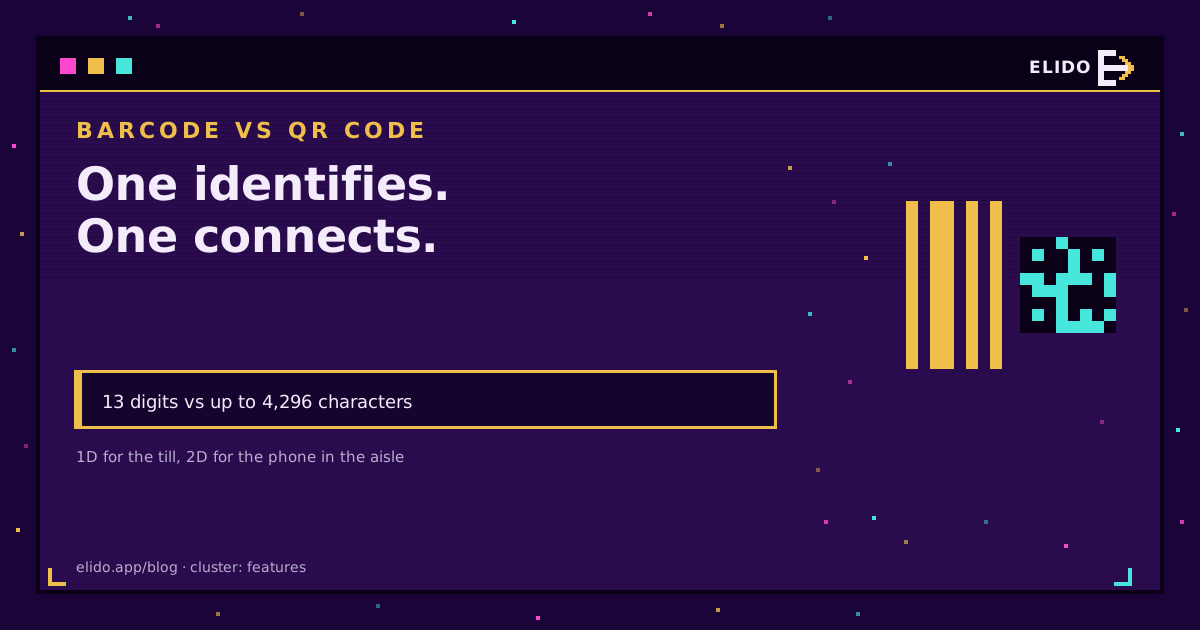
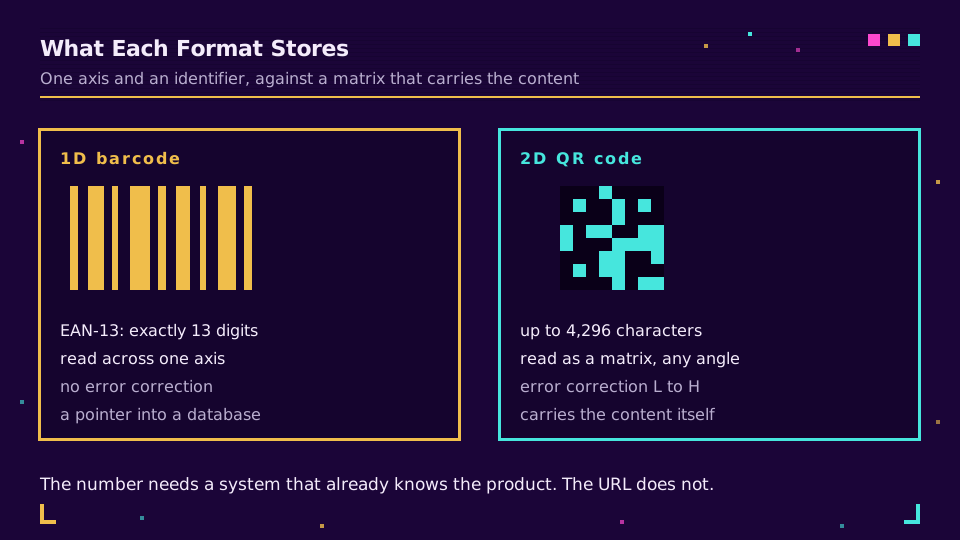
A barcode is one-dimensional: it stores a short identifier, usually a number, read across a single axis. A QR code is a two-dimensional matrix that holds up to 7,089 numerals or 4,296 alphanumeric characters, along with error correction that lets a damaged code still scan. The practical split follows from that. A barcode points at a record in a system that already knows what the product is; a QR code carries content that a phone can act on without knowing anything in advance.
Which means barcode vs QR code is rarely a contest of which format is better. It is who does the scanning, what they hold in their hand, and what should happen in the second after the beep. This piece covers what each format stores, the scanner hardware that decides for you, the 2027 retail deadline that is quietly changing the answer, and the one property only a QR code can have. If QR codes themselves are new, what is a QR code explains the mechanics underneath.
What Each Format Actually Stores
A linear barcode encodes data in the widths of bars and spaces along one line. That is a hard ceiling on capacity. A retail EAN-13 holds thirteen digits, no letters, no punctuation, and those digits are a global identifier rather than information in themselves; look them up in a database and you learn the product, look at them alone and you learn nothing. Code 128, the workhorse of logistics labels, does handle the full ASCII range, but a label gets physically wide fast, so a few dozen characters is the practical limit.
A QR code encodes data across two axes, in a grid of modules read as a matrix. That buys capacity, and it buys something the linear format never had: Reed-Solomon error correction at four selectable levels, L through H, which can rebuild a symbol that has been scuffed, folded, or partly covered by a logo. The version scale runs from 1 to 40, and the top of that range is where those 7,089 numerals live.
Worth clearing up a naming confusion: a QR code is a barcode, formally a two-dimensional one, standardised as ISO/IEC 18004. The retail and logistics world says 1D and 2D. Everyone else says barcode and QR code, meaning the striped one and the square one.
Who Is Scanning, and With What
Hardware decides more of this than data capacity does.
A checkout laser or a warehouse gun is built for linear codes and reads them at speed, off a curved surface, in any orientation, hundreds of times an hour, by a person who will never look at a screen. That chain of scanner, till, and stock system expects a number, and it expects a specific one.
A phone camera is the opposite instrument. It reads a matrix comfortably, it needs a moment to focus, and the person holding it is looking at a screen and about to tap something. Give that person a thirteen-digit number and nothing happens. Give them a URL and you have their attention for as long as the page holds it.
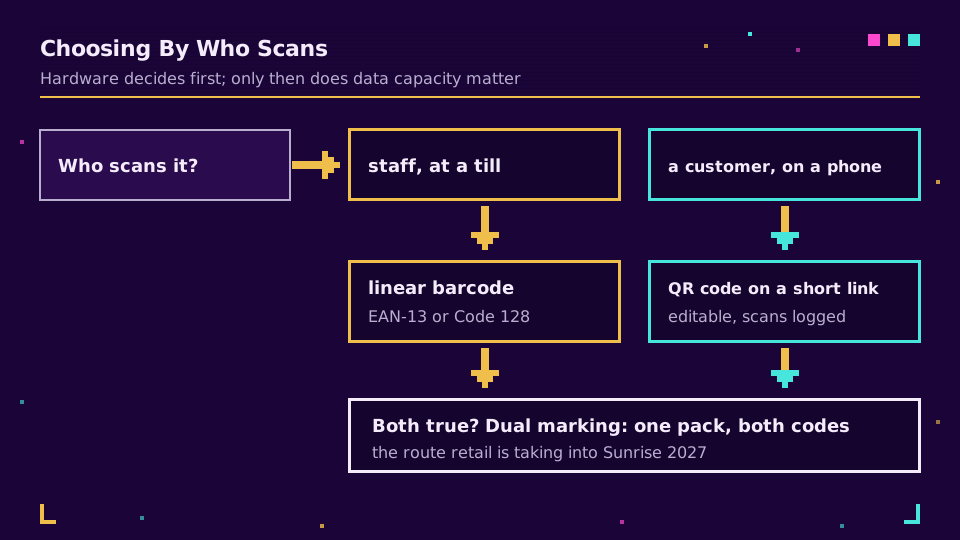
So barcode vs QR code usually resolves itself on hardware: if the scan is done by staff, on equipment you bought, to identify something the system already knows, it wants a linear barcode. If the scan is done by a customer, on a phone they own, to reach something, it wants a QR code. The interesting cases are the ones where both are true, which is where packaging is heading.
The 2027 Retail Deadline Changes the Question
Retail is in the middle of a format migration, and it is worth knowing about before you design a pack. GS1's Sunrise 2027 initiative asks retailers to be able to scan 2D barcodes at point of sale by the end of 2027.
Two things it does not mean. It is not a switch-off date for the EAN and UPC codes on today's shelves, and it does not oblige you to redesign packaging next quarter. What it is, is a readiness milestone: checkout hardware and software that can read a 2D code carrying a GS1 Digital Link, which encodes the product identifier and a web address in one symbol. During the transition, brands are dual marking, putting the linear barcode and the 2D code on the same pack while the scanner estate catches up.
That is the shift worth planning for. A single square can serve the till and the customer, which used to require two separate marks with two separate owners inside the company. The regulatory version of the same idea, where the code carries provenance and compliance data for a product's whole life, is covered in the digital product passport QR code.
Choose By the Job
Most of the decision fits in a table. The column that matters is the last one.
| Job | Format | Why | Editable later |
|---|---|---|---|
| Retail checkout, stock | EAN-13 / UPC (1D) | Scanner estate expects the number | No |
| Logistics and asset labels | Code 128 (1D) | Wide reader support, cheap to print | No |
| Customer-facing content | QR code (2D) | Phone camera, carries a URL | Only via a redirect |
| Retail plus content, one mark | GS1 Digital Link QR | Identifier and URL in one symbol | Depends on setup |
The tables published by scanner vendors usually stop at capacity and error correction. Editability is the column that decides whether a print run becomes a liability, and it is the one nobody prints on the spec sheet.
Only One of Them Can Be Repointed
A barcode is a fixed identifier. It cannot be anything else, and that is fine: the number is meant to stay stable for the life of the product.
A QR code, though, is only frozen if you encode the final destination inside it. Encode a short link instead and the symbol becomes a pointer to a decision you can change: the campaign page today, the manual next year, a recall notice on a bad Tuesday. The scan still resolves in milliseconds, and every one of them is logged, which is the static versus dynamic QR distinction applied to physical goods. It is also, in my experience, the single most expensive thing to discover after the print run rather than before it.
A shorter destination has a second benefit that shows up at the printer. Fewer characters means a lower QR version, which means larger modules at the same physical size and a code that scans faster off a curved bottle or a matte carton. How big a QR code should be has the sizing rules. If you want codes you can repoint and measure after the pallet ships, start a workspace and generate them from your own domain, then read the results in scan analytics.
Mistakes That Cost a Print Run
Four failures account for most of the reprints I have seen.
- Putting a marketing QR where a checkout laser expects the retail barcode, and discovering at the till that the two are not interchangeable.
- Encoding a long, parameter-heavy URL, which pushes the code to a high version with tiny modules that fail on the shop floor.
- Dropping the quiet zone, the clear margin of about four modules, because the layout was tight.
- Printing the code in brand colours with too little contrast, which survives the office test and dies under supermarket lighting. Branded QR design covers how far you can push that safely.
None of these is exotic. They are all caught by the same habit: print one proof, scan it with the actual device that will do the scanning, in the light where it will live. For codes meant for a phone, how to create a QR code walks the whole flow, and if you are weighing a chip instead of a symbol, NFC versus QR codes covers that comparison.
Read the Cornerstone Series
This post sits in the features cluster. For the campaign version, a QR code campaign from scratch covers planning through measurement, and what is a QR code covers how the scan resolves.
Related on the Blog
- Dynamic vs static QR codes: what actually changes
- How big should a QR code be? Sizes for print and screen
- NFC vs QR codes: cost, reach, and when each wins
- Digital product passport QR codes and what they must carry
- How to track QR code scans: the analytics that matter
- Branded QR code design, done right
Frequently asked questions
What is the difference between a barcode and a QR code?
A barcode is one-dimensional and read across a single axis, so it stores a short identifier such as the 13 digits of an EAN-13. A QR code is two-dimensional and read as a matrix, so it stores thousands of characters, including a full URL, and carries error correction that lets it survive damage. In practice a barcode points at a record in a system that already knows the product, while a QR code carries content a phone can act on directly.
Can a phone camera read a normal barcode?
Yes. Modern phone cameras and most scanning apps read 1D barcodes such as EAN-13 and Code 128 as well as 2D codes. The difference shows up in what happens next: the phone gets a number, and a number is only useful if an app knows what to do with it. That is why consumer-facing packaging tends to carry a QR code alongside the retail barcode rather than instead of it.
Which holds more data, a barcode or a QR code?
The QR code, by orders of magnitude. A retail EAN-13 holds exactly 13 digits, and a Code 128 label typically carries a few dozen characters before it gets impractically wide. A QR code at its largest version holds up to 7,089 numerals or 4,296 alphanumeric characters, which is why it can carry a URL, a WiFi credential, or a product passport.
Is a QR code just a type of barcode?
Yes, technically. QR is a two-dimensional barcode, standardised as ISO/IEC 18004, and the retail world now calls the whole family 1D and 2D barcodes rather than barcodes and QR codes. The everyday distinction people mean is between the striped label a checkout laser reads and the square matrix a phone camera reads.
What is GS1 Sunrise 2027?
It is the retail industry's push to have point-of-sale systems able to scan 2D barcodes by the end of 2027. It is a readiness milestone rather than a switch-off date for the EAN and UPC barcodes on today's packaging, and the transition is happening through dual marking: a linear barcode and a 2D code on the same pack. Retailers need scanners and software that handle both.
Should I put a barcode or a QR code on my packaging?
Usually both, doing different jobs. The linear barcode stays for checkout and inventory, because that is what the scanners and systems in that chain expect. The QR code goes on for anything a customer should reach: instructions, registration, provenance, a campaign page. Only the QR side can be repointed later, and only if you encode a short link rather than a fixed URL.
Try Elido
Paste a URL, get a working short link
No signup. Link lives for 30 days. Sign up to keep it forever.
Free, no signup required · 2 per day