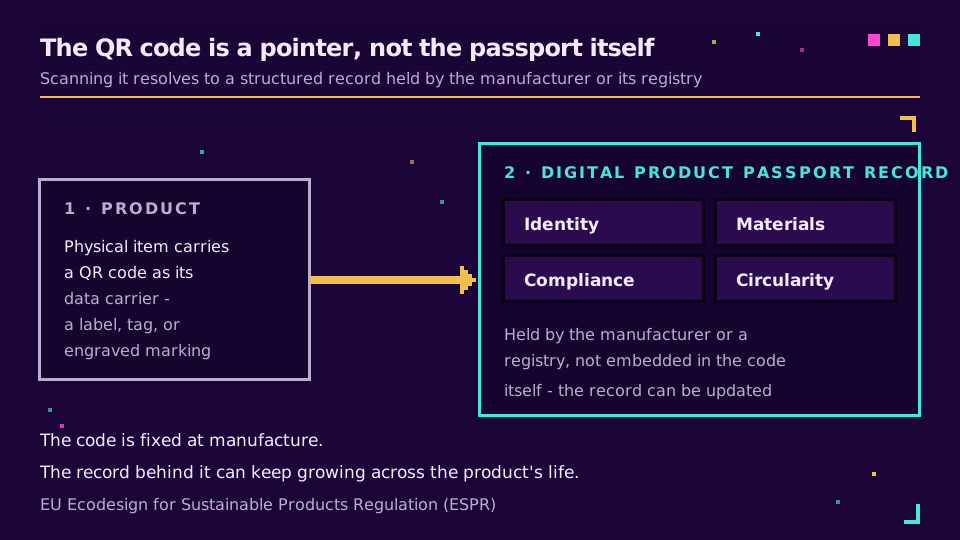
The EU is about to put a QR code on your products by law. The Digital Product Passport (DPP) is a structured, machine-readable record of an item's identity, materials, compliance, and circularity data, and the Ecodesign for Sustainable Products Regulation (ESPR, Regulation (EU) 2024/1781) requires a data carrier - in practice a QR code - physically on the product or its packaging so anyone can reach it. This is a compliance read on what the QR side of that obligation actually demands.
Most link and QR blogs are not covering this yet, which is exactly why it matters: for whole product categories, a scannable, durable, resolvable code is about to move from marketing nicety to market-access requirement. This piece is the compliance-cluster view; for the mechanics of making a code that scans, the how to create a QR code guide is the companion.
What the DPP Actually Requires
Two separate things sit behind the phrase "Digital Product Passport", and it helps to keep them apart.
- The passport - a structured data record (identity, materials, origin, compliance, repair and recycling information) held to a defined data model.
- The data carrier - a machine-readable code on the product or packaging that resolves to that record. The ESPR mandates a carrier; the market has settled on the QR code because it prints cheaply and scans with any phone.
The regulation entered into force on 18 July 2024 and extends ecodesign rules from energy products to almost all physical goods. The QR code is the doorway; the passport is the room behind it. This article is about the doorway - the carrier, its durability, and where it resolves - not about building the data model, which is product-specific.
The Deadlines That Are Already Set
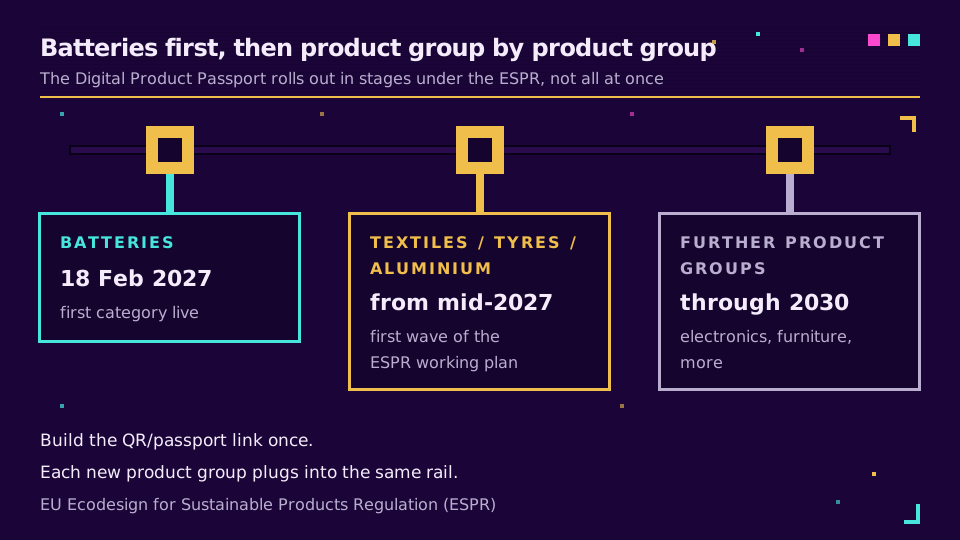
The DPP arrives group by group, not all at once. The dates that are firm enough to plan around:
- Batteries - 18 February 2027. Under the Batteries Regulation (EU) 2023/1542, a Battery Passport reachable via a QR code is mandatory for EV, industrial, and light-means-of-transport batteries over 2 kWh placed on the EU market, regardless of origin.
- Textiles, apparel, tyres, and more - from around mid-2027. These join under the ESPR, with the exact requirements set by delegated acts (expected 2025-2026) and a compliance window of roughly 18 to 36 months after each act is published.
- Later waves extend to further groups through 2030.
The practical read for a business: if you make batteries, the clock is measured in months, not years; if you make textiles, the requirement is close enough that the data-carrier decision belongs in your 2026 planning. Circularise's overview of DPP legislation by sector tracks the group-by-group timeline in detail.
Why the Carrier Choice Is a Compliance Decision, Not a Design One
A DPP QR code is not a campaign asset you reprint next quarter. The passport has to stay reachable for the product's lifetime and, for circularity, beyond it - through resale, repair, and recycling. That turns three ordinary QR choices into compliance choices.
Durability. A static QR code bakes its destination into the pattern, so if the resolver URL ever changes, every product already in the field points at a dead link. A dynamic QR code stores a short redirect you control, so the printed code outlives any change to where the record is hosted. For a passport that must survive a decade, that indirection is the point, not a nice-to-have.
Resolution and uptime. The carrier is only compliant if it resolves. A code that 404s under market surveillance is a non-conformant code. Whatever runs the redirect has to be dependable for years.
Data location. The passport touches product and sometimes personal data, and it is an EU-market obligation. Hosting the resolver and record in the EU keeps the whole chain under one jurisdiction and avoids a transfer analysis layered on top of the ESPR work - the same residency logic the GDPR for URL shorteners cornerstone applies to click data.
This is the part Elido actually covers, and I want to be precise about the boundary. The DPP data model and registry are a separate, product-specific system; Elido is not that. What an EU-resident dynamic QR layer provides is the compliant, durable, in-region data carrier - the resolvable QR and redirect that the passport hangs off - so the code you print in 2026 still resolves, in the EU, in 2036. Set up a dynamic QR code for that layer; build or buy the passport data model separately.
What to Do Before Your Deadline
The useful work now is scoping, not panic. Four steps that apply regardless of product group:
- Confirm whether your product group is in scope and its date. Batteries are first; check the ESPR 2027 compliance guides for the rest.
- Decide the carrier as a durability decision: dynamic over static, so the code survives a hosting change.
- Pin down where the resolver and record live, and prefer EU hosting for an EU-market obligation.
- Treat the passport data model as its own project, separate from the carrier.
None of this is legal advice for your specific product, and the delegated acts will add detail. But the carrier decision - durable, resolvable, EU-hosted - is one you can make correctly today, before the data model is even finalised.
Read the Cornerstone Series
This sits in the compliance cluster. For the QR mechanics, start at how to create a QR code and the dynamic vs static decision; for the wider EU data-location argument, the GDPR for URL shorteners cornerstone.
Related on the Blog
Frequently asked questions
What is a Digital Product Passport QR code?
It is the machine-readable data carrier the EU requires on a product so anyone can reach its Digital Product Passport - a structured record of the item's identity, materials, compliance, and circularity data. The ESPR does not mandate the QR format specifically, but it requires a data carrier on the product or packaging, and a QR code is the most widely adopted and cost-effective option.
When is the Digital Product Passport required?
By product group, in stages. The Battery Passport, reachable via a QR code, is mandatory from 18 February 2027 for EV, industrial, and LMT batteries over 2 kWh under Regulation (EU) 2023/1542. Textiles, apparel, tyres, and other groups follow under the ESPR from around mid-2027, with exact rules set by delegated acts and a compliance window after publication. Check the timeline for your specific product group.
Does the ESPR require a QR code specifically?
No - it requires a machine-readable data carrier physically present on the product or packaging that links to the passport. In practice QR codes dominate because they are cheap to print, scan with any phone, and can be dynamic. Data Matrix and NFC are also permitted carriers, but the QR code is the default the market has settled on.
What happens if my product has no Digital Product Passport?
For product groups in scope, a compliant passport and its data carrier are a condition of placing the product on the EU market, tied to the CE-marking and market-surveillance regime. A missing or non-conformant passport can block sale and expose you to enforcement, so for regulated groups it is not optional labelling - it is market access.
Where should the Digital Product Passport data be hosted?
The regulation expects the passport to stay accessible for the product's lifetime and beyond, which raises durability and data-location questions. For EU-market products, hosting the resolver and the record in the EU avoids a transfer analysis and keeps the link stable under a provider you control - the same argument that applies to any long-lived QR redirect.
Try Elido
Paste a URL, get a working short link
No signup. Link lives for 30 days. Sign up to keep it forever.
Free, no signup required · 2 per day