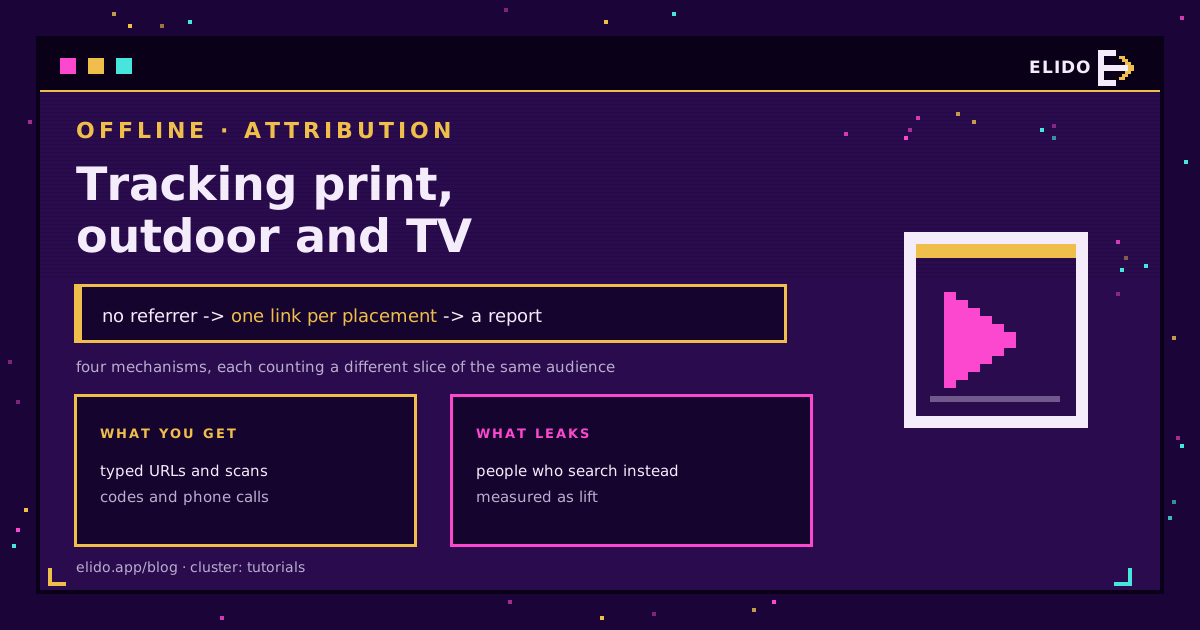
A billboard sends no referrer. A magazine page has no click event, a radio spot leaves no trace in your analytics, and a poster in a bus shelter cannot tell you that four hundred people read it. Every offline measurement technique is a workaround for that one fact, and each of them counts a different, partial slice of the audience.
So the goal is not perfect attribution. It is a small number of deliberate signals, each one attached to a specific placement, plus an honest account of the traffic that arrives without touching any of them. This post covers the four mechanisms, what each is good for, and how to read the gap they leave. If your campaign is mostly QR-driven, a QR code campaign from scratch is the cornerstone that covers the printed workflow end to end.
Four Mechanisms, Four Blind Spots
A vanity URL. Short, memorable, typed by hand. It works because it can be remembered between the poster and the phone, and it fails when it is too long, ambiguous when spoken, or awkward to type on a keyboard. Point it at the real destination through a redirect and the campaign tags ride along invisibly, which is the whole trick: the printed address stays short while the arrival is fully tagged. Vanity URLs explained covers the naming side.
A QR code. No typing, and it carries whatever parameters you like. It requires a camera, a free hand and a placement people can physically approach, which rules out a surprising share of outdoor inventory. Scan rates vary by an order of magnitude between a table tent and a motorway sign.
A promotional code. Measures purchases rather than visits, which makes it the only one of the four that proves revenue. It undercounts everyone who bought without entering it and everyone who never reached checkout.
A dedicated phone number. Still the strongest signal in categories where people call: trades, clinics, legal, local services. It counts calls and nothing else.
Most campaigns need two of these, not all four. A poster with a URL and a code, or a TV spot with a spoken address and a promo code, covers the top and the bottom of the funnel without cluttering the creative.
One Placement, One Link
The discipline that separates a measurable campaign from a total is granularity, and it is decided at design time.
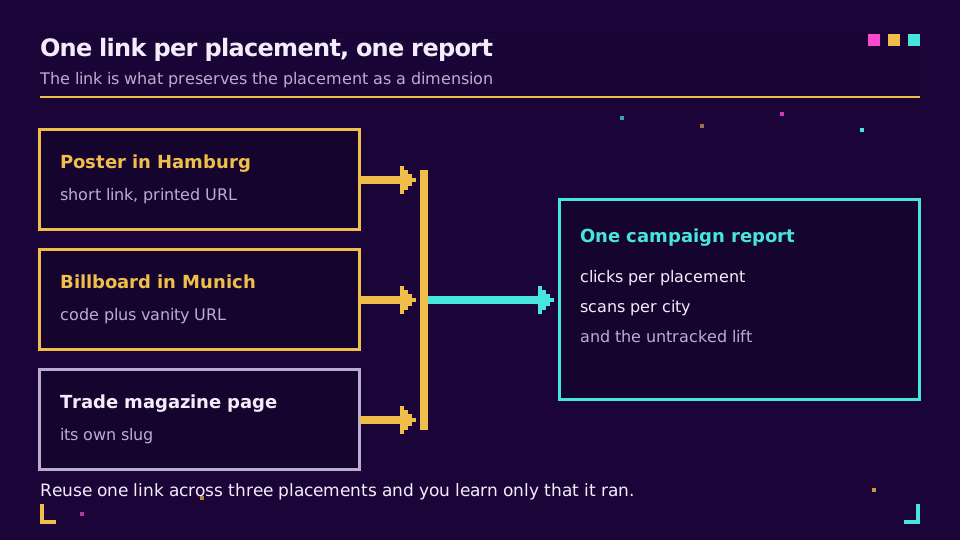
Give each placement its own short link. Different cities on the same billboard creative, different publications carrying the same page, different versions of a flyer. The destination is identical; the link is not. That is what lets you compare Hamburg against Munich, or the trade magazine against the consumer one, using numbers rather than impressions.
A convention that holds up in practice: the medium as the campaign qualifier, the placement as the slug. Keep the printed form short and keep the tags on the redirect, so nobody has to read utm_content off a poster. The campaign parameter reference is worth a read before you invent your own field meanings. UTM naming conventions has the vocabulary rules that keep those rows grouping properly six months later.
The Leak You Cannot Close
Here is the part vendors skip. A large share of the people who respond to an offline ad never touch your measurement at all. They see the poster, remember the brand, and search for it later. That arrives as brand search or direct traffic with no campaign attached, and no amount of tagging recovers it.
The industry has always known this, which is why outdoor audiences are estimated rather than counted. Route, the UK outdoor audience measurement body, builds its figures from travel surveys and visibility modelling precisely because there is no click to count.
Two techniques give you the missing half.
Baseline comparison. Measure direct traffic and brand search volume for two weeks before the campaign starts. Compare the campaign period against that baseline. The lift is your unmeasured response, and it is frequently larger than the tracked one.
Geographic split. For outdoor and regional print, compare cities that ran the campaign against comparable cities that did not, over the same period. That difference is the cleanest offline signal available without a formal study, and it costs nothing but the discipline of holding a region back.
For broadcast, tighten the window rather than the geography: look at the ten minutes after each airing against the same slot on days without a spot. People do not type a URL during an ad, but they do search during the break.
Running print, outdoor and digital from the same plan? Elido's campaign links keep each placement as its own row while rolling up into a single campaign total, so the comparison survives the reporting.
What Each Medium Actually Needs
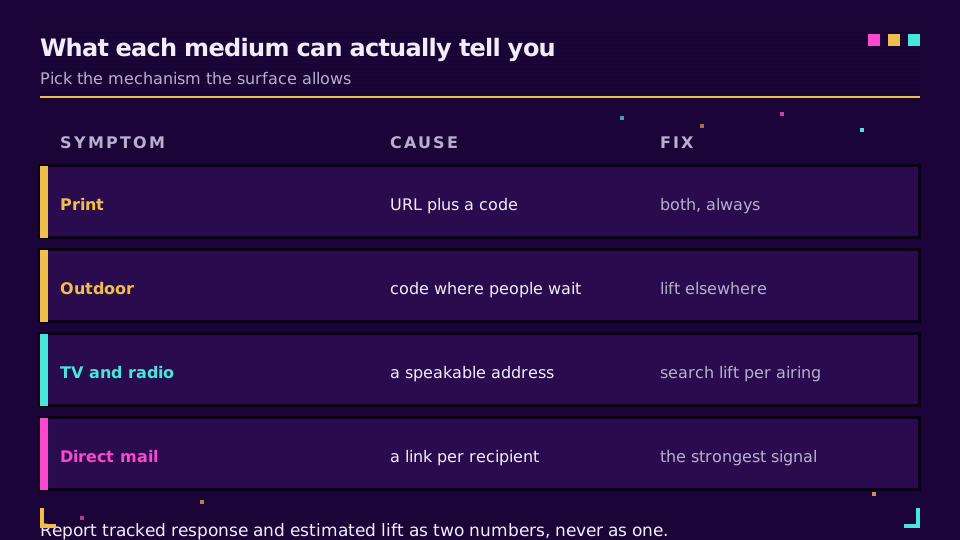
Print. A vanity URL and a code, both. The URL serves people reading on a train with a phone in the other hand; the code serves people at a table. Print the URL under the code, which is also the accessible option covered in QR code accessibility.
Outdoor. Placement decides everything. Codes work where people wait: transit shelters, platforms, lifts, queues. They do not work at speed or at height, and a code on a motorway billboard is decoration. Where a code cannot work, a spoken-length URL and brand search lift are what you have.
TV and video. Give the address time on screen. A short link that appears for two seconds is not readable, and the second-screen behaviour you are counting on happens during the break rather than during the spot. Expect most response through search; use the tracked URL as a floor, not as the number.
Radio and podcasts. The address has to survive being spoken once. No hyphens, no ambiguous spellings, no numbers that could be digits or words. Podcast hosts reading a code aloud is the highest-converting version of this because the listener trusts the reader.
Direct mail. The only offline medium that can be personalised, which makes it the strongest of the lot: a unique link or code per recipient turns a mailing into a measurable list. It is also the one where a shortened, readable address matters most, because the recipient is typing it by hand.
Reporting It Without Fooling Yourself
Three rules keep an offline report honest.
Report tracked response and estimated lift as two separate numbers. Adding them produces a figure nobody can defend; showing both tells the real story.
Never compare a scan count against an impression count as if they were a rate. The denominator is modelled and the numerator is a minority behaviour, so the percentage means nothing.
And state the placement dates. Offline response has a long tail, especially in print, where a magazine sits on a table for weeks. A campaign that looks flat in week one often is not.
The teams that get value from offline measurement are the ones that decided what they wanted to learn before the artwork went to print. Everyone else gets a number at the end and no way to act on it.
Read the Cornerstone Series
This post sits in the tutorials cluster. A QR code campaign from scratch is the cornerstone for the printed workflow, and track UTM parameters end to end covers the tagging chain that the redirect fills in for you.
Related on the Blog
Frequently asked questions
How do you track an offline marketing campaign?
By manufacturing a signal the medium cannot provide, since print and broadcast send no referrer. The four mechanisms are a vanity URL, a QR code, a promotional code and a dedicated phone number. Each one converts a physical impression into a digital event you can count, and each one is used by only a fraction of the people who saw the ad.
What is a vanity URL and why use one offline?
A short, memorable address printed or spoken in place of the real destination, such as your domain followed by a single word. It exists because nobody types a 90-character campaign URL from a poster. Point it at the tagged destination through a redirect and the campaign parameters arrive without ever appearing on the printed page.
Should I use one link per placement?
Yes, wherever the budget for design allows it. One link per city, per creative or per publication is what turns a single total into a comparison, and it costs nothing but a naming convention. Reuse the same link everywhere and you learn only that the campaign happened.
How do I measure a TV or radio ad with no link?
By looking at what moves in the minutes after a spot airs rather than at who clicked. Compare direct traffic and brand search against a baseline in tight time windows around each airing. A spoken URL helps if it is short enough to remember, but most of the response arrives through search regardless.
Why does my QR scan count look lower than the audience?
Because scanning is a minority behaviour, and it varies enormously by placement. A code at a bus stop where people wait converts far better than one on a motorway billboard nobody can safely photograph. Judge a code against comparable placements, not against the impression count.
Do promo codes still work for attribution?
They work well and they measure something different. A code proves a purchase came from the campaign, which a click never does, but it only counts people who reached checkout. Run it alongside a tracked URL and you have both the top and the bottom of the funnel.
Try Elido
Paste a URL, get a working short link
No signup. Link lives for 30 days. Sign up to keep it forever.
Free, no signup required · 2 per day