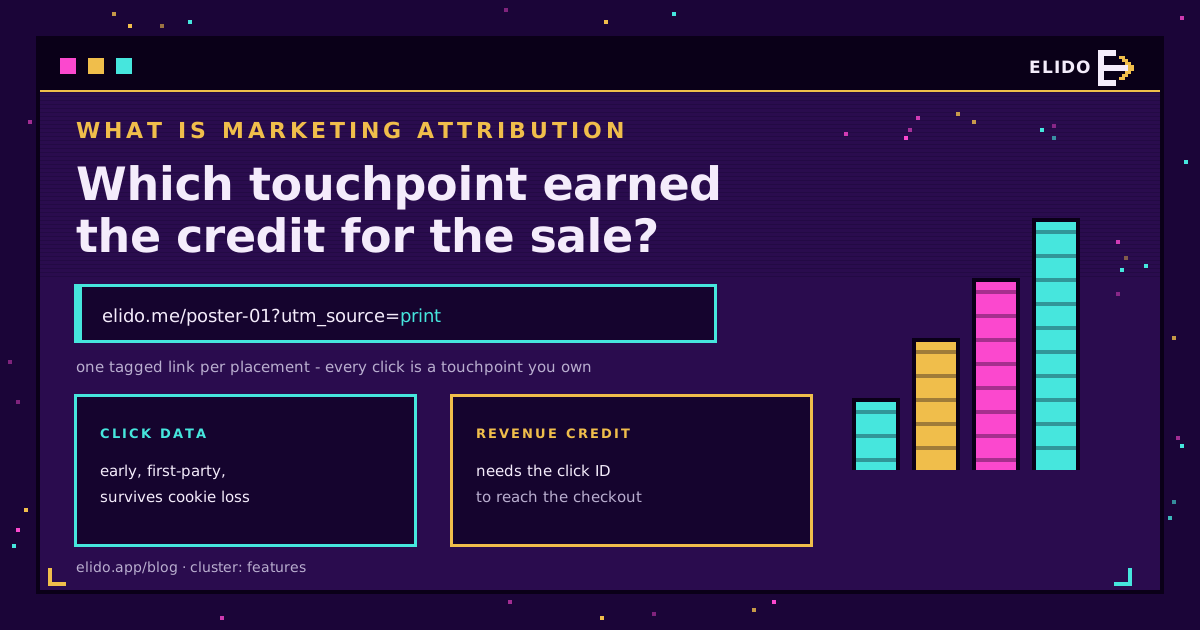
Marketing attribution is the practice of assigning credit for a conversion, such as a purchase or a sign-up, to the marketing touchpoints that came before it. A customer sees a post, scans a poster, clicks an email link and then buys. Attribution is the set of rules and data that decides how much each of those three deserves, so you can spend more on what works and stop paying for what doesn't.
That's the textbook answer, and every guide gives it. What most skip is that attribution isn't one thing. It's a ladder of evidence, and the rung you can stand on depends on how you tagged your links in the first place. This guide covers the definition, then how attribution works when your campaigns run through links and QR codes, where click data helps and where it stops, and what changes in a privacy-first setup.
If you're already past the basics, the sibling posts on cookieless attribution and click attribution after Safari ITP go deeper on the browser side.
Marketing Attribution, Defined
Attribution answers one question: which touchpoint caused this result? Wikipedia's entry on marketing attribution frames it as identifying the set of user actions, or touchpoints, that contribute to a desired outcome and assigning value to each. In practice, a touchpoint is anything the customer interacted with: an ad, a newsletter link, a QR code on a leaflet, a post shared in a group chat.
Three words do most of the work in any attribution setup.
- Touchpoint: one interaction you can observe, usually a click or a scan.
- Conversion: the outcome you care about, from a newsletter sign-up to a paid order.
- Credit: the share of the conversion you assign to a touchpoint, between 0 and 100 percent.
Everything else, the model names and the dashboards, is a way of deciding credit. Credit is a judgment call, not a measurement. Two sensible models can hand the same sale to different channels. Neither is wrong.
How Attribution Works for Link and QR Campaigns
When your campaign runs through links, attribution has a clean starting point. Each placement gets its own tagged link, and every click on it is recorded the moment it happens. That click is a touchpoint you observe, not one you infer.
The flow has four steps, and the first diagram shows them in order.
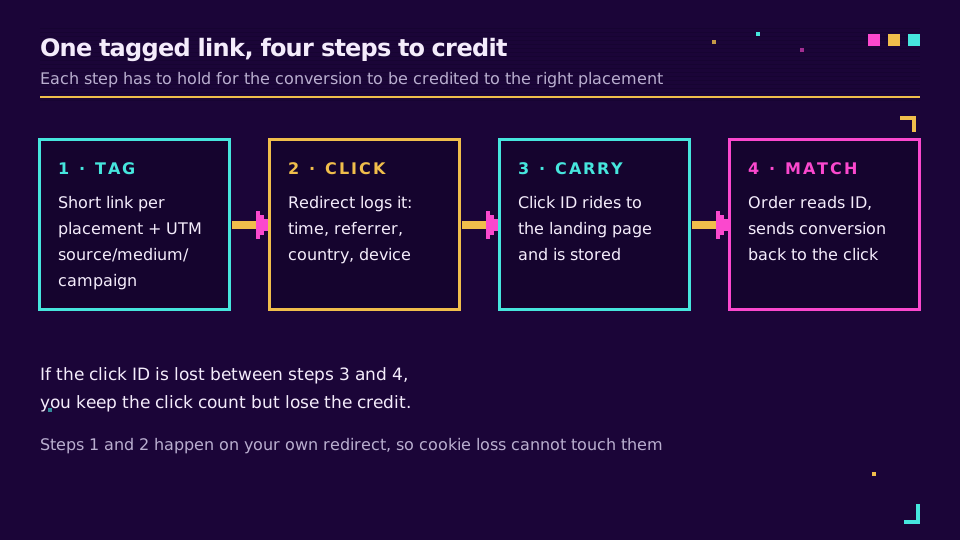
First, you tag. Each placement gets a unique short link with UTM parameters naming the source, medium and campaign. If the tag names are a mess, nothing downstream works, so settle them early with a UTM naming convention. UTM parameters explained covers the five tags in full.
Second, the redirect records the click. Because the short link sits on your own domain, the click is logged before the visitor reaches the destination: timestamp, referrer, country, device. Nothing has to load in the visitor's browser. That's the point.
Third, an identifier travels with the visitor. A click ID can ride on the landing URL, and your site stores it when the visitor arrives.
Fourth, the conversion gets matched back. When the sale happens, your back end reads the stored click ID and reports the conversion against the original click. Server-side forwarding to ad platforms is covered in server-side conversion tracking.
Why QR codes fit this model
A printed QR code is just a link someone can scan. If it's a dynamic code, each scan passes through a redirect and becomes a logged click, so a poster in one window and a flyer in another report separately. That's the practical answer to a question offline media usually can't answer. Offline campaign tracking lists the other mechanisms and their blind spots, and tracking QR code scans walks through the setup.
Where Short-Link Click Data Fits
Click data sits near the top of the evidence ladder. It's the earliest observation you can trust, and it's the one that survives privacy changes best, because you collected it yourself on your own redirect. The second diagram shows what each rung can and can't tell you.
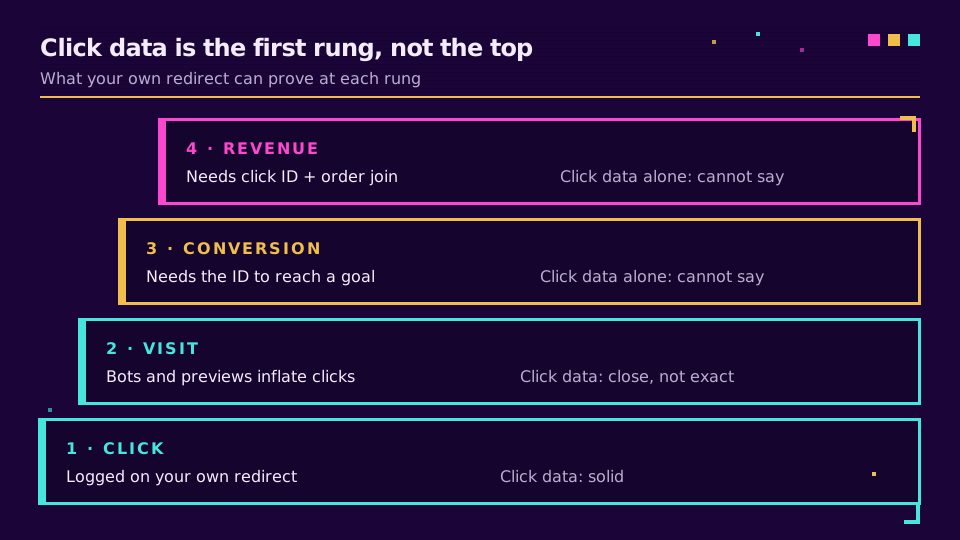
A click record gives you the placement, country, device, referrer and trend over time. For comparing a poster against a newsletter against a creator post, that's often enough to make a decision. The analytics feature page shows how Elido presents these records, and what to measure on short links separates the useful numbers from the vanity ones.
What clicks cannot prove
A click is not a visit, and a visit is not a sale. Link scanners and preview bots inflate click counts, and analytics tools merge repeat visits into one session, which is why the two numbers rarely match. Clicks vs GA4 sessions explains the gap and how to reconcile it in an afternoon.
More important: a click tells you a person showed interest, not that the link caused the purchase. Someone may have been sold by a podcast, then clicked your tracked link only because it was the easiest way to find you. Last-click credit would hand the link the win. I've watched teams cut a channel that was quietly doing the persuading and keep the one that happened to sit last in the path.
Click Data vs Revenue Attribution
Revenue attribution connects spend to money. It needs the click, the visit and the order joined by a shared identifier, plus a rule for splitting credit when several touchpoints exist. Link-level click data is the first half of that chain, not the whole of it.
So the honest framing is a ladder, not a competition. Click data is cheap, early and reliable but shallow. Revenue attribution is deep but depends on getting an ID from the click to the checkout without losing it. When the ID survives, you can report revenue per placement. When it doesn't, you fall back to clicks and conversion counts and say so.
Elido's conversion tracking is built for this middle ground: it carries a click ID from the link and lets you send the conversion back server-side. It doesn't replace a full multi-touch model, and it won't tell you about touchpoints that never went through a tagged link. If a customer first heard of you in a private chat and typed your URL, that visit shows up as direct. The same blind spot has a name, dark social, and tagged links are the partial remedy.
Choosing a model
The models themselves are simpler than their names. First-touch credits the opener, last-touch credits the closer, and multi-touch splits it by a rule such as linear or time-decay. For most link and QR campaigns, start with last-touch for the per-placement view and add first-touch as a sanity check on which placements start journeys. Google's attribution help page documents how GA4 treats these options if that's your reporting layer.
Attribution in the Privacy Era
Attribution used to lean on third-party cookies that followed a visitor across sites. Safari and Firefox restrict them by default, ad blockers remove many tracking scripts, and consent banners mean a share of visitors never get measured at all. Browser-side pixels now miss a meaningful slice of conversions, and the size of the gap depends heavily on your audience and device mix.
Two things hold up. Your own redirect records the click server-side, and a first-party identifier can carry it forward. Both are described in more depth in the cookieless attribution guide.
Consent still applies
Cookieless doesn't mean consent-free. The EDPB guidelines on the technical scope of Article 5(3) of the ePrivacy Directive make clear that reading or storing information on a visitor's device can need consent whatever the technology, and the underlying rule is the ePrivacy Directive. Counting a click on your own server is a different act from placing an identifier on the device, so design with that line in mind and get legal advice for your own case. The GDPR guide for URL shorteners covers what a click record contains and how to keep it minimal.
A Practical Starting Point
You don't need a data warehouse. This setup takes an afternoon and tells you something useful within a week.
- Create one short link per placement, never one link for a whole campaign.
- Tag every link with source, medium and campaign from a written naming sheet.
- Define one conversion, such as a sign-up, and wire it to the click ID.
- Review clicks and conversions per placement weekly, and note what the data can't see.
The campaigns feature and the marketers solution page show how that setup looks in Elido, and the pricing page has the plan details.
Write the gaps next to the numbers. A report that says "42 conversions, plus an unknown amount from private shares" is more useful, and more believable, than a clean figure that pretends to be complete.
Related on the Blog
Frequently asked questions
What is marketing attribution in simple terms?
Marketing attribution is the practice of working out which marketing touchpoints led to a sale or sign-up, and how much credit each one deserves. A customer might see a post, scan a poster, then click an email link before buying. Attribution is the set of rules and data that decides whether the post, the poster or the email gets the credit. Its purpose is to move budget toward what works.
Why is marketing attribution important?
Because without it you are budgeting on guesses. Attribution shows which channels and campaigns produce results, so you can cut the ones that don't and fund the ones that do. It also exposes double counting, where every platform claims the same sale. The catch is that the answer is only as good as the data behind it, which is why clean link tagging matters before any model does.
What are the main types of marketing attribution?
The common models are first-touch, last-touch and multi-touch. First-touch gives all credit to the first interaction, last-touch to the final one, and multi-touch spreads credit across several using rules such as linear, time-decay or position-based. Data-driven models let software weigh touchpoints from observed paths. Marketing mix modeling is a separate, top-down method that uses aggregate spend and sales.
What is the difference between marketing attribution and marketing mix modeling?
Attribution works bottom-up, following individual clicks or sessions toward a conversion, usually in near real time. Marketing mix modeling works top-down, using months of aggregate spend and sales data to estimate each channel's effect. Attribution needs identifiers that privacy rules increasingly limit. Mix modeling needs no individual tracking but is slow and coarse. Many teams run both.
Can you track marketing attribution without cookies?
Yes, within limits. A tagged short link records the click on your own redirect, and a click ID or UTM tags can follow the visitor to the landing page without a third-party cookie. Conversions can then be matched server-side. You lose cross-device journeys and anyone who never arrives through a tagged link. Consent rules still apply to what you store.
How do you measure attribution for QR codes and offline campaigns?
Point each placement at its own dynamic QR code or short link, so every scan is a logged click tied to that poster, flyer or package. Add UTM tags so analytics can group the traffic. You'll know which placement drove visits and, with a conversion hook, which drove sign-ups. You won't see who saw the poster and didn't scan.
Try Elido
Paste a URL, get a working short link
No signup. Link lives for 30 days. Sign up to keep it forever.
Free, no signup required · 2 per day