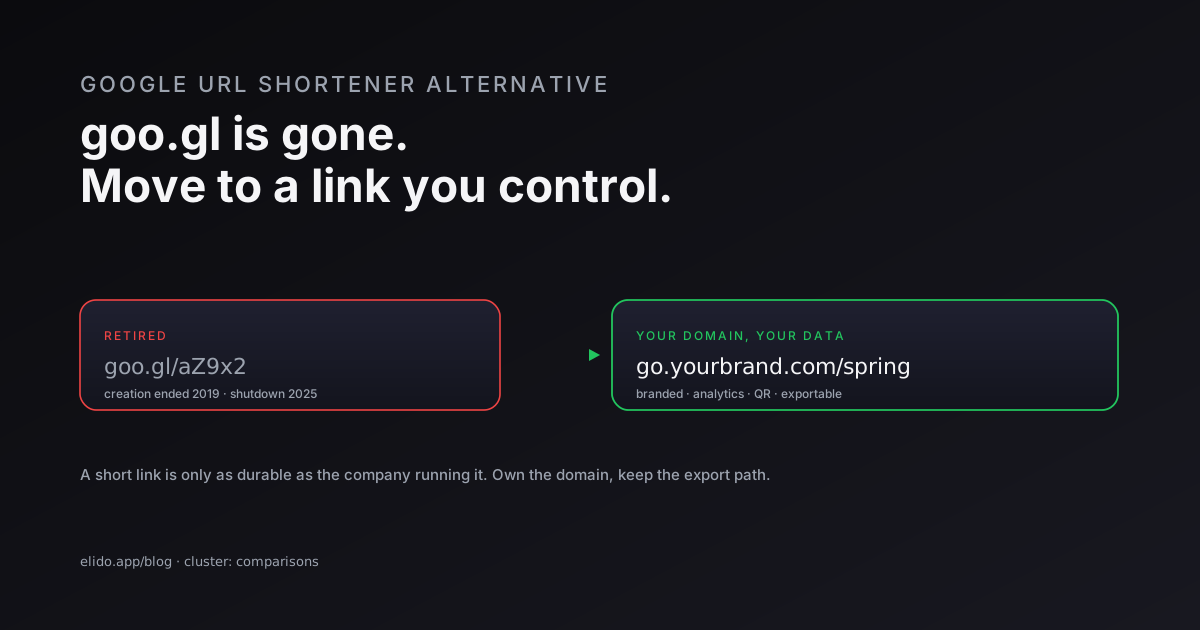
The Google URL Shortener is gone. Google stopped allowing new goo.gl links in March 2019 and finished the shutdown in 2025, when goo.gl redirects began failing instead of forwarding. As of 2026 those links are fully dead - a goo.gl URL now returns an error page, not a redirect. There is no replacement from Google, and the Firebase Dynamic Links service it once pointed people toward was retired as well. If you still have goo.gl links anywhere, the practical answer is to move them to a shortener you control.
This is the part that catches people out: a short link is only as durable as the company running it, and goo.gl proved that even Google will sunset one. So the real question is not which goo.gl alternative shortens links - almost all of them do - but which one gives you a branded domain, real analytics, and an export path so you are never stranded again. That is the lens this guide uses.
If you are weighing the wider field, the best EU URL shorteners and Bitly alternatives - the feature gap cover it in depth; here we focus on the goo.gl situation specifically.
What Happened to the Google URL Shortener
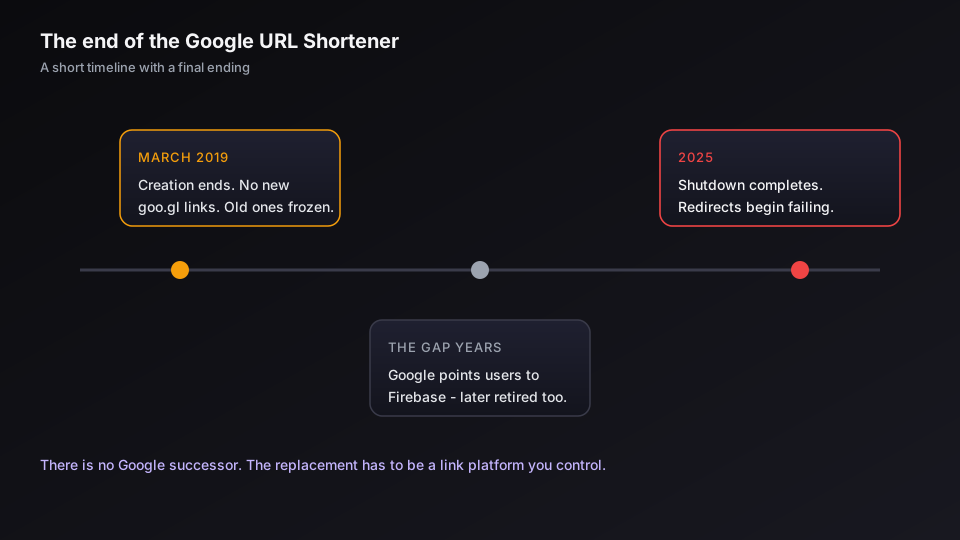
The timeline is short and final. Google ended goo.gl link creation in March 2019, leaving existing links working but frozen. Through 2025 the shutdown completed: goo.gl links began returning a notice rather than redirecting, and the service was fully retired. The Wikipedia record of the Google URL Shortener tracks the dates.
Google's suggested path afterward was Firebase Dynamic Links, but that too was wound down, with its links breaking in the same window - the Firebase Dynamic Links FAQ documents that sunset. So there is no Google-made successor to migrate to. The lesson is not that Google is uniquely unreliable; it is that any link you do not control can be switched off by the company that runs it.
What to Do With Your Old goo.gl Links
Treat every goo.gl link you ever published as broken, because you cannot control which ones survive or for how long. Anywhere a goo.gl link still lives - a printed flyer, a slide deck, a PDF, an app, an old newsletter - is now a dead end for whoever clicks it.
The recovery is the same regardless of where the link sits. You need the original destination each goo.gl link pointed to, then a fresh short link to replace it. If you exported your goo.gl data while the dashboard was still available, you already have the mapping. If not, reconstruct the destinations from your own records: campaign spreadsheets, the destination pages' own analytics, or the original content where you first used the link. Once you have the destinations, you recreate them as new links and update every surface that referenced the old one. For links that were printed and cannot be reprinted, this is exactly the case for a redirect you can edit later, which goo.gl never offered.
What a goo.gl Replacement Should Have
Almost anything shortens a URL. The goo.gl experience is a checklist of what a shortener should give you so this never happens again.
- A branded custom domain, so your links carry your name instead of a third party's - and so the links are tied to a domain you own, not a host that can disappear.
- Real analytics: clicks, geography, devices, and referrers, not the bare counter goo.gl offered.
- QR codes, since half of short-link use now lives offline on packaging and posters.
- An export path. The single most important lesson of goo.gl is that you must be able to leave with your data. A shortener you cannot export from can strand you the same way.
That last point is the one people skip until it bites. Our ranking of free URL shorteners flags which ones let you export and which quietly do not.
If you want links on your own domain, with analytics and a clean export from day one, start a free Elido workspace and rebuild your first goo.gl link as something you control.
Migrating From goo.gl: The Steps
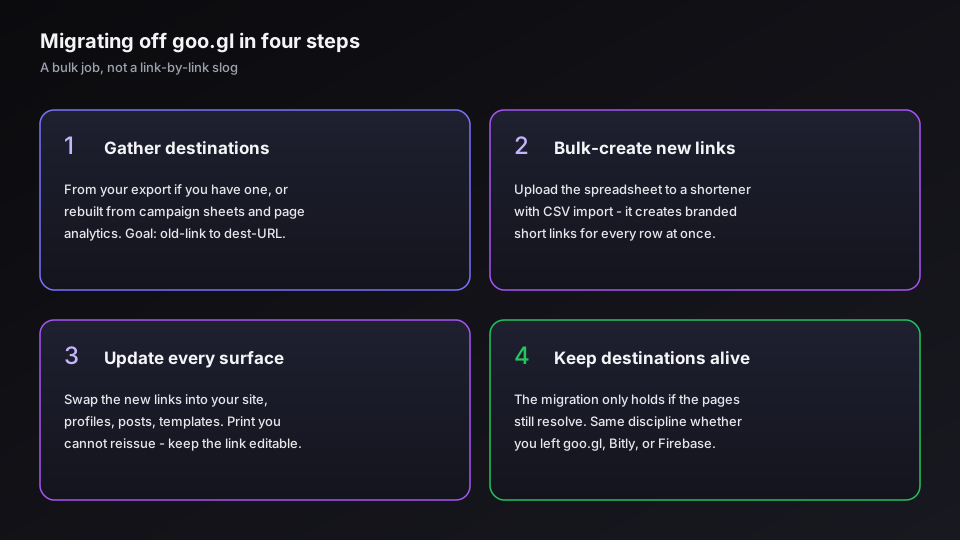
Moving off goo.gl is a bulk job, not a link-by-link slog, as long as you approach it in order.
- Gather the destinations. From your export if you have one, or reconstructed from campaign records and page analytics if you do not. A spreadsheet of old-link to destination-URL is the goal.
- Bulk-create the new links. Upload that spreadsheet to a shortener that supports CSV import, and it creates branded short links for every row at once - bulk import from a spreadsheet walks through the format.
- Update every surface. Swap the new links into your site, profiles, scheduled posts, and templates. For printed material you cannot reissue, point the new link at the right place and keep it editable.
- Keep the destinations alive. The migration only holds if the pages still resolve; the same discipline applies whether you came from goo.gl, Bitly, or Firebase - the Bitly migration playbook and migrating off Firebase Dynamic Links cover the mechanics that transfer cleanly.
New to creating links at all? How to shorten a URL covers the basic flow that sits underneath all of this.
Why an EU-First Alternative
There is one more axis goo.gl never made you think about: where your click data lives. Every short link you replace is also a small analytics pipeline, and for anyone in or selling to Europe, that data carries obligations.
An EU-first shortener keeps click data in the EU region, which clears the data-residency question a procurement or legal review will raise before it becomes a blocker. It is not the reason to leave goo.gl - goo.gl leaving you is - but if you are choosing a replacement anyway, choosing one that handles residency correctly is a free win. The best EU URL shorteners compares the field on exactly that, and if you are coming from Bitly rather than goo.gl, Bitly alternatives - the feature gap is the sibling comparison.
The summary is blunt: goo.gl is not coming back, its Firebase successor is gone too, and the fix is a shortener on your own domain that you can measure and export. Rebuild your links once, somewhere you control, and you never have to do this migration again.
Related on the Blog
Frequently asked questions
Is the Google URL Shortener still available?
No. Google stopped letting anyone create goo.gl links in March 2019, and the shutdown completed in 2025 when goo.gl redirects began failing. There is no way to make a new Google short link, and old ones can no longer be relied on, so anyone still using goo.gl needs a replacement. Google pointed users toward third-party shorteners rather than offering a successor.
What happens to my existing goo.gl links now?
Treat them as broken. As the goo.gl shutdown rolled out through 2025, links began returning a notice instead of redirecting, and you do not control the timeline or which links survive. Any goo.gl link in print, in a PDF, in an app, or in an old email is a liability. The fix is to recreate those destinations as new short links on a service you control and update wherever the old link was published.
Did Firebase Dynamic Links replace goo.gl?
It did for a while, then it was retired too. Google steered developers to Firebase Dynamic Links after goo.gl, but that service was also shut down, with its links breaking around the same window. So the Firebase path is a dead end as well. The durable answer is a dedicated link platform you control, not another Google product that may be sunset later.
What is the fastest way to migrate goo.gl links?
If you exported your goo.gl link list while the dashboard was still up, the fastest route is a shortener that supports CSV bulk import: upload the destinations and it creates new short links in one pass. If you never exported, recover the destination URLs from your own records - campaign sheets, the pages' analytics, or the original content - then bulk-create fresh links and update every place the old goo.gl link appeared.
Which Google URL Shortener alternative is best for a business?
Pick one that gives you a branded custom domain, real analytics, QR codes, and an export path so you are never locked in - the things goo.gl never had. For teams in or selling to Europe, an EU-first shortener that keeps click data in the EU also clears the data-residency questions a procurement or legal review will raise. The point is to choose a tool you control, on your own domain, so no future shutdown strands your links again.
Are free URL shorteners safe to use as a goo.gl replacement?
A reputable free tier is fine for low-stakes links, but read the limits before you commit a campaign to one. Free plans often withhold branded domains, detailed analytics, and bulk export, and the goo.gl story is the reason export matters: a shortener you cannot leave is a shortener that can strand you. Choose a provider whose free tier still lets you export your links and points at a real paid path for when you scale.
Try Elido
Paste a URL, get a working short link
No signup. Link lives for 30 days. Sign up to keep it forever.
Free, no signup required · 2 per day