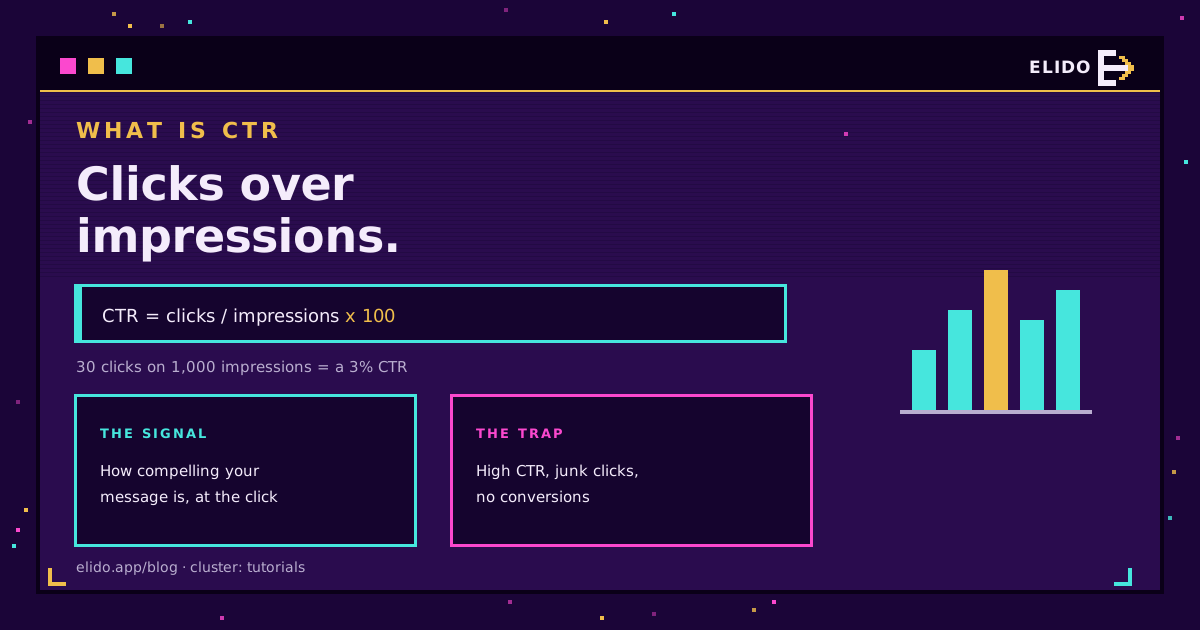
CTR, or click-through rate, is the share of people who saw something and then clicked it, written as a percentage. The formula is clicks divided by impressions, times 100. It measures how compelling a link, ad, email, or button is to the people who actually saw it, which makes it one of the first signals you look at to judge a headline, an offer, or a call to action. A good CTR depends heavily on the channel, and a high one only matters if the clicks go on to convert.
This is a practical guide: what CTR is, how to calculate it, what counts as good on each channel, and how to lift it without chasing junk clicks. For the wider set of numbers worth watching, short link analytics: what to measure covers the rest.
How CTR Is Calculated
The math is simple, and seeing it once makes the rest of the article concrete.
Clicks divided by impressions, times 100. If a link was shown 1,000 times and got 30 clicks, that is 30 / 1,000 = 0.03, times 100 = a 3 percent CTR. Impressions are how many times the thing was seen; clicks are how many times it was tapped. The result tells you the pull of your message at the moment someone decided whether to act, and nothing about what happened after the click.
That last point matters, so hold onto it: CTR is a top-of-funnel signal. It is the first gate, not the finish line.
What Counts as a Good CTR
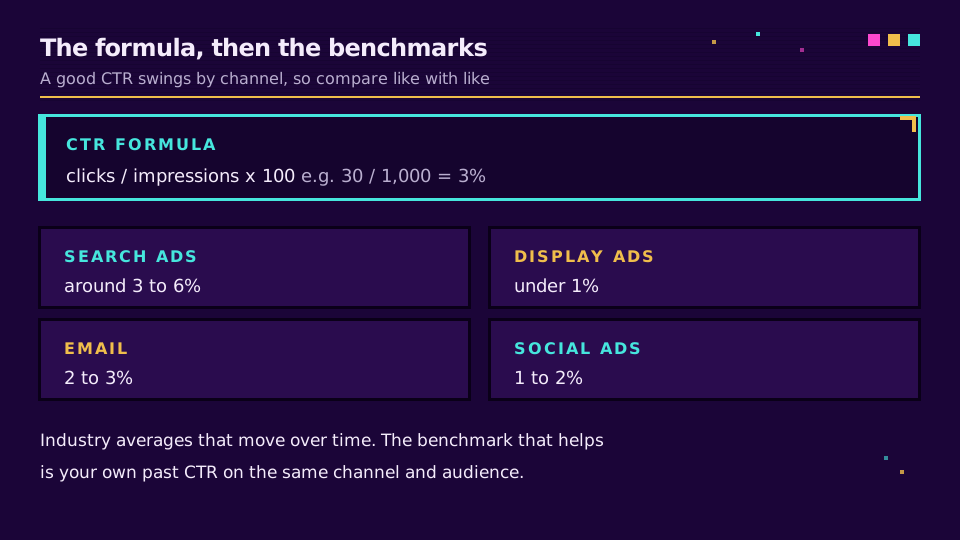
There is no single good number, because CTR swings wildly by channel, and the most common mistake is comparing an email CTR to a search-ad CTR as if they were the same thing.
Rough industry averages, which move over time: search ads land around 3 to 6 percent, display ads under 1 percent, email 2 to 3 percent, and social ads 1 to 2 percent. Google publishes its own definition and reporting for clickthrough rate (accessed 2026-07-18) if you want the ad-side detail. But the benchmark that actually helps is your own past performance on the same channel and audience. A 2 percent email CTR is weak for a tight newsletter list and strong for a cold blast, so beating yourself last month tells you more than beating an industry average built from everyone.
How to Lift It
CTR responds to a short list of levers, in roughly this order of impact.
- Relevance. The single biggest factor. A message that matches what the audience already wants gets clicked; a generic one gets scrolled past. Segment so the right link reaches the right people.
- The call to action. Make the next step obvious and specific. "Get the free template" beats "Learn more" because it says what happens on tap.
- Targeting. Putting the link in front of the wrong audience caps CTR no matter how good the copy is. Split branded from non-branded, high-intent from low.
- Creative and placement. Strong subject lines and previews on email, a thumbnail and clear label on a bio link, and enough contrast that the clickable thing looks clickable.
Change one variable at a time and measure it, because if you rewrite the headline and the button and the audience at once, you learn nothing about which move worked. That is the whole idea behind an A/B test on your links. It applies to the domain too: the claim that a branded domain lifts CTR by 39% has no published method behind it, so test it on your own audience.
The CTR Trap
Here is where teams burn budget: treating CTR as the goal instead of a signal.
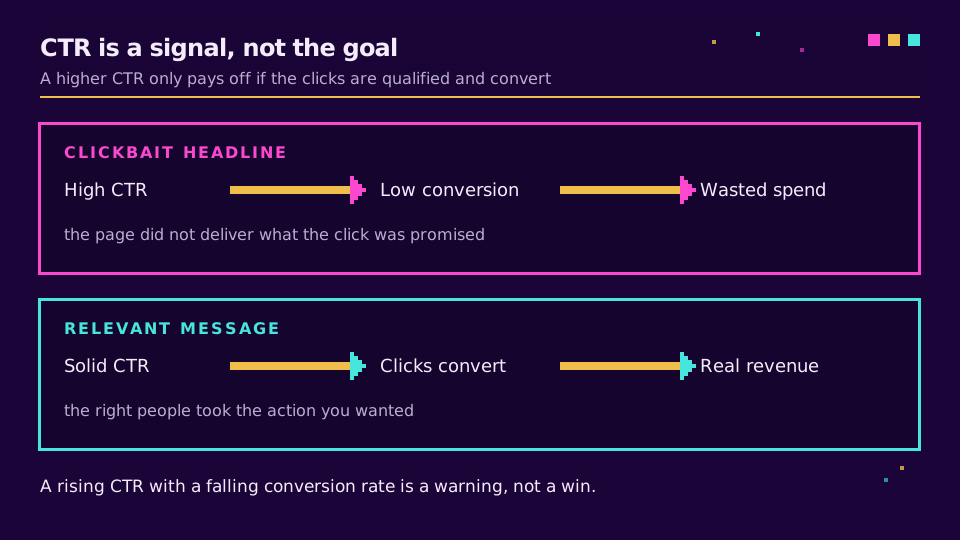
A higher CTR only helps if the clicks are qualified and go on to convert. A clickbait headline reliably lifts CTR and just as reliably tanks conversion rate, because the people who clicked were promised something the page does not deliver. Chasing clicks for their own sake raises cost and lowers quality. Read CTR next to conversion rate, always: a rising CTR with a falling conversion rate is a warning, not a win. The click is the means; the conversion is the point, which is why conversion tracking sits underneath any serious CTR work.
How to Measure CTR on Your Own Links
For an ad or an email, the platform reports impressions and clicks and does the division for you. For a link you share anywhere else, a social post, a bio page, a printed QR, you own the click side and need to pair it with the impressions from wherever it was shown.
A short link gives you the clean click count. Every tap on it is a logged event with a time, a device, and a location, so you can see clicks per placement and compare them. Put the impression number next to it, the post reach, the send count, or the campaign traffic Google Analytics records, and you have a CTR for a channel the ad platforms never see. Because a shortened link also survives platform quirks that strip other tracking, it captures the click even when the surrounding data does not. What is a URL shortener covers that redirect layer, and how to track social media links walks through the social case specifically. You can start measuring on the free plan.
CTR is the first honest read on whether your message lands. Calculate it right, judge it against yourself, lift it with relevance before tricks, and never let it drift loose from the conversion it is supposed to lead to.
Related on the Blog
Frequently asked questions
What is a good CTR?
It depends on the channel, and comparing across channels is the common mistake. Rough ranges: search ads land around 3 to 6 percent, display ads under 1 percent, email 2 to 3 percent, and social ads 1 to 2 percent (industry averages, they move over time). A good CTR is one that beats your own past performance on the same channel and audience, so track it against yourself before you track it against a benchmark.
How do you calculate CTR?
Divide clicks by impressions and multiply by 100. If a link was shown 1,000 times and got 30 clicks, the CTR is 30 divided by 1,000 times 100, which is 3 percent. Impressions are how many times the link, ad, or email was seen; clicks are how many times it was tapped. The result is a percentage that tells you how compelling the thing was to the people who saw it.
What is CTR in marketing?
CTR, or click-through rate, is the share of people who saw something and then clicked it, across ads, emails, search results, social posts, and buttons. It measures the pull of your message and creative at the moment of the click, not what happens after. A strong CTR means the headline, offer, and call to action are landing; it says nothing on its own about whether those clicks convert.
Why is my CTR low?
Usually relevance or the call to action. If the message does not match what the audience wants, or the next step is unclear, people scroll past. Weak or generic copy, a vague button, poor targeting that puts the link in front of the wrong people, and low-contrast or buried placement all pull CTR down. Fix relevance first, then the call to action, then targeting, and test one change at a time.
Does a high CTR mean more sales?
Not by itself. CTR measures clicks, not conversions, so a high CTR with unqualified clicks can raise costs without adding revenue. A clickbait headline lifts CTR and tanks conversion. The clicks only pay off if they are the right people who then take the action you want, which is why CTR is a starting signal, read alongside conversion rate, not a goal on its own.
Try Elido
Paste a URL, get a working short link
No signup. Link lives for 30 days. Sign up to keep it forever.
Free, no signup required · 2 per day