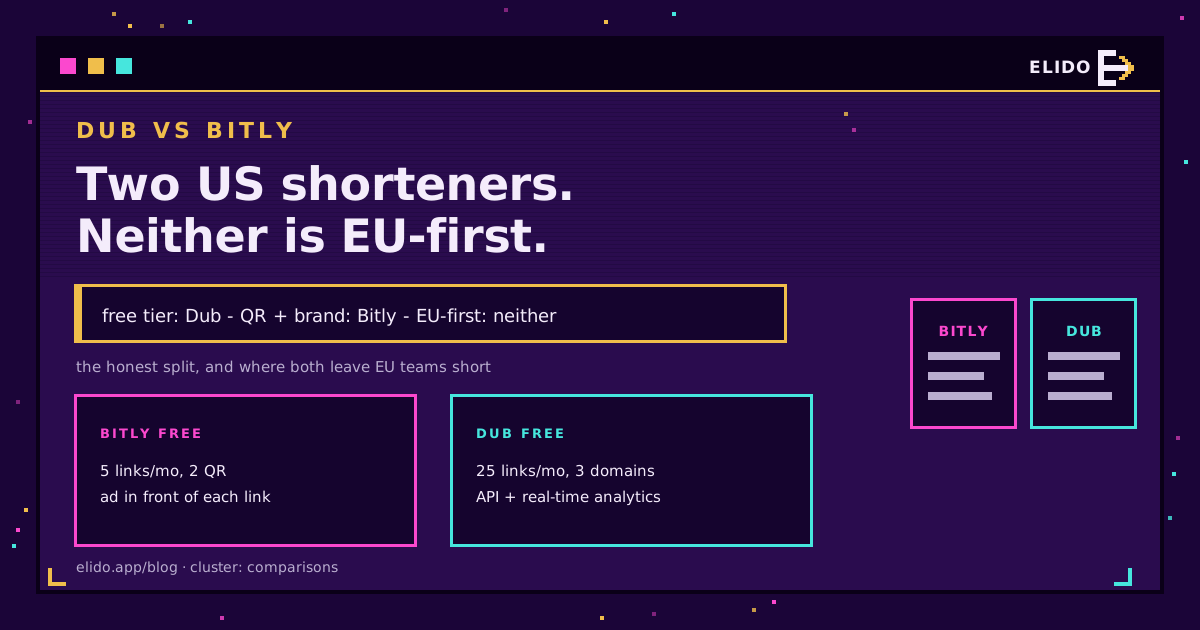
Here is Dub vs Bitly in one line: Bitly is the mainstream incumbent you already recognise, and Dub is the modern, developer-first challenger that gives you more on the free plan and more room to grow. Bitly wins on brand familiarity, QR codes, and the cheapest paid entry. Dub wins on free-tier usability, custom domains, conversion tracking, and an open-source option.
The catch that neither page tells you: both are US companies, and neither treats EU data residency as a default. So if you are choosing between them from inside the EU, the residency question sits on top of everything below and often changes the answer.
This is a comparisons-cluster piece, so the pricing is date-stamped and pulled straight from each vendor. For the wider field beyond these two, the Bitly alternatives feature gap cornerstone maps where the whole market splits.
The Quick Verdict
If you don't want to read the tables, here is who each tool is for.
Pick Bitly if you want a name your stakeholders already trust, you run QR-heavy print or offline campaigns, and you want the lowest possible monthly entry price. It is a mature, safe, mainstream choice.
Pick Dub if you are a developer, a SaaS team, or a marketer who has outgrown basic short links: you want a real API, conversion tracking, deep links, A/B tests, and the option to self-host. Its free plan is also just more usable than Bitly's.
Pick neither if your hard requirement is EU data residency, because that is the one thing both leave on the table. More on that below.
Free Plans Compared
This is the starkest difference, and it is where most people form their first impression.
Dub's free plan, as of July 2026, gives you 25 new links a month, 1,000 tracked events, 30-day analytics retention, 3 custom domains, QR codes, and API access. That is a working free tier a small project can actually run on.
Bitly's free plan gives you 5 short links and 2 QR codes a month, no data retention on click history, no custom domain, and an ad interstitial in front of every free link. We wrote up that ad detour separately in Bitly ads on links. Five links is an evaluation stub, not a starting point.
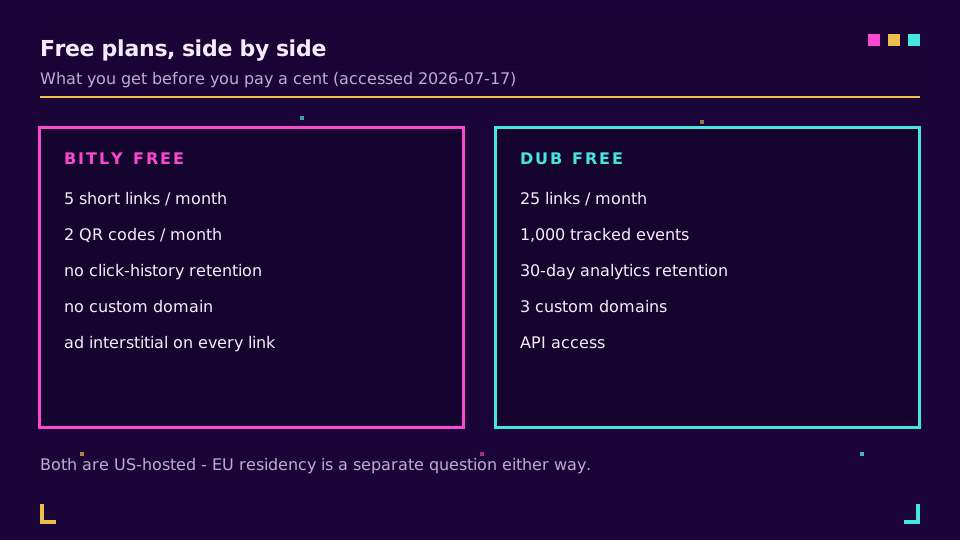
If your evaluation starts and ends on the free plan, Dub is the obvious pick. Bitly's free tier is designed to move you to a paid plan quickly.
Pricing, Tier by Tier
Now the part where Bitly looks cheaper until you read the fine print. All figures below are annual-billing monthly rates from Bitly's pricing page and Dub's pricing page (both accessed 2026-07-17).
| Feature | Bitly | Dub |
|---|---|---|
| Free plan | 5 links/mo, 2 QR, ad interstitial | 25 links/mo, 3 domains, API, real-time analytics |
| Entry paid tier | Core, 10 USD/mo (100 links, 30-day history, no custom domain) | Pro, 25 USD/mo (1,000 links, 50K events, custom domains) |
| Branded custom domain | Growth, 29 USD/mo | Included free (3 domains) |
| Conversion tracking | Not offered | Business, 90 USD/mo |
| Open-source / self-host | No | Yes (MIT) |
| QR codes | Mature, with landing pages | Basic |
| EU data residency by default | No (US) | No (US) |
Bitly's Core at 10 USD a month is the cheapest way onto a paid link tool here. But it caps you at 100 links, keeps only 30 days of click history, and still doesn't give you a branded domain. For that you need Growth at 29 USD. Dub's Pro at 25 USD starts higher, then hands you custom domains, 1,000 links, and 50,000 tracked events out of the gate.
So the honest read on price: Bitly is cheaper per month at the very bottom, and Dub is cheaper per feature the moment you need a custom domain or real analytics. Where Dub gets expensive is conversion tracking, which lives on its Business plan at 90 USD a month.
Features Where They Diverge
Both shorten links, make QR codes, and show click data. Past that, they were built for different people.
Dub leans toward developers and revenue teams. Conversion tracking, deep links, event webhooks, Stripe and Shopify integrations, A/B tested link previews, and partner or affiliate program tooling are all part of its pitch. It is also open-source under MIT with a self-host option, which is a real draw for teams that want to own their data plane. If links are part of how you measure revenue, Dub was designed for that.
Bitly leans toward mainstream marketing and offline campaigns. Its QR-code product is mature: bulk generation, tracking, and landing pages that matter when the link lives on a poster or a package, not just in a tweet. Add near-universal brand recognition and a long enterprise track record, and Bitly is the low-risk institutional choice. What it doesn't really do is conversion attribution or a modern developer experience.
If you want conversion attribution without Dub's 90 USD Business tier, server-side conversion tracking on a mid-market plan is worth comparing before you commit. And if QR is your main use case, weigh QR codes as a first-class feature rather than an afterthought.
Where Both Fall Short: EU Residency
The head-to-head usually skips this part. Dub and Bitly are both US-centric, and neither offers EU data residency as a standing default. Every redirect logs an IP address and a user-agent, which are personal data on identifiable people, so where that click data lives is a genuine GDPR question, not a formality. We broke down exactly this for the incumbent in is Bitly GDPR compliant: the short version is that "compliant" via transfer is not the same as "the data never left the EU."
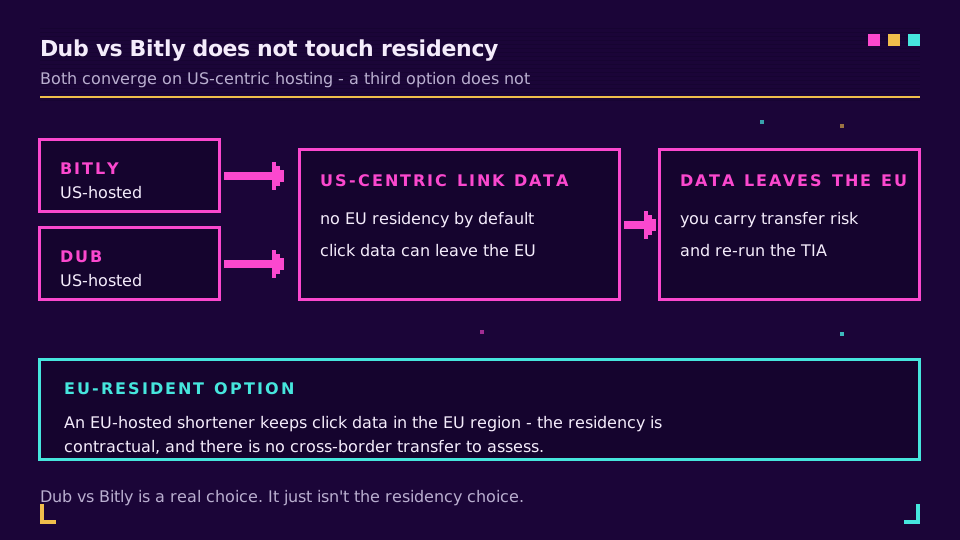
For a lot of teams that is fine. For an EU company, an agency answering a client's procurement review, or anyone in a regulated sector, it is the deciding factor. That is the gap Elido is built for: EU data residency and a signed DPA on every plan, conversion tracking below the top tier, and no ad interstitial on any tier. If residency is why Dub vs Bitly feels like a false choice, start on the free plan and keep the analytics and DPA from your first link.
Which One Should You Choose
Match the tool to your actual constraint.
Choose Bitly for brand trust, QR-first campaigns, and the cheapest entry price. Choose Dub for a better free tier, custom domains without an upsell, conversion tracking, deep links, and open-source self-hosting. Both are solid at what they were built for. If you want a full picture of each against Elido specifically, Elido vs Bitly and Elido vs Dub run those head-to-heads, and Dub alternatives covers the wider shortlist if Dub is the one you are leaving.
Read the Cornerstone
This sits in the comparisons cluster. The cornerstone is Bitly alternatives: the actual feature gap - start there for the full market map. If EU hosting is on your list, the best EU URL shorteners ranks the field by residency posture.
Related on the Blog
Frequently asked questions
Is Dub better than Bitly?
For developers, SaaS teams, and marketers who want conversion tracking, deep links, an open-source option, and a usable free tier, Dub is the stronger fit. For brand recognition, mature QR-code campaigns, and the cheapest paid entry point, Bitly still wins. Neither is EU-first, so if data residency is your constraint, that decision is separate from Dub vs Bitly.
Is Dub cheaper than Bitly?
Not at the entry point. Bitly's Core plan is 10 USD a month against Dub's Pro at 25 USD a month (both on annual billing, accessed 2026-07-17). But Dub includes custom domains and far higher link volume at that tier, while Bitly gates branded domains behind its 29 USD Growth plan. Cheaper per month is not the same as cheaper per feature.
Does Dub have a better free plan than Bitly?
Yes, clearly. Dub's free plan gives you 25 links a month, 3 custom domains, API access, and real-time analytics. Bitly's free plan is 5 links and 2 QR codes a month, shows an ad interstitial in front of every free link, and does not retain click history. For anyone evaluating on the free tier, Dub is the more usable starting point.
Is Dub or Bitly better for QR codes?
Bitly. QR codes with tracking, bulk generation, and landing pages are a mature, front-and-centre part of Bitly's product, which matters for print and offline campaigns. Dub generates QR codes too, but they are a lighter feature rather than a headline one.
Are Dub and Bitly GDPR compliant and EU-hosted?
Both can be used in a GDPR-compliant way, but both are US-centric and neither markets EU data residency as a default. If your requirement is that EU click data stays in the EU, that is a constraint neither tool solves out of the box, and you would need an EU-resident shortener instead.
Try Elido
Paste a URL, get a working short link
No signup. Link lives for 30 days. Sign up to keep it forever.
Free, no signup required · 2 per day