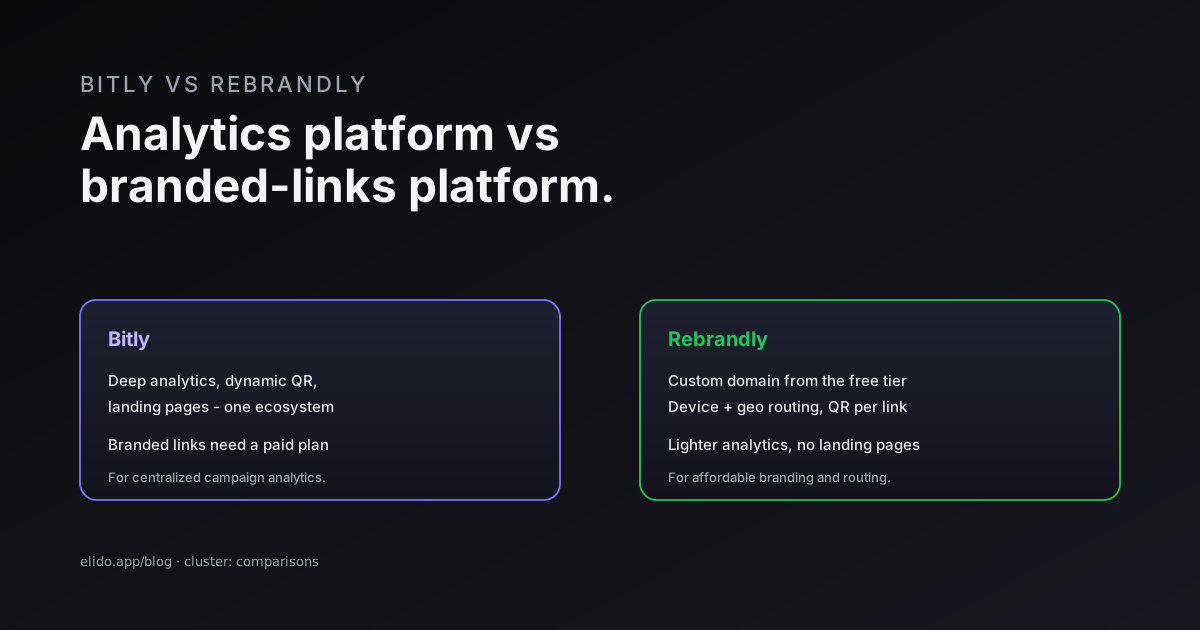
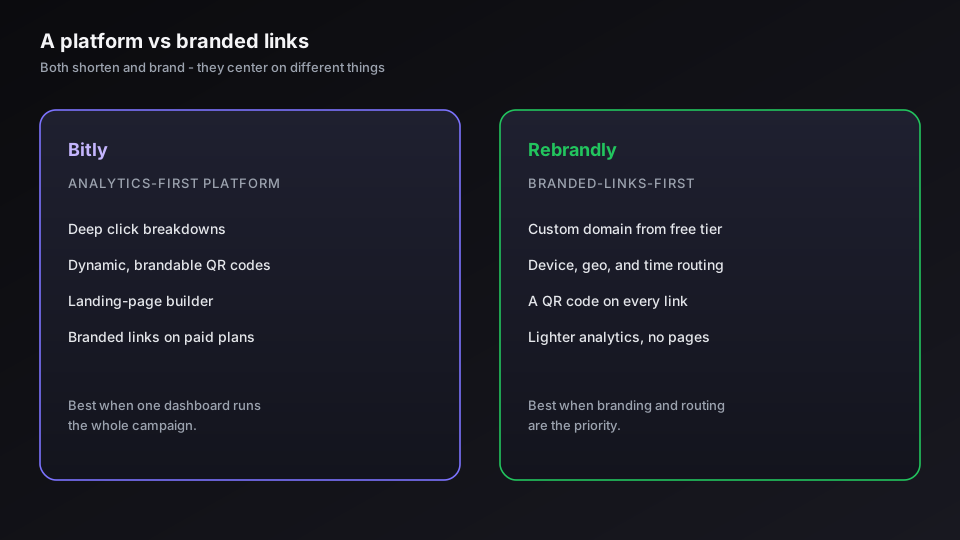
Bitly and Rebrandly both shorten and brand links, but they are built around different center points. Bitly is analytics-first: deep click data, dynamic QR codes, and landing pages bundled into one ecosystem. Rebrandly is branded-links-first: custom domains, device and geo routing, and link galleries, with branding available from the very bottom of its pricing. The single sharpest difference is exactly there - Rebrandly hands you a custom branded domain on its free tier, while Bitly puts branded links behind a paid plan.
So the choice tracks what you are optimizing for. If you want the deepest analytics and an all-in-one suite that also builds landing pages, Bitly leans your way. If you want an affordable branded domain and the ability to route one link by device or country, Rebrandly leans yours. And if you are in Europe, there is a third question - where your click data lives - that neither answers well.
This is a comparison-cluster post; the wider field is in Bitly alternatives - the feature gap, and the other head-to-head worth reading is Bitly vs TinyURL. Here we put Bitly and Rebrandly side by side.
Bitly vs Rebrandly at a Glance
The split fits in one table.
| Dimension | Bitly | Rebrandly |
|---|---|---|
| Custom domain on free tier | No, paid plan required | Yes, one domain included |
| Core strength | Analytics + landing pages + QR ecosystem | Branded domains + routing |
| Analytics depth | Deeper, rich breakdowns | Solid but lighter |
| QR codes | Dynamic, brandable, rationed by tier | One per link, on every plan |
| Device / geo routing | Limited | A core feature |
| Landing pages | Yes | No |
| Best fit | Teams wanting centralized analytics | Teams wanting cheap branding + routing |
The pattern: Bitly sells a platform, Rebrandly sells branded links. Both are good at their center and lighter toward the other's. The official sites - bitly.com and rebrandly.com - make the positioning obvious within a screen.
Branded Domains: The Big Divide
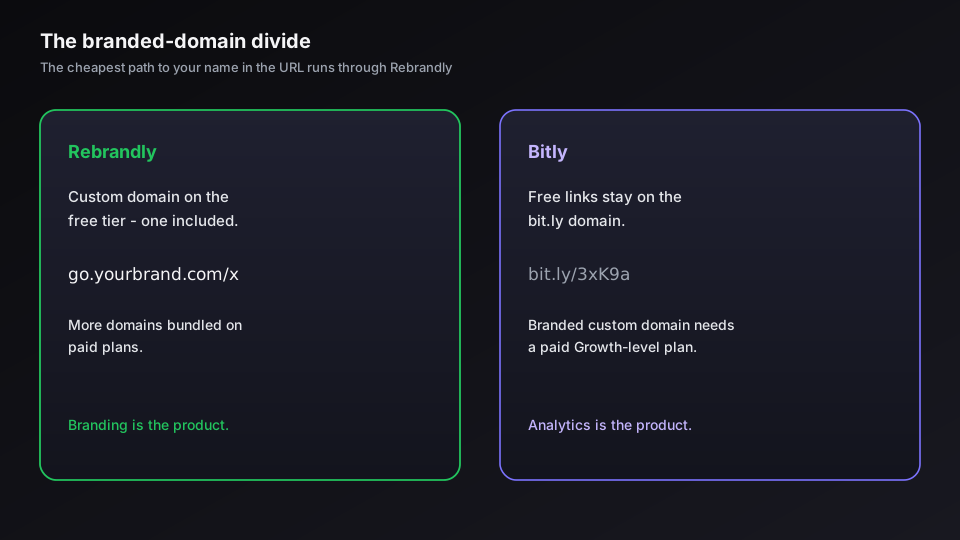
If you only compare one thing, compare this, because it decides the price of the feature most people came for. A branded link - your name in the URL instead of bit.ly or rebrand.ly - needs a custom domain, and the two vendors treat that very differently.
Rebrandly includes a custom domain from its free tier and bundles more domains as you move up its paid plans. Branding is the product, so it is available immediately. Bitly keeps links on its own domain at the free level and unlocks a branded custom domain only on a paid Growth-level plan. Neither approach is wrong - Bitly is betting you will pay for the analytics, Rebrandly that you will pay for the branding - but it means the cheapest path to a branded link runs through Rebrandly. If branded links are your reason for shortening at all, that gap matters, and vanity URLs explained covers what a good branded link should actually look like once you have the domain.
Analytics, QR, and Routing
Past branding, the two diverge along their strengths. Bitly is the analytics tool: even on lower paid tiers you get rich click breakdowns - geography, device, referrer - and it folds QR codes and landing pages into one place, so a campaign lives in a single dashboard. If measuring and centralizing is the job, that depth is the draw.
Rebrandly answers a different question. Its standout is routing: a single link can send mobile users to your app and desktop users to your site, or visitors from different countries to localized pages - the kind of conditional behavior covered in smart links. It also generates a QR code for every link as standard rather than rationing them. Its analytics are solid but lighter than Bitly's. So the rule of thumb writes itself: deep campaign analytics and an all-in-one suite point to Bitly; affordable branding plus per-link routing point to Rebrandly.
Pricing
Pricing is where you should read the live page, because both vendors revise tiers regularly. The structural difference, as of June 2026, is that Rebrandly tends to scale by link and QR-code volume with routing and team features unlocking higher up, while Bitly scales by plan tier, adding platform depth at each step. The practical consequence is the branding gap already noted: Rebrandly reaches a custom domain for less because it offers one free, whereas Bitly's branded links require a paid plan.
Treat any specific figure, here or anywhere, as a starting point to verify rather than gospel. Map your must-haves - branded domain, analytics depth, QR volume, seats - to each vendor's current pricing, and the cheaper option flips depending on which features you actually need.
If you want branded domains, routing, and deep analytics together, without the US-residency question hanging over your click data, start a free Elido workspace and compare on your own links.
Where Both Fall Short
The dimension neither comparison usually raises is the one both share: Bitly and Rebrandly are US companies, so your click data sits under US jurisdiction. For a solo user that is irrelevant. For a company in or selling to Europe, it is the first thing a procurement or legal review asks, and naming either vendor is not a satisfying answer to a data-residency question.
An EU-first shortener closes that gap - click data kept in the EU region, with branded domains, routing, and analytics matching what these two offer between them. That is the case Elido vs Bitly and Elido vs Rebrandly lay out in full, and the best EU URL shorteners compares the EU field. The summary: choose Bitly for analytics depth and an all-in-one suite, Rebrandly for affordable branded domains and routing, and an EU-first alternative when residency, or residency plus those capabilities, is on the line.
Related on the Blog
Frequently asked questions
What is the main difference between Bitly and Rebrandly?
Bitly is an analytics-first link platform - deep click data, dynamic QR codes, and landing pages in one ecosystem - while Rebrandly is branded-links-first, built around custom domains, device and geo routing, and link galleries. The clearest practical split is custom domains: Rebrandly includes a custom branded domain from its free tier, whereas Bitly gates branded links behind a paid plan. Pick Bitly for analytics depth and an all-in-one suite, Rebrandly for affordable branded domains and routing.
Does Bitly include a custom domain for free?
No. Bitly's free plan gives you links on its own domain, and a branded custom domain requires upgrading to a paid Growth-level plan. Rebrandly takes the opposite approach, bundling one custom domain even on its free tier. So if a branded link on your own domain is the priority and budget is tight, Rebrandly reaches it sooner. Always check each vendor's current plan page, since the tier names and limits change.
Is Rebrandly better than Bitly for branded links?
For branded links specifically, Rebrandly is the more focused tool: custom domains start on the free tier, paid plans bundle more domains, and it routes traffic by device, location, and time on a single link. Bitly does branded links well too, but they sit higher up its pricing, and its strengths lie more in analytics and its landing-page and QR ecosystem. If branding and routing are the job, Rebrandly fits; if centralized analytics across a whole suite is the job, Bitly fits.
Which is cheaper, Bitly or Rebrandly?
It depends on what you need, but Rebrandly generally reaches a branded custom domain at a lower price because it offers one from the free tier, while Bitly requires a paid plan for branding. Rebrandly tends to scale by link and QR volume, Bitly by plan tier. The honest answer is to map your must-have features - branded domain, analytics depth, QR volume, team seats - to each vendor's current pricing page, because the cheaper option flips depending on which features you actually require.
Do both Bitly and Rebrandly offer QR codes and analytics?
Yes, but with different emphasis. Both generate QR codes - Rebrandly creates one for every link, while Bitly treats dynamic, brandable QR codes as a first-class feature rationed by tier. On analytics, Bitly is the deeper of the two, with rich click breakdowns even on lower paid plans, whereas Rebrandly's analytics are solid but lighter. Match the emphasis to your priority: QR-everywhere and routing lean Rebrandly, deep campaign analytics lean Bitly.
Is there a better alternative to both Bitly and Rebrandly?
It depends on what they miss for you. Both are US-based, so for teams in or selling to Europe, neither cleanly answers the data-residency question a procurement or legal review will raise. An EU-first shortener keeps click data in the EU while offering branded domains, routing, and analytics - the capability of both without the jurisdiction question. For pure US-based branding or analytics, Bitly and Rebrandly are fine; for EU-bound use, look past both.
Try Elido
Paste a URL, get a working short link
No signup. Link lives for 30 days. Sign up to keep it forever.
Free, no signup required · 2 per day