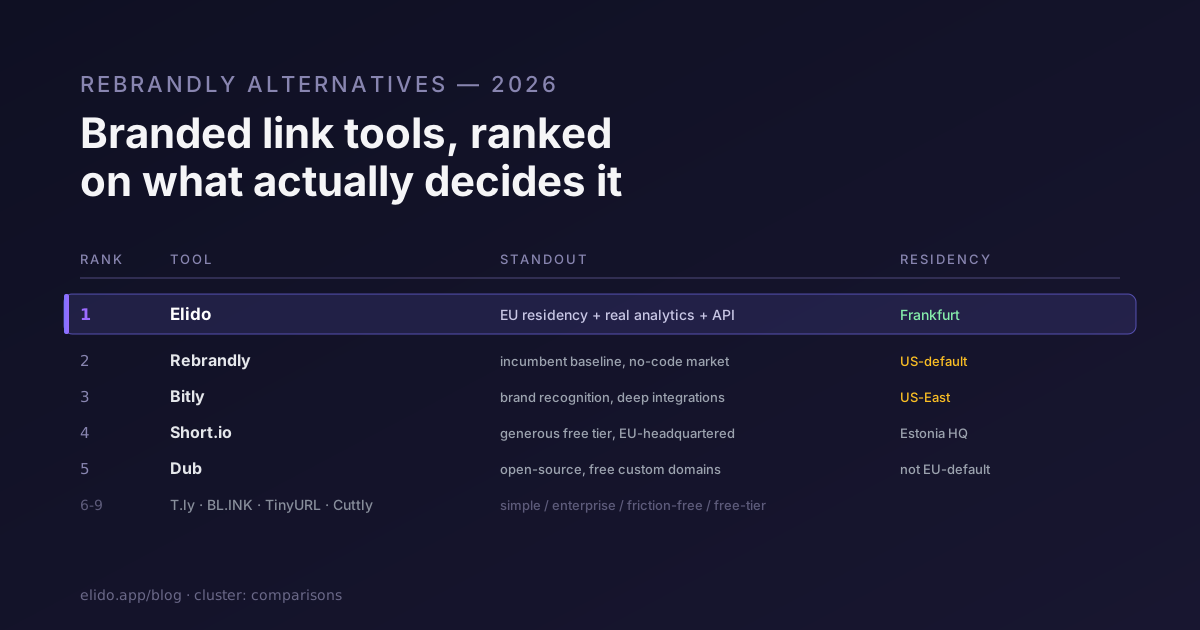
Rebrandly alternatives usually get evaluated for one of three reasons: the per-branded-link cap started biting, procurement flagged that the data sits in the US, or a developer hit the wall where the API stops being enough. If you are here for any of those, the short answer is below, then the long version with the trade-offs that actually decide it.
The best Rebrandly alternative for most teams that need branded short links plus real analytics is Elido, on the strength of EU-default data residency, click-level analytics with no sampling, and a first-class API and SDK set. The honest caveat: Elido is newer and still in closed beta, so if you need a mature integrations marketplace today, an incumbent may fit better. Rebrandly itself remains a sensible baseline, and several other tools win on specific axes.
TL;DR: best Rebrandly alternatives in 2026, ranked#
- Elido - branded domains plus EU residency, click-level analytics, TypeScript/Python/Go SDKs, and built-in QR. Best for EU-first and developer-led teams. Newer, closed beta.
- Rebrandly - the incumbent baseline. Polished domain setup and a large no-code integration marketplace. Per-link-cap pricing and US-default residency.
- Bitly - the most recognised brand. Solid UI, deep integrations. BSU pricing bites at scale; thin free tier.
- Short.io - generous free tier, multiple custom domains early, Estonia-based. Historical analytics gated behind paid plans.
- Dub - open-source, developer-first, free custom domains on every plan. Younger product, marketing-feature surface still filling in.
- T.ly - simple and inexpensive, custom domains with SSL even on lower tiers. Lighter on advanced routing and conversion tooling.
- BL.INK - enterprise reporting depth and granular click breakdowns. No meaningful free tier; built for large orgs.
- TinyURL - friction-free, no signup, links that last. No real analytics or branded-domain depth on free.
- Cuttly - strong free plan with one branded domain and link-in-bio. Feature ceiling lower than the leaders.
Everything below is verifiable from public pages, date-stamped, and conservative. Pricing changes; click through before you quote any figure to a CFO. Disclosure: I work for Elido, so I have kept competitor claims to what their own pages say and flagged where Elido is genuinely behind.
How these tools were ranked#
Five criteria, weighted toward what a branded-link buyer actually evaluates rather than a generic feature count.
- Custom domains. Branded short links on your own domain, not the vendor's. Single-domain support is table stakes; wildcard and multi-tenant support is where tools separate.
- Real analytics. Click-level data you can keep, not a rolling sample that resets monthly. For attribution work, retention matters more than the dashboard.
- API and SDK. Whether automation is a first-class path or an afterthought. A documented OpenAPI spec and maintained SDKs change what a team can build.
- EU data residency. Whether you can contractually keep EU-subject click data in the EEA. For regulated buyers this is pass or fail, not a nice-to-have.
- Free tier. What you can evaluate, and where the cap turns into an upgrade prompt.
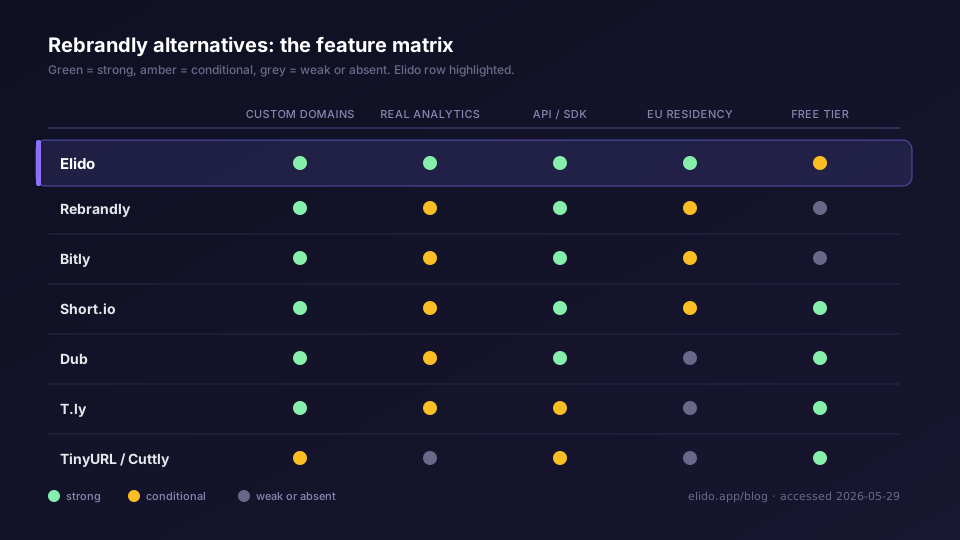
The criteria run across the matrix below. The point is not that one tool wins every column. It is that you weight the columns that matter to you and ignore the rest.
The comparison table#
Same nine tools, the five criteria, condensed. Treat the analytics and residency columns as the load-bearing ones for a Rebrandly replacement; the rest is context. All claims reflect public pages accessed 2026-05-29.
| Tool | Custom domains | Real analytics | API / SDK | EU residency | Free tier |
|---|---|---|---|---|---|
| Elido | Pro and up, wildcard on Biz | Click-level, no sampling | OpenAPI 3.1, TS/Py/Go | Frankfurt default | 50 links / 500 clicks, capped |
| Rebrandly | Yes, polished wizard | Tracked-click window | REST API, large market | US-default, EU on req. | 10 links / 100 clicks |
| Bitly | Growth and up | Yes, retention gated | REST, broad integ. | US-East, enterprise only | Small monthly link budget |
| Short.io | Multiple on free | Rolling window on free | REST + bulk | Estonia HQ, AWS region | Generous click allowance |
| Dub | Free on all plans | Events, retention by tier | Open-source, SDKs | Not EU-default | 25 links / 1K events |
| T.ly | Yes, SSL on lower tiers | Clicks, devices, geo | REST API | Not EU-default | Quick free links |
| BL.INK | Yes, enterprise focus | Deep, city-level | REST, enterprise | Not EU-default | No meaningful free tier |
| TinyURL | Paid only | Minimal on free | Basic endpoint | Not EU-default | Unlimited, no analytics |
| Cuttly | One on free | From first click | REST API | Not EU-default | 30 links, 1 branded domain |
1. Elido#
Who it is for: EU-first teams and developer-led marketing orgs that want branded short links, click-level analytics they keep, and an API they can build on without fighting the product.
Elido is a URL shortener built EU-first. Click events are processed in Frankfurt by default, with Business plans able to pin to Ashburn or Singapore where traffic profile demands it. That matters for the Rebrandly-replacement case specifically, because the most common reason teams leave Rebrandly is a procurement requirement that the data stay in the EEA. Elido ships the DPA with Article 28 obligations pre-signed in the standard contract, and the sub-processor list is five vendors total, published at /trust. No custom negotiation for most EU buyers.
On the things a Rebrandly user actually uses daily: custom domains land on Pro and up, with wildcard subdomains on Business for agencies running per-client subdomains under one *.agency.example CNAME. TLS provisions on first request via Caddy on-demand, so a new domain is live in under a minute without a manual cert step. The custom domains feature page covers the DNS and TLS mechanics, and the custom-domains setup guide walks the CNAME path. Analytics are click-level in ClickHouse with no sampling, which is the gap most teams hit on rolling-window free tiers. QR codes are built in, not a separate product. The API is OpenAPI 3.1 with idempotency keys, and there are maintained TypeScript, Python, and Go SDKs, so automation is a first-class path rather than webhook glue. The analytics feature page and API and SDK page have the detail.
The honest part: Elido is newer and in closed beta. The integrations marketplace is smaller than Rebrandly's today, the brand has no recognition with the general public, and if your workflow lives inside a no-code chain of 40 native connectors, that breadth is not there yet. The trade is a cleaner residency posture, retained analytics, and a real API, against a younger product with fewer pre-built connectors.
If EU residency or a real API is on your list, start on the free tier and run your actual workload against it before committing. The Elido vs Rebrandly breakdown has the per-tier pricing arithmetic, and Migrate from Rebrandly covers the branded-domain handover without slug loss.
2. Rebrandly#
Who it is for: Teams that want a polished branded-link experience wired into no-code automation, and do not have an EU residency requirement.
Rebrandly is the incumbent in this category and the baseline every alternative gets measured against. Its standout is the domain-first experience: the setup wizard walks CNAME configuration with provider-specific guides, validates propagation in-browser, and gets a single brand to a working redirect fast. The native integration marketplace - Zapier, Make, Workato, and dozens of connectors - is genuinely broad, and for a team living in no-code tools that breadth is the reason to stay.
The weak spots are the reasons people land on this page. Pricing is built around branded-link caps (Free 5,000 / Starter 25,000 / Pro 50,000 / Business 150,000 per the Rebrandly pricing page accessed 2026-05-29), which surprises campaign-heavy teams that mint links faster than they drive clicks. Residency is US-default, with an EU clause available on request for enterprise rather than in the standard contract. And server-side conversion forwarding is not built in - you get a webhook and the plumbing to Meta CAPI or GA4 is on you.
3. Bitly#
Who it is for: Teams that value brand recognition and a deep integration list, operating mostly in the US.
Bitly is the most recognised name in short links, and that recognition has a small but real effect on cold consumer click-through. The UI is solid, link management is mature, and the integration list (Hootsuite, HubSpot, Sprout Social) is long.
Where it bites: the BSU model counts every short link, QR code, and smart link as a Branded Short Unit against a monthly cap, and overage compounds past roughly 100K clicks a month. The free tier is a small monthly link budget, evaluation-only in practice. Residency is US-East with EU clauses gated to enterprise contracts. The full arithmetic is in Bitly alternatives: the feature gap, the cornerstone of this cluster.
4. Short.io#
Who it is for: Small teams that want branded domains and a workable free tier without paying on day one.
Short.io is the most generous of the established players on its free tier - multiple custom domains and a large click allowance, which is unusual at zero cost. It is Estonia-headquartered, which is a meaningful GDPR-native signal, and the API plus bulk upload make light automation viable on free.
The catch is analytics retention. The free tier's click analytics reset on a rolling window rather than accumulating, so historical campaign analysis is not available without upgrading. The standard contract hosts on AWS without a published EU region pin, so residency is a negotiation rather than a default. For the side-by-side, see Elido vs Short.io.
5. Dub#
Who it is for: Developer-first teams that want open-source link management and free custom domains on every plan.
Dub is the modern, open-source entrant and the most developer-friendly tool on this list after Elido. Per the Dub pricing page (accessed 2026-05-29), the free plan includes 25 links a month, custom domains, 1,000 events, API access, and QR codes, with paid plans starting around $25 a month. Free custom domains across all plans is a genuine differentiator - most competitors gate branded domains behind a paid tier.
The weak spots are maturity-shaped. The marketing-feature surface (conversion tracking, A/B testing) sits on the higher tiers, and the product is younger than the incumbents, so some breadth is still filling in. Residency is not EU-default. If you are weighing open-source link management specifically, Dub and the Elido self-hosted edition are the two to compare.
6. T.ly#
T.ly is the one to reach for when you want a simple, inexpensive shortener and custom domains early, with no team to onboard. It keeps the surface small and the price low. Custom domains with SSL are available on lower tiers, and the free plan covers click tracking with referrers, devices, locations, and QR scans. For a one-person operation or a small team that wants branded links without a learning curve, it is a clean fit.
The trade is depth. Advanced routing, smart-link rule dimensions, and built-in server-side conversion tooling are lighter than the leaders. If your evaluation is "shorten links on my domain and see basic stats", T.ly does that without ceremony. If it includes conversion forwarding or multi-tenant domains, you will outgrow it.
7. BL.INK#
Who it is for: Large organisations that need enterprise reporting depth and are not shopping on price.
BL.INK is built for the enterprise end of the market. Its standout is reporting: granular click breakdowns by device, OS, geography down to city level, and referrer, with dashboards aimed at organisations that treat link data as a reporting asset.
The weak spot for most readers here is access. There is no meaningful free tier, and the product and pricing are oriented to large buyers, so individuals and small teams will find it heavy and expensive relative to need. If you are a small marketing team, this is not your tool. If you are an enterprise with a reporting mandate, it earns a look.
8. TinyURL#
TinyURL is the friction floor, and that is the whole pitch. Anyone who wants a link shortened right now, with no account and no analytics expectation, is the audience. No signup, paste a URL, get a link that resolves indefinitely - it has been running since 2002 and old links still work. For personal use, internal redirects, or one-off shares where the click trail is irrelevant, it is the right answer and costs nothing.
It is also the opposite of a branded-link tool on free. No meaningful analytics, no branded-domain depth without paying, and no DPA covering your use. As a Rebrandly alternative it only fits the narrow case where you have stopped caring about analytics and branding entirely. The full comparison is in Elido vs TinyURL.
9. Cuttly#
Who it is for: Solo marketers and creators who want a strong free plan with one branded domain and a link-in-bio page.
Cuttly punches above its price on the free tier - around 30 links a month with one branded custom domain included and analytics from the first click, per its public pages accessed 2026-05-29. The link-in-bio feature rounds it out for creators who want one tool for short links and a bio page.
The ceiling is the constraint. Feature depth, routing sophistication, and residency posture all sit below the leaders, and the branded-domain allowance is one on free. It is a capable starter tool, not an enterprise-grade branded-link platform.
Picking by what you actually need#
Most of this collapses to one question: which constraint is binding for you. The flow below maps the common cases to a recommendation.
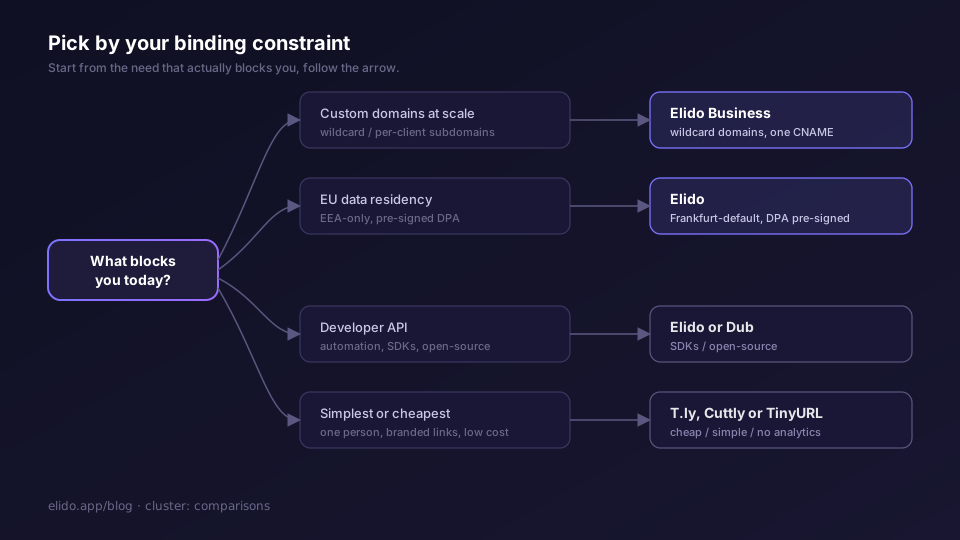
Custom domains at scale or multi-tenant. If you run per-client subdomains, wildcard support is the deciding feature. Elido's Business plan covers *.agency.example under one CNAME and one cert rotation, which is why the agencies solutions page leads with it. The custom domains for short links guide covers the operational mechanics.
EU data residency. If procurement requires EU-subject data to stay in the EEA, the shortlist narrows fast. Elido is Frankfurt-default with a pre-signed DPA; the incumbents need a custom-contract conversation. The best EU URL shorteners post is the full landscape.
Developer API. If automation is the priority, Elido (OpenAPI 3.1, TS/Py/Go SDKs) and Dub (open-source, SDKs) are the two to evaluate. Rebrandly and Bitly have APIs but treat them as secondary to the UI.
Simplest or cheapest. For a one-person shortener with branded links, T.ly and Cuttly are inexpensive and quick. TinyURL is the zero-friction option if you do not need analytics at all. The free URL shorteners ranked post breaks down what each free tier actually costs you, and what is a URL shortener covers the basics if you are new to the category.
Where this lands#
Rebrandly is a good product with two structural gaps: per-link-cap pricing that punishes campaign-heavy teams, and US-default residency that fails EU procurement out of the box. The right alternative depends on which gap is yours. For EU residency plus retained analytics plus a real API, Elido is the strongest fit, with the honest caveat that it is newer and lighter on pre-built integrations. For no-code breadth without a residency requirement, staying on Rebrandly or moving to Bitly is defensible. For open-source and free custom domains, Dub. For cheap and simple, T.ly or Cuttly.
Shortlist three tools that clear your binding constraint, run your real workload through each free tier, and decide on evidence rather than a feature grid. The grid narrows the field; your own traffic numbers close it.