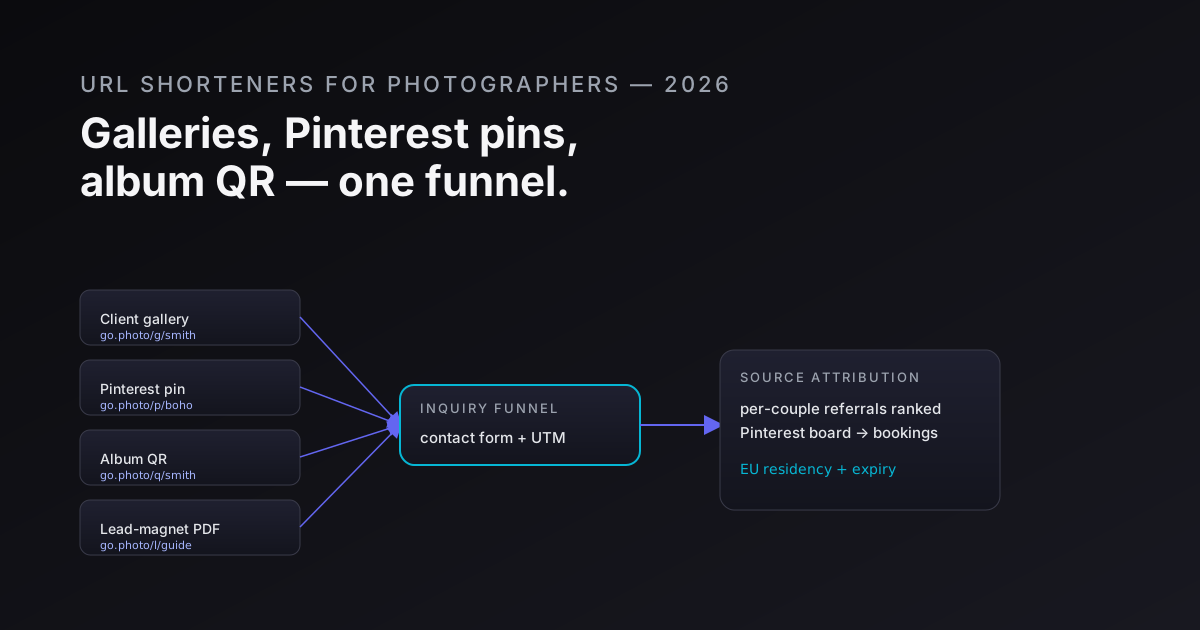
Photography businesses run on trust, referrals, and visual first impressions. The link layer is where most of that value leaks. A long, auto-generated Pixieset URL forwarded over WhatsApp. A free-tier Bitly link on the price-guide PDF that strips referrer data. A QR code on a wedding album pointing at the photographer's homepage instead of their portfolio. This post is the link architecture that closes those gaps - for independent photographers, small studios, and wedding photo agencies scaling from 20 to 200+ weddings a year.
For the QR-specific deep dive, dynamic vs static QR codes covers the static-vs-dynamic decision and error-correction considerations. This post is the broader photography-business picture.
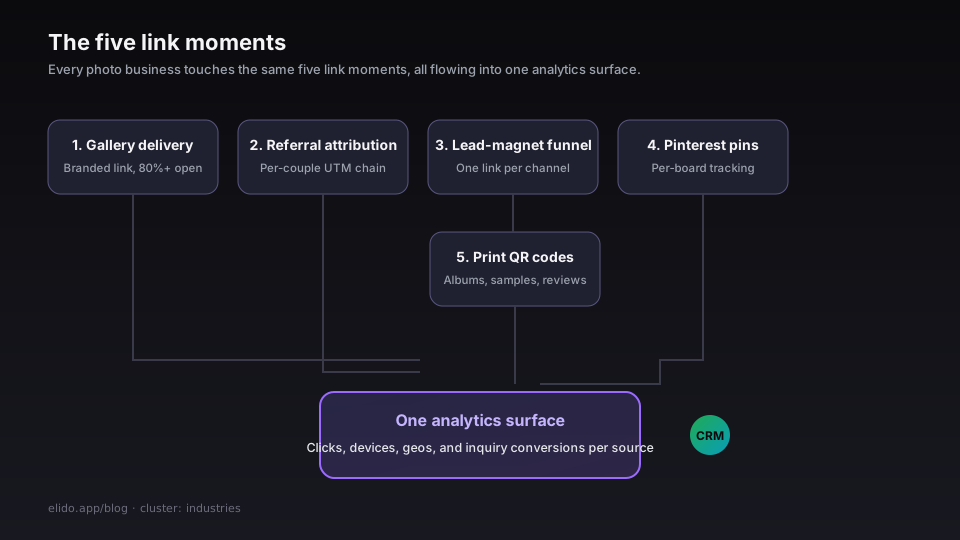
The five link moments in a photography business
Every photographer touches the same five moments with links. Each one has different requirements.
1. Client gallery delivery
The gallery delivery email is the most-read email you will ever send a client. Open rates consistently land north of 80% because the couple has been waiting weeks for it. The link inside that email matters more than any other link in your business.
Gallery vendors - Pixieset, ShootProof, SmugMug, Pic-Time, CloudSpot - auto-generate URLs like:
https://yourstudio.pixieset.com/smithwedding2024june14galleryproofs/
That URL is long, ugly, and vendor-locked. If you switch from Pixieset to ShootProof next year, every gallery link you ever sent breaks. And there is zero tracking: you have no idea whether the client opened the link on mobile, whether they shared it with family, or how many people clicked through.
The fix is a branded short link issued from your own domain:
yourname.photo/smith-wedding
Or via a short domain for the studio:
gallery.acepictures.co/smith-wedding
This link is memorable enough for the client to type from memory (they will forward it to their mothers over the phone). It is trackable - you see every click, every country, every device. And it is vendor-neutral: if you migrate galleries next year, you update the destination URL in your shortener and the old link still works. Clients never see a 404.
For how to set up UTM tracking behind the destination URL so the click data flows into your analytics platform, track UTM campaigns end-to-end is the complete walkthrough.
2. Per-couple referral attribution
Wedding photography runs on referrals. An industry average is 40-60% of new bookings come from past-client referrals. Most photographers know this; almost none measure which couples are their best referral sources.
The mechanism is simple. When you deliver the gallery, the short link carries a UTM parameter:
yourname.photo/smith-wedding → https://gallery.pixieset.com/smithwedding/?utm_source=gallery&utm_campaign=smith-wedding&utm_medium=direct
When the Smith bride forwards the gallery link to three friends and one of those friends clicks through, visits your portfolio, and submits a booking inquiry, the referral chain is:
- Smith gallery delivery email → click by bride → gallery visit
- Bride shares
yourname.photo/smith-weddingwith friend → click by friend → portfolio visit → inquiry form
Step two shows up in your short-link analytics as a second click on the Smith gallery link from a new device and location, days or weeks after delivery. Pair that with the inquiry form's hidden UTM field and you now know the Smiths are responsible for that new booking - before you have even spoken to the friend.
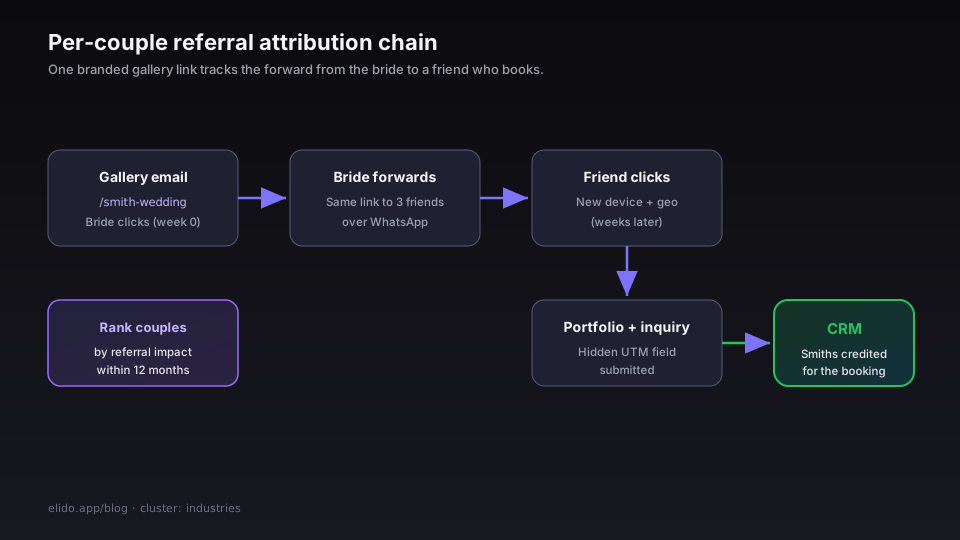
At 50 weddings a year, you can rank your couples by referral impact within 12 months. That ranking tells you where to send thank-you gifts, which clients to feature in case studies, and which segments of your portfolio to invest in.
3. Lead-magnet and price-guide funnels
Most photographers run at least one lead-magnet funnel: a PDF price guide, a "what to wear" styling guide, or a free mini-session booking calendar. These are distributed across multiple channels - Pinterest, Instagram, Google Ads, a blog post, a wedding directory listing.
The mistake is using one link for all channels. When you check your inquiry form next month, you have no idea whether the serious inquiries came from Pinterest or Google Ads or the wedding directory. You optimise blind.
The fix: one short link per channel, all pointing at the same PDF landing page with channel-specific UTMs.
yourname.photo/guide-pinterest   → /price-guide?utm_source=pinterest&utm_medium=social
yourname.photo/guide-instagram   → /price-guide?utm_source=instagram&utm_medium=social
yourname.photo/guide-google      → /price-guide?utm_source=google&utm_medium=cpc
yourname.photo/guide-directory   → /price-guide?utm_source=theknot&utm_medium=directory
Now your analytics surface answers the question: which channel is delivering qualified inquiries, not just PDF downloads? If Google Ads delivers 3× the PDF downloads but 0.2× the inquiry conversion rate of Pinterest, the optimisation call is obvious.
Short link analytics - what to measure covers which metrics actually matter once the per-channel links are live.
4. Pinterest pin tracking
Pinterest is the highest-intent discovery channel for wedding photographers and portrait studios. A searcher on Pinterest for "outdoor fall engagement session" is actively planning a shoot, not passively scrolling. The commercial intent is higher than any other social platform in the photography vertical.
Most photographers pin their work and link back to their website. Almost none track per-pin attribution. The result: they know Pinterest "sends traffic" but cannot say which boards drive inquiries vs which boards drive impressions only.
The fix: a unique short link per pin, or at minimum per board.
yourname.photo/pin-golden-hour-portraits
yourname.photo/pin-fall-engagement
yourname.photo/pin-outdoor-ceremony
Each link points at the relevant portfolio category page (not the homepage - see anti-patterns below) with a UTM:
?utm_source=pinterest&utm_medium=social&utm_content=golden-hour-portraits
After 90 days of pinning with tracked links, you have a ranked list of which boards drive inquiry-quality traffic. That list tells you where to focus your pinning time, which board covers to upgrade, and which pin formats to replicate.
For the broader social attribution picture, URL shorteners for influencers covers the same per-channel attribution model applied across multiple platforms.
5. QR codes on physical print products
Wedding photographers routinely deliver physical products: albums, print boxes, USB sticks, thank-you cards, and sample books shown to prospective clients. Each of these is an opportunity for a QR code that leads somewhere useful - and almost all of them are wasted.
Wedding albums delivered to the couple. The QR on the back inside cover should go to the photographer's active portfolio (not the couple's own gallery, which will be archived). When the couple's friends flip through the album at a dinner party, the QR captures their interest at peak intent - they are literally looking at the photographer's work in a tactile, immersive format.
Sample albums shown during consultations. The QR should link to the specific style or collection the sample represents, with a UTM tagged to that sample. If three consultations in a month all scan the same QR and two convert, the sample is doing its job. If zero convert, the sample needs to be replaced.
Review-funnel QR codes. A small card slipped into the delivery box - "loved your photos? leave us a review" - with a QR that routes through a short link to your Google Business profile or WeddingWire page. The per-couple QR tells you which weddings generate review velocity. After 20 weddings you have a dataset: certain seasons, certain venues, certain package tiers correlate with higher review rates.
Per-couple QR codes that are truly unique are easy to generate in bulk. Elido's POST /v1/links/bulk endpoint accepts a CSV of slugs and destinations and returns a batch of QR-ready short links in a single call. A photographer with 50 albums to ship processes the QR batch in under a minute.
For everything you need to know about QR production quality and the durability trade-offs, dynamic vs static QR codes is the definitive resource.
The watermark back-link angle
This one is niche, but real enough to mention for photographers with a large organic web presence.
When a photographer's image is used without credit - embedded in a wedding blog, pinned without attribution, used in a vendor's Instagram post - the image itself can carry a recoverable lead. If the photographer's contact-page short link is embedded in the image EXIF metadata (Copyright and Artist fields, plus URL in the IPTC block), a journalist or planner who strips the watermark and runs a Google Lens reverse-image search will land on results that surface the metadata. Some image-hosting platforms expose that metadata; some don't. But at minimum, including a short URL in the metadata is free and recoverable - and the short link's click data tells you when the metadata is being actively read.
The same short URL can appear as a visible watermark on sample images shared for editorial use. When those samples are downloaded and the watermark is not cropped, the URL is a passive lead capture that requires zero follow-up.
The four anti-patterns that destroy photographer attribution
1. Sharing the gallery vendor's auto-generated URL. The vendor URL is long, untrackable, and vendor-locked. Every time you share it, you give up attribution data and create a future 404 risk when you migrate gallery platforms. The vendor URL should be the destination; the short link is what you share.
2. Using a free shortener that strips referrer information. Several popular free shorteners anonymise or remove the Referer header on redirect - a privacy feature that doubles as an analytics killer. The per-couple referral attribution chain described above depends on Referer data flowing to your analytics. Use a shortener that preserves referrer information, or use UTM parameters on all links to make the attribution explicit rather than relying on browser-side Referer headers.
3. Per-client gallery links without expiry. Galleries accumulate. A photographer doing 50 weddings a year has 500 open gallery links after a decade. Storage costs compound; GDPR erasure obligations apply to gallery images (identifiable individuals in the photos). The clean operational model: set a 6-month default expiry on gallery links, email the client 30 days before expiry with a "download your full resolution files before the gallery closes" nudge, then let the gallery vendor archive and the short link expire. Link rotting prevention strategy covers the expiry and redirect-chain management patterns that keep your link inventory clean at scale.
4. Linking Pinterest pins to the homepage instead of the relevant portfolio category. A searcher landing on a homepage from a "fall engagement session" pin has to navigate to the right portfolio section themselves - a friction point with a ~70% drop-off rate. The pin's link should go to the relevant portfolio category page: fall sessions, outdoor portraits, specific venue, or the style that matches the image. Per-board short links with category-specific destinations convert at materially higher rates than homepage links, and the per-board short link analytics quantify the lift.
A reference link architecture for a 50-wedding-year studio
This is the setup I recommend as a starting point. It scales up to 200+ weddings with the same structure.
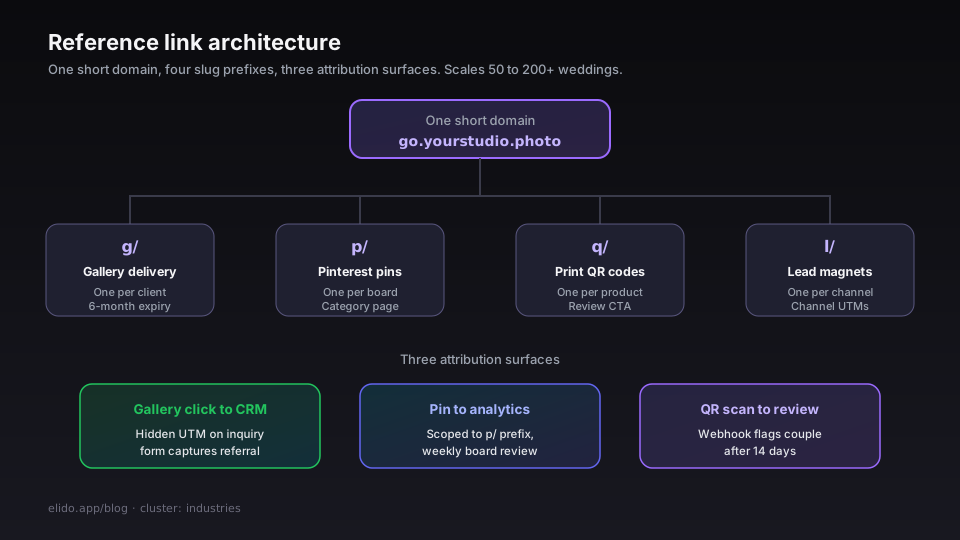
One short domain for the studio. go.yourstudio.photo, or links.yourstudio.com if the studio does not own a .photo TLD. Issue via DNS + custom-domain feature in your URL shortener. On-demand TLS means the domain is live within 30 seconds of the CNAME record propagating.
Four slug prefixes:
g/- gallery delivery links.go.yourstudio.photo/g/smith-wedding-2026. One per client. UTM baked into destination. Expires 6 months post-delivery.p/- Pinterest and social pins.go.yourstudio.photo/p/fall-engagement. One per board or per active pin campaign. Points at the relevant portfolio category.q/- physical QR codes.go.yourstudio.photo/q/smith-album. One per physical product. Points at the active portfolio with review CTA.l/- lead magnets.go.yourstudio.photo/l/guide-pinterest,l/guide-instagram. One per channel per lead magnet.
Three attribution surfaces:
- Gallery click → CRM via the inquiry form's hidden UTM field. When a gallery-referred friend submits an inquiry, the referral source is captured without any manual follow-up.
- Pinterest pin → analytics scoped to the
p/prefix. Weekly review of which boards are sending inquiry-quality traffic. - QR scan → review funnel via webhook from the short link to your CRM. When a review-funnel QR is scanned, the CRM flags the couple for a follow-up message if they have not left a review within 14 days.
The setup takes roughly 2 hours on a quiet afternoon - mostly the DNS record and the initial slug batch for existing active galleries and Pinterest boards. After that, new gallery links take 30 seconds to issue per wedding.
Where Elido sits
The architecture above works on any URL shortener that supports custom domains, dynamic QR, bulk link generation, and UTM transparency. Elido's specific fit for photographers:
- Bulk gallery link generation -
POST /v1/links/bulkwith a CSV export from your CRM or gallery vendor. 50 gallery links issued in under 5 seconds, with per-link QR codes ready for print. - Link expiry with redirect fallback - set an expiry date on gallery links and configure a fallback redirect to an "archive closed" page. Clients who click an expired link get a helpful message instead of a 404.
- Per-link UTM builder - the dashboard UTM builder attaches source/medium/campaign/content parameters to the destination URL at creation time, so the UTM is always accurate and you never fat-finger a parameter in a spreadsheet.
- EU data residency - click data for gallery links lives in our EU-region analytics store by default. Relevant for photographers in the EU or shooting EU-based clients who ask about GDPR compliance for the gallery analytics data.
- Webhook-on-click - fire a CRM webhook when a review-funnel QR is scanned. The dispatcher signs deliveries with HMAC-SHA256.
For a setup walkthrough specific to your gallery platform, the solutions page for marketers has worked examples for Pixieset, ShootProof, and SmugMug.
Related on the blog
- Dynamic vs static QR codes - the durability and changeability trade-off for print products
- Track UTM campaigns end-to-end - the UTM attribution cornerstone
- Short link analytics - what to measure - which metrics matter once the links are live
- Link rotting prevention strategy - expiry management for large link inventories
- Build a link-in-bio in 5 minutes - the single portfolio entry-point for social profiles
- URL shorteners for influencers - the per-channel attribution model across social platforms
- Bio pages for creators - how to centralise your portfolio, booking form, and socials on one page
Try Elido
Paste a URL, get a working short link
No signup. Link lives for 30 days. Sign up to keep it forever.
Free, no signup required · 2 per day