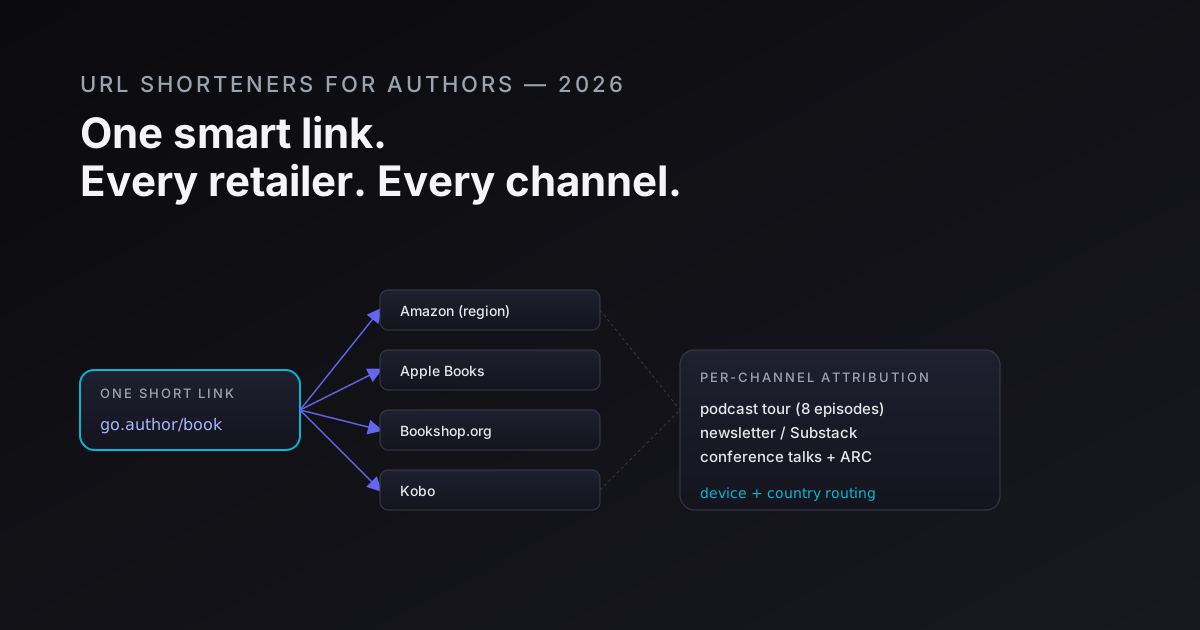
Book launches run on links. Pre-order links, podcast episode descriptions, ARC emails, book-back-matter CTAs, signed-bookmark QR codes. When the link layer is a mess - a Bitly account for Amazon, a different raw URL for Barnes & Noble, a third link you made up the morning of the podcast recording - the attribution is broken before the launch week opens. This post is the link architecture that actually works for a debut indie author or a traditional house running a mid-list launch.
For the broader analytics foundation, smart links explained covers the building blocks this post assumes. If you already know what a smart link is, read on.
The six stages of a book launch link
Every launch has the same six stages. Each stage has different requirements for the underlying link.
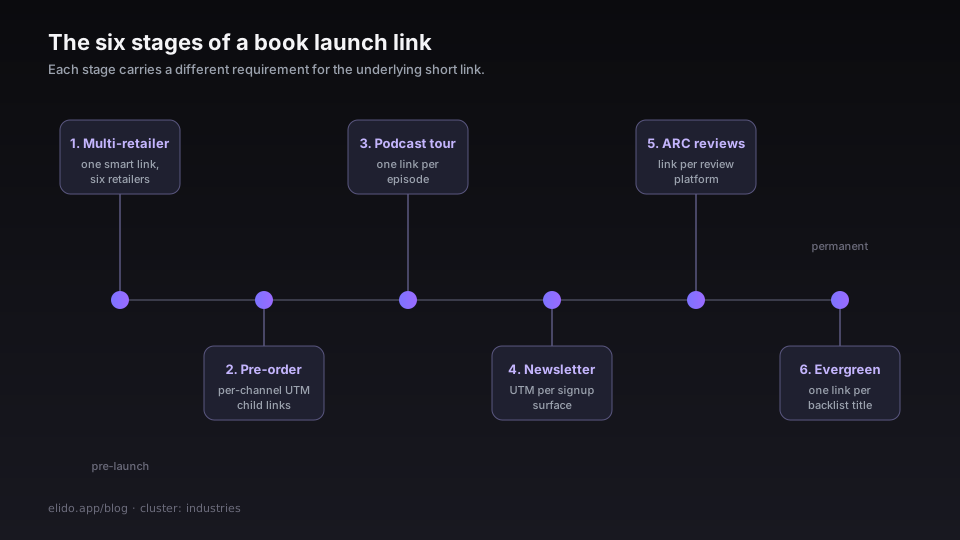
1. The multi-retailer smart link
Readers buy from different retailers. Some are lifelong Amazon customers. Some are Bookshop.org loyalists who route every purchase through their local indie bookstore. Some are Kobo subscribers in Germany who have never opened the Amazon app. Sending everyone to a single Amazon URL is leaving a measurable slice of sales on the table - and it's visibly bad UX for readers who don't shop there.
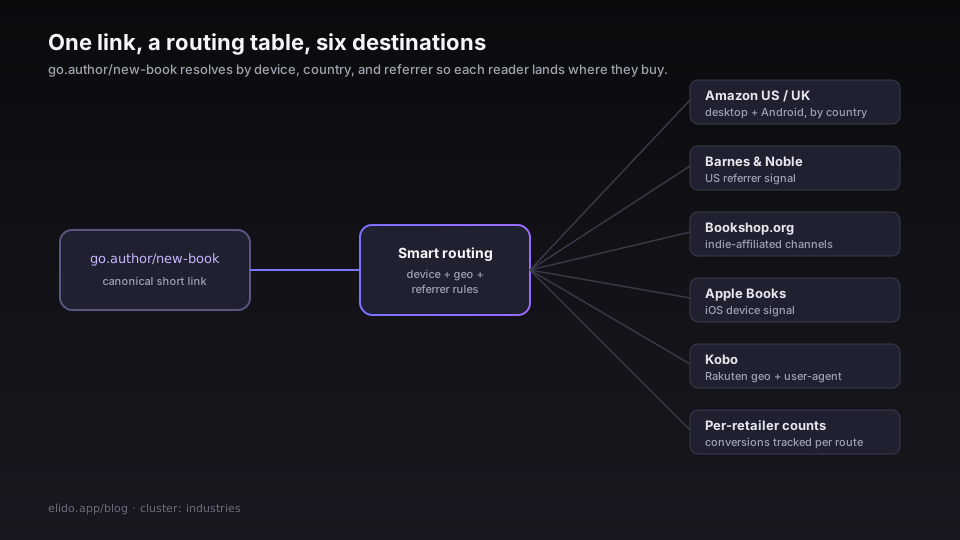
The solution: one canonical short link (go.author/new-book) backed by a smart routing table. The link resolves to:
- Amazon US - for US Android and desktop readers
- Amazon UK - for UK readers
- Barnes & Noble - for US readers who bounce off the Amazon page within two seconds (or when you know the referring surface skews B&N)
- Bookshop.org - surfaced when you're promoting on channels where Bookshop.org support is a cultural signal (Literary Twitter, BookTok accounts that openly affiliate with indie stores)
- Apple Books - for iOS readers (device signal)
- Kobo - for Rakuten-ecosystem readers (geo + user-agent)
The reader taps one link and lands where they buy. You track which retailer got how many conversions. When the paperback drops and the retailer rankings shift, you update the routing table - the link in every podcast description, every newsletter, every printed bookmark stays the same.
For the mechanics of building this kind of routing table, smart links explained is the deep dive.
2. Pre-order campaign attribution
A launch campaign touches a dozen channels: the author's email list, Instagram posts, Twitter/X threads, TikTok BookTok videos, Facebook groups, podcast pre-roll mentions, newsletter ad placements, BookBub featured deals. Every one of those is a separate source driving clicks to the pre-order link.
What matters: per-channel UTM tags so you know - two weeks after launch day - which channels drove actual pre-orders versus which ones drove vanity clicks. ?utm_source=newsletter&utm_medium=email&utm_campaign=launch-may23 vs ?utm_source=instagram&utm_medium=social&utm_campaign=launch-may23.
The workflow: create one canonical destination URL (the smart link above). For each channel, create a child link with the relevant UTM. The short link is still clean and human-readable (go.author/new-book-ig for Instagram, go.author/new-book-nl for the newsletter). The analytics dashboard tells you that the newsletter drove 340 pre-order clicks and Instagram drove 82. Now you know where to double the effort for the next launch.
For the full UTM tagging workflow, track UTM campaigns end-to-end covers every step from link creation to conversion attribution.
3. Podcast tour tracking
A podcast tour is not one campaign. It is eight separate campaigns. The author goes on eight shows during launch week - maybe a crime-fiction podcast, a general storytelling show, an author-business podcast, a local radio show's companion podcast, three mid-size genre shows, and one big get with 80K listeners per episode. The conventional wisdom is "the big show moved the needle." The conventional wisdom is frequently wrong.
What matters: one unique short link per podcast episode. go.author/new-book-dark-stories for the Dark Stories show, go.author/new-book-author-chat for the author-chat podcast. Each link resolves to the same pre-order smart link but carries a different UTM. The episode drops; you watch the click graph for the next 48 hours.
The data you get back is often counterintuitive. The 80K-listener show drives 200 clicks and 40 pre-orders. The 8K-listener show with a highly engaged genre audience drives 190 clicks and 120 pre-orders because the audience has high purchase intent for exactly this book. Next launch, you spend your pitch energy on that second podcast network, not the first.
Anti-pattern: treating all podcast mentions as one UTM utm_source=podcast. You now know podcasts work, collectively. You don't know which podcast to pitch for the next launch. You've thrown away the most actionable signal the tour generated.
For a deeper look at the podcast-specific attribution problem, the URL shorteners for podcasters post covers the show-host side of the same dynamic.
4. Newsletter audience growth
The book back-matter CTA is one of the highest-LTV surfaces an author has. A reader who finished your book and is now staring at the last page before the acknowledgements is maximally primed. "Join my newsletter for the next book's ARC and early access" - with a short link and a QR code - converts at a rate that paid advertising can rarely touch.
What matters: every surface where you ask for the newsletter signup gets its own UTM. The book back-matter is one source. A signed bookmark at an in-person event is another. The author bio on a guest post is a third. A conference talk slide is a fourth.
When you look at the subscriber cohort one year later, back-matter subscribers have a significantly higher open rate, click rate, and conversion to the next book than subscribers who came from Instagram ads. Knowing which source each subscriber came from means you can:
- Report accurately on which marketing surfaces have the best LTV (useful for publishers who want to justify author marketing budgets)
- Tailor the welcome sequence to the subscriber source ("you came from the book - here's what's next in this series")
- Stop spending money on low-LTV channels earlier
Practical note: the QR code in the print book back-matter is a special case. It gets printed once and is permanent for the life of that edition. Use a dynamic short link - not a static QR with the destination burned in - so you can update the destination if your newsletter platform changes. The dynamic vs static QR codes post covers exactly this trade-off.
For setting up the subscriber attribution flow in a few minutes, build a link-in-bio in 5 minutes is the fastest path to a single author hub that collects all those UTM-tagged entry points in one place.
5. ARC reader → review conversion
Advance Reader Copy programmes are high-effort, high-leverage. You send 80 readers a free digital ARC six weeks before launch. In theory, they post reviews on launch day. In practice, review follow-through varies enormously across reader and platform.
What matters: a short link from the ARC delivery email to the review platform. Not one link for all 80 readers - at minimum, one link per platform (Goodreads, Amazon, NetGalley, StoryGraph) so you can see which platform review requests actually convert. If your ARC list is organised into segments (bookstagrammers, Bookstagram, audiobook reviewers, librarians), a per-segment link tells you which reader cohort has the highest follow-through.
The mechanics: create go.author/review-goodreads, go.author/review-amazon, go.author/review-netgalley. Drop these into the ARC delivery email with copy like "Once you've read it, here's where to leave a review - pick the platform you're on." Track which link drives actual clicks in the 72 hours after delivery. Clicks don't equal reviews, but no clicks equals no reviews - so the non-click is an early signal that the segment isn't going to convert and you have time to follow up.
For understanding which metrics to watch at each stage, short link analytics: what to measure is the reference.
6. Evergreen book-page links
Each book in the author's backlist deserves a canonical short link: go.author/book-title. It resolves to the book's detail page on the author website. When the title goes on sale, the short link's destination updates to the sale page. When the paperback drops, it updates to the paperback page. When the audiobook releases, it updates to the audiobook landing page.
The short link stays permanent. The book's entry in old podcast episode descriptions, in interview show notes from two years ago, in the author's Wikipedia page, in the Goodreads author profile - all of them keep working without any link rot.
Why this matters for backlist: a traditionally published author with eight books in print does not want eight sets of stale Amazon URLs scattered across the internet. One canonical link per title, managed from one dashboard, means a single back-catalogue audit once a year instead of a scavenger hunt across eight years of podcast appearances and author-site updates.
The four anti-patterns that cost you launch data
1. Sharing only the Amazon URL. Amazon has the biggest US audience. It is still not the only audience. Bookshop.org generated over $30M in author royalties in recent years - that audience is real and it is politically motivated to avoid Amazon. Handing everyone an Amazon link loses the Bookshop.org buyer, the Apple Books subscriber, and the Kobo user in Germany. The multi-retailer smart link has exactly zero extra work for the reader (they click once and land where they buy) and meaningfully broader reach.
2. Per-book individual Bitly accounts. Some authors end up with a Bitly free account per book, or a per-book folder inside one account with no naming convention. Backlist management becomes unmanageable by book four. The correct setup: one account, one custom domain, a consistent slug naming scheme (go.author/title-year or similar). The backlist is searchable, the analytics are aggregated, and the annual audit is a filter away.
3. A static QR code in the print author bio. If the QR code in your printed book author bio has the destination URL burned directly into the QR (not routed through a short link), that destination is permanent for the life of the print run. When you move platforms, change the newsletter service, or rename the page, every copy of that print book in circulation becomes a broken link. Dynamic QR codes through a short link service cost the same to print and take five minutes more to set up - and they give you a destination you can update without a reprint.
4. Treating "podcast tour" as one campaign. This is the attribution error that most visibly costs authors usable data. Eight podcast appearances, one utm_source=podcast tag. You know podcasts "work." You don't know which podcast drove 120 pre-orders and which drove 4. The signal you need for the next launch - which shows to pitch, which audiences have high purchase intent for your genre - is right there in the click data, but only if you gave each show its own link.
A reference link architecture for a book launch
This is the link setup I walk authors through most often. It takes about two hours to build before the pre-order window opens.
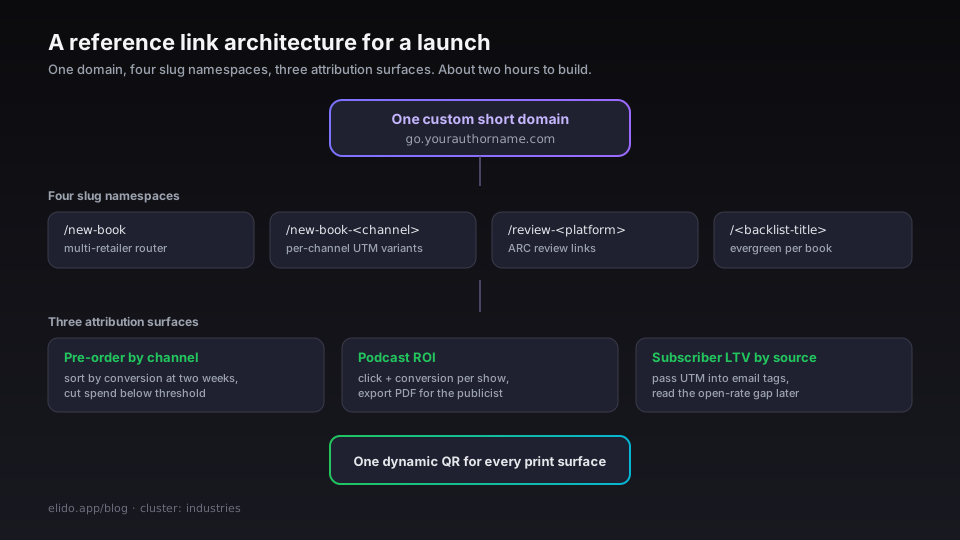
One custom short domain. go.yourauthorname.com or links.yourauthorname.com. Point a CNAME at your URL shortener's edge, cert issues in under a minute. The branding matters: readers and podcast hosts see your domain, not bit.ly.
Four slug namespaces:
go.author/new-book- the canonical pre-order smart link (multi-retailer router)go.author/new-book-<channel>- per-channel UTM-tagged variants (newsletter, instagram, twitter, podcast-showname)go.author/review-<platform>- ARC review destination links per platformgo.author/<backlist-title>- permanent evergreen links per book
Three attribution surfaces:
- Pre-order by channel - the UTM-tagged variants aggregate on a single dashboard. Two weeks in, sort by conversion and cut spend on the channels below the threshold.
- Podcast ROI - per-show click + conversion rate tells you which shows to pursue next launch. Export the report as a PDF for your publicist so they know which podcast network is worth the pitch.
- Subscriber LTV by source - pass UTM data from the newsletter signup link into your email platform's subscriber tags. Segment by source in six months and read the open-rate difference.
One QR code for print. Dynamic QR on a short link for every printed surface (bookmarks, author copies, ARCs, conference materials). Update the destination as the book moves through launch phases without reprinting.
Where Elido sits
URL shorteners for authors need a specific combination of features that generic shorteners approximate but don't nail: multi-retailer routing logic, a custom domain that takes minutes to set up, dynamic QR for print, bulk UTM-tagging for tour campaigns, and EU data residency for the GDPR coverage that matters when your Substack list is 40% European.
A few things we built with exactly this use case in mind:
- Smart-link routing table - define retailer-specific rules by device type, country, and referrer. One short link, six possible destinations, zero redirects that land a German reader on an Amazon.com page priced in USD.
- Custom domain in under 60 seconds - CNAME + automatic TLS. Your
go.authorname.comdomain is live before the podcast goes to record. - Dynamic QR export - every short link on Elido has a QR code endpoint (
/qr) that returns a print-ready SVG at whatever size you need. The QR destination updates when you update the link - no reprint required. - Per-campaign analytics export - filter by UTM campaign, export as CSV, hand to the publicist or the agent. No custom SQL. No "ask the analytics team."
- EU data residency - click events live in an EU-region analytics store by default. Your reader data stays in Europe without any additional paperwork.
For authors managing a backlist across multiple titles, short link analytics: what to measure covers the dashboard setup that surfaces the metrics above without noise.
Related on the blog
- Smart links explained - the multi-retailer routing cornerstone
- Track UTM campaigns end-to-end - full UTM attribution from link to conversion
- Build a link-in-bio in 5 minutes - author hub for all UTM-tagged entry points
- Dynamic vs static QR codes - the print back-matter QR decision
- URL shorteners for podcasters - the show-host side of podcast attribution
- URL shorteners for musicians - sibling post for release-day smart links and merch attribution
- Short link analytics: what to measure - which metrics signal launch health vs. vanity
Try Elido
Paste a URL, get a working short link
No signup. Link lives for 30 days. Sign up to keep it forever.
Free, no signup required · 2 per day