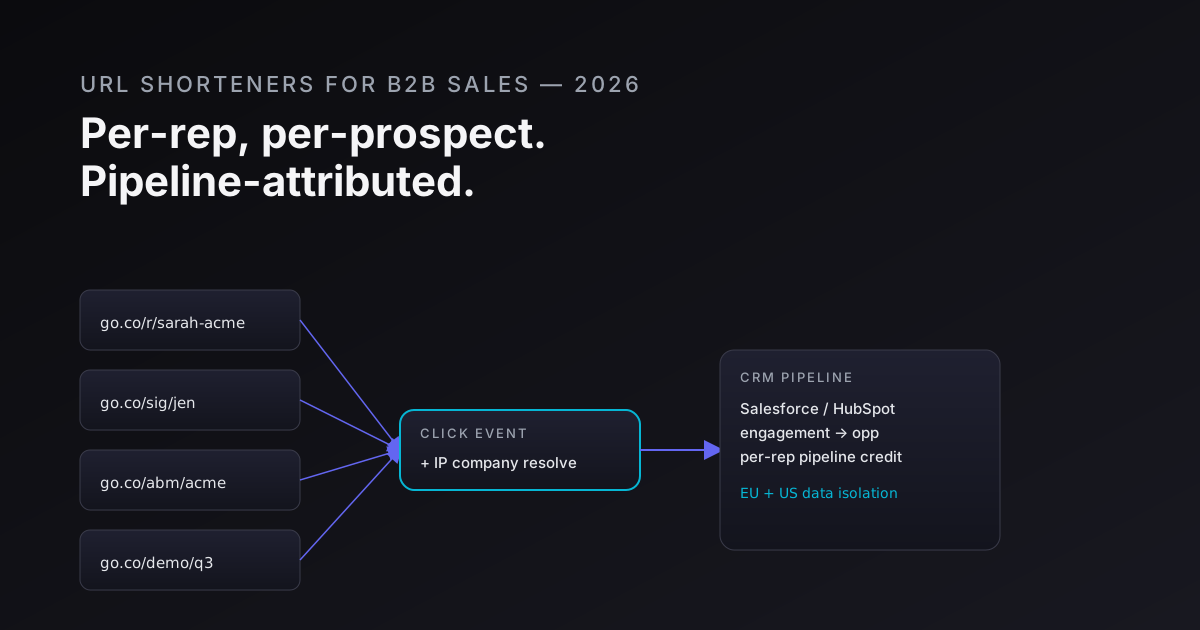
Outbound sales runs on links. Cadences, call prep decks, demo-booking CTAs, personalised one-pagers. When those links are all variations of bit.ly/book-a-demo or raw cal.com URLs, the attribution picture is useless: you can't tell which rep's sequence drove the pipeline, which named-account programme converted, or whether the signature traffic even moves the needle. This post is the link architecture that actually works for an outbound team of 8-80 reps.
For the broader analytics setup, Track UTM campaigns end-to-end covers the full UTM pipeline from click to closed-won. This post is specifically the sales-motion use cases that need something beyond a simple UTM tag.
Why outbound sales links are different
Most link-shortening advice is written for marketing campaigns - you have consent, you have a cookie, you have a first-party event stream. Outbound sales operates under different constraints:
- No prior consent. The prospect hasn't visited your site, hasn't accepted cookies, hasn't agreed to anything. The legal basis for the click data is legitimate interest (more on this below), not consent.
- Individual attribution matters. A marketing campaign cares about aggregate conversion rate. Sales leadership cares about which rep drove a prospect to click, because that determines pipeline credit and compensation.
- Tiny volumes, high stakes. A campaign might have 50,000 link clicks. A rep's cadence has 400. The signal-to-noise ratio is the opposite: you need every single click to be attributable correctly.
- Links travel across channels. The same short link ends up in an email, in a LinkedIn message, in a cold call follow-up, and in the rep's signature. Without per-channel disambiguation you can't tell which outreach motion worked.
The five use cases
1. Per-rep / per-prospect links in outbound sequences
An AE writing to Sarah at ACME should not send a generic yourco.com/demo link. They should send yourco.com/r/sarah-acme - a branded short link that:
- Is tracked to this rep, this prospect, this send date
- Forwards Sarah to a demo-booking page that pre-fills her company name (via URL token the destination page reads)
- Fires an engagement event to the CRM the moment Sarah clicks, regardless of whether she books
The pattern is: yourco.com/r/<rep-initials>-<account-slug>. Elido's link-creation API makes this scriptable from within Outreach or Salesloft via a custom action - the sequencer calls POST /v1/links with the destination URL, the rep's workspace tag, and a custom slug derived from the prospect's account name. The response is a short link the sequencer inserts into the email body.
Why this beats UTMs alone: UTMs are parameters on the destination URL. If Sarah shares the link with her VP, the UTM comes along for the ride and attribution is correct. But if Sarah's VP visits the same destination URL from a bookmark (without the UTM), it looks like direct traffic. With a short-link click event, the first touch is recorded server-side and can't be lost to browser stripping, Safari ITP, or link-preview pre-fetchers. Read more on the mechanics in server-side conversion tracking.
2. ABM-target attribution
When a named-account programme spends €40k on programmatic display for 200 target accounts, the question the VP of Sales asks is: "Did anyone from those accounts click anything?" Not aggregate CTR - did Siemens AG click?
IP-to-company resolution at the click level answers this. The flow:
- The short link click event is captured server-side (Elido's analytics pipeline).
- The click's source IP is passed to a reverse-IP API (Clearbit Reveal, Dealfront, or 6sense's IP endpoint).
- The resolved company domain is tagged onto the click record.
- A nightly join matches click-level company domains to the ABM target account list.
- Sales gets a weekly "accounts that touched the programme" digest fed into Salesforce.
The confidence level varies by IP type - corporate office IPs resolve with high accuracy; home offices and VPNs don't. But for ABM target accounts, the relevant signals are usually from corporate networks. The value isn't 100% accuracy; it's the difference between zero signal and actionable signal.
For the conversion-forwarding mechanics, forwarding conversions to Meta CAPI covers the webhook → enrichment → downstream system pattern in detail - the same pipeline applies here, with your CRM replacing Meta as the destination.
3. Email-signature tracking
Every sales rep has a "book a 15-minute call" link in their signature. If every rep uses the same cal.com/yourco/demo link, you get:
- No per-rep attribution
- No conversion rate visibility by rep
- No ability to A/B test signature CTAs
- No idea whether signature traffic converts differently from cadence traffic
The fix: each rep gets a unique signature short link - yourco.com/sig/sarah-j - that forwards to the same booking page but carries a rep=sarah-j parameter the booking system records. The short link analytics surface tells you how many clicks each rep's signature generated in the last 30 days. The CRM records tell you how many of those clicks converted into booked calls.
This is pipeline contribution visibility. It matters for quota calculation, for coaching conversations ("Sarah's signature gets 40 clicks a month but converts at 8% - why?"), and for attribution when a prospect replies to a cold email three weeks after the initial send (the signature on the reply chain was the actual last touch).
Signature links should have a quarterly rotation policy. Set an expiry (or a redirect-rotation date), issue net-new slugs each quarter, and retire the old ones. The reason: old signature short links accumulate in email archives, get scraped into databases, and eventually pollute your click data with non-prospect traffic.
4. Demo-link conversion forwarding to the CRM
A click on a demo-booking short link is a leading indicator of intent, even if the prospect doesn't complete the booking. The booking confirmation is the lagging indicator. Most CRMs only record the lagging event (the booking) because that's what the calendar integration fires.
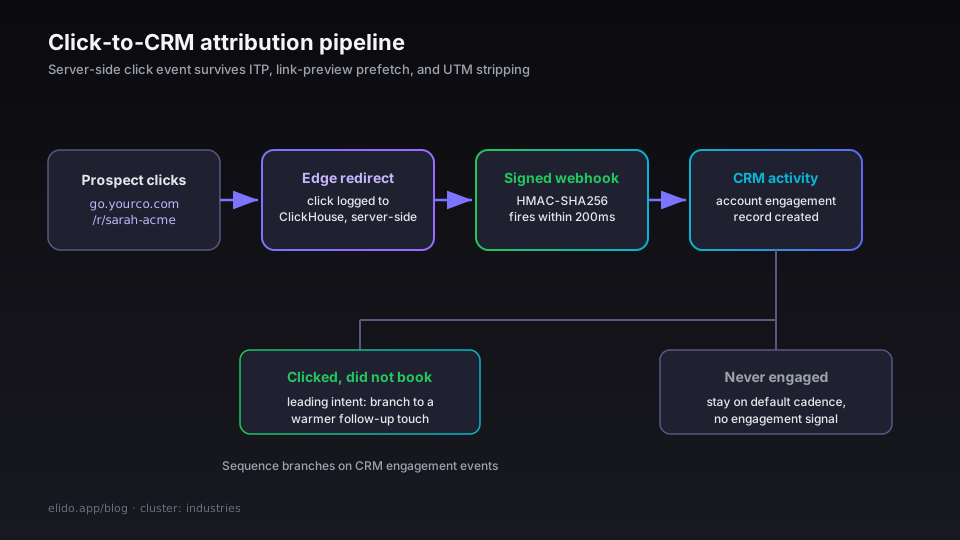
The gap between leading and lagging matters for sequence logic: if Sarah clicked the demo link but didn't book, the next touchpoint in the cadence should be different from the touchpoint she'd get if she'd never engaged at all. Some sequencers support "if contact visited booking page" branching; the reliable way to trigger it is a webhook from the short-link click event into the CRM as an "engagement" activity record.
The webhook fires within 200ms of the click. It carries the short link slug (which encodes the rep and prospect), the click timestamp, and the raw user agent. The CRM handler creates an activity record on the account, which the sales rep sees in their activity feed. If the cadence platform is subscribed to CRM activity events, it can branch the sequence automatically.
Short-link analytics: what to measure has the full breakdown of which click-level fields are worth recording and which are noise at sales volumes.
5. GDPR / CCPA basis for outbound prospect tracking
Outbound prospects haven't given consent. You're tracking their click on an email you sent them before any relationship exists. Here is the legal basis and the practical limits:
GDPR Art. 6(1)(f) - legitimate interests covers B2B outbound click tracking when:
- The prospect is being contacted in their professional capacity (work email, relevant to their role)
- The tracking is necessary for the business purpose (measuring sales effectiveness)
- Their interests don't override yours (a B2B prospect in a relevant industry targeted with a relevant offer is the standard case)
The practical implementation: your privacy policy covers "we track clicks on links in our sales communications for pipeline measurement purposes." You don't need a consent banner before sending a cold email, but you do need to honour an opt-out from tracking if the prospect requests it (a no-track=1 flag on the contact record that suppresses click enrichment for that contact is sufficient).
What you cannot do under this basis:
- Drop retargeting pixels on the demo landing page before the prospect accepts a cookie consent (the Meta pixel or Google tag fires to a third party - legitimate interest doesn't extend that far)
- Pass click data to a data broker or ad platform without a separate legal basis
- Track prospects who have explicitly opted out of your communications
For US (CCPA): California B2B contacts are broadly exempt from CCPA's opt-out-of-sale provisions when the personal information is used only for the B2B relationship. The practical advice: keep click data in your own systems (CRM + analytics warehouse) and don't sell or share it with third parties; the CCPA concern is close to non-existent for internal pipeline analytics.
One more reason to use an EU-based shortener for EU prospects: a US-only shortener routing clicks through US data centres creates a data-transfer issue under GDPR Chapter V (Schrems II). Elido's analytics pipeline stores click events in EU-region infrastructure by default - see SCIM, SSO, and compliance for marketing tools for the broader compliance picture.
A reference architecture for an 8-rep outbound team
This is the setup I walk sales-ops teams through. It handles a team of 8-80 reps without custom tooling.
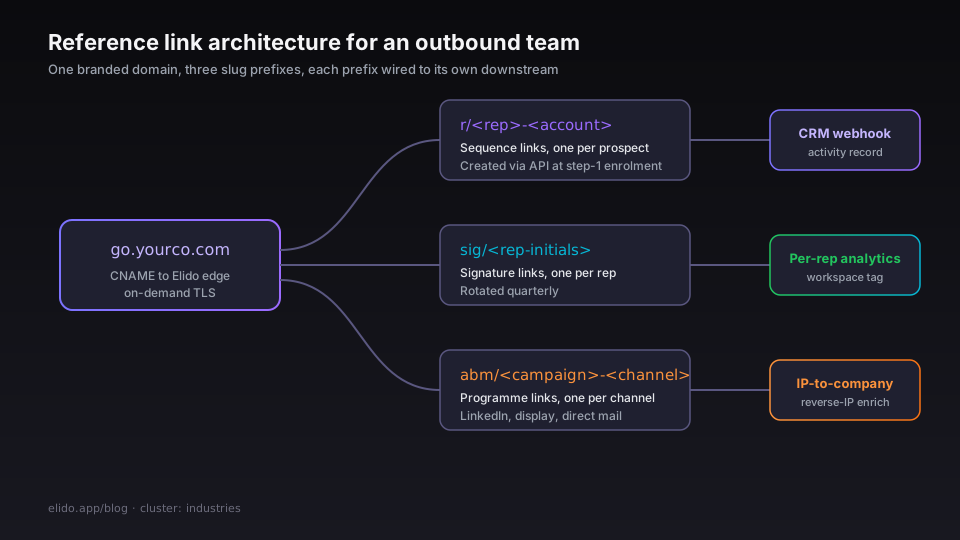
One branded short domain. go.yourco.com. CNAME to Elido's edge, cert provisioned on-demand. Every link in every outbound motion lives on this domain. Consistency matters: prospects see go.yourco.com/r/sarah-acme and it reads as intentional, not as a Bitly link from the spam folder.
Three slug prefixes:
r/- sequence links.go.yourco.com/r/<rep>-<account>. One per active prospect in a sequence. Created via API from the sequencer at step-1 enrolment.sig/- signature links.go.yourco.com/sig/<rep-initials>. One per rep. Updated quarterly.abm/- ABM programme links.go.yourco.com/abm/<campaign>-<channel>. One per programme per channel (LinkedIn, display, direct mail).
Workspace tagging by rep. Each rep's links are tagged with their user ID in the Elido workspace. The analytics dashboard can be scoped per-rep. Sales managers see per-rep click volume without needing access to the sequencer logs.
CRM webhook for every r/ click. A single webhook endpoint on your CRM handles all sequence-link clicks. The endpoint looks up the account by the slug's account component, creates an activity record, and updates the "last engagement" field. This feeds the sequence branching logic.
IP-to-company enrichment on abm/ clicks. ABM-prefix clicks get passed to the reverse-IP API. Sequence clicks do not - you already know who the prospect is from the slug; enrichment adds no signal and adds latency cost.
Quarterly signature rotation. A calendar reminder + a short script that calls POST /v1/links/bulk to issue sig/ links for the current quarter and archives the previous quarter's slugs.
The four anti-patterns that erode sales data
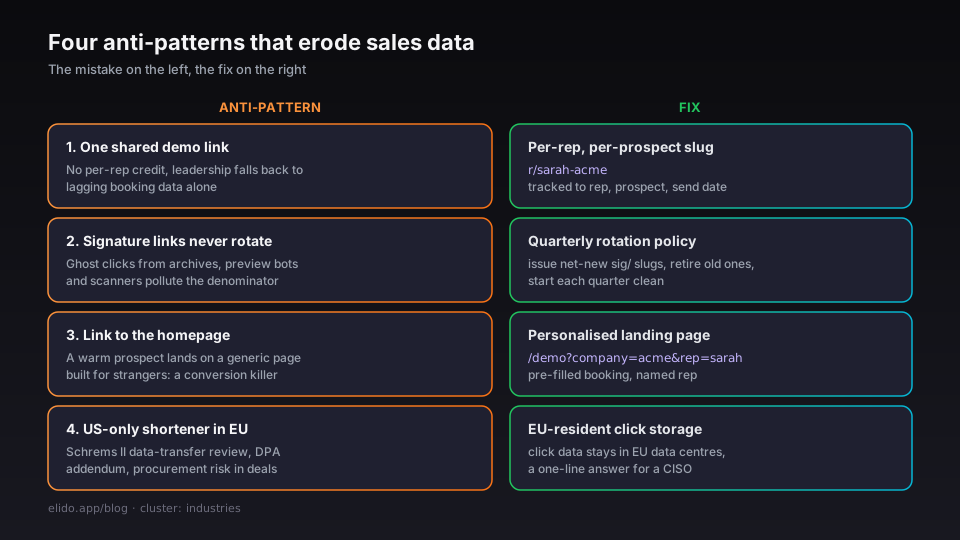
1. One shared demo link across the team. yourco.com/demo is sent by every rep in every sequence. Nobody can tell which rep's pipeline credit belongs to which click. The outcome: sales ops can't answer "which rep is generating the most interest per prospect touched?" and leadership falls back to booking data alone - which lags by two weeks and misses the reps who are good at generating intent but whose prospects get poached late in the process.
2. Signature links that never rotate. An old signature link from 2023 is still resolving through the email archives of every prospect you've ever contacted. When you measure signature traffic in 2025 you're looking at ghost clicks from archived emails, auto-preview bots, and email security scanners. The data looks like conversion rate has been declining steadily for two years; the real explanation is that the denominator is polluted. Rotate quarterly, retire old slugs, start clean.
3. Linking outbound to the homepage instead of a personalised landing page. A warm-reply follow-up link that lands a prospect on yourco.com is a conversion killer. The prospect clicked because they're considering a demo. The homepage is for visitors who have no idea who you are. The short link should forward to /demo?company=acme&rep=sarah - a page that says "Sarah has 3 slots open this week" and shows a pre-filled booking form. The technical mechanism is a destination URL with query tokens that the landing page reads and renders.
4. Using a US-only shortener for European enterprise prospects. A CISO at a German manufacturing firm seeing click-tracking data from a US shortener is a procurement risk. "Where does the click data go?" is a real question in enterprise deals, especially in financial services and public sector. Using an EU-resident shortener is a one-line answer: "click data stays in EU data centres, covered under GDPR." Using a US-only shortener requires a data-transfer analysis and probably a DPA addendum with the shortener vendor. The sales ops overhead isn't worth it.
What sales-ops teams actually measure
If you set up the architecture above, here's the dashboard your sales ops team will have within 30 days:
- Per-rep click volume by week - leading indicator of outbound activity volume
- Click-to-booking rate per rep - are the links converting to booked calls? Normalises for rep activity level
- ABM account touch rate - percentage of named accounts that clicked anything in the last 30 days
- Sequence step that generates the most clicks - is it step 1, step 3, or the break-up email at step 8?
- Signature vs. sequence click split - what fraction of pipeline-leading clicks comes from the signature vs. the active cadence? (Often surprises people - the signature outperforms late-cadence steps)
- Geo breakdown of ABM clicks - which country-level offices of your target accounts are engaging?
Short-link analytics: what to measure has the full field-level breakdown of what each click record should carry to make these queries answerable without custom SQL.
Where Elido fits
Elido wasn't built exclusively for sales, but the platform's constraints align with what outbound teams need: sub-15ms redirect latency (a slow redirect in a cold email looks like phishing to the recipient's mail client), EU-resident click storage, webhook delivery within 200ms, and an API first enough to plug into Outreach / Salesloft custom actions without a middleware layer.
The specific capabilities that matter for this architecture:
- Link creation API -
POST /v1/linkswith custom slug, destination, workspace tag, and expiry. Scriptable from any sequencer that supports webhook-based custom actions. - Bulk-import for signature links - upload a CSV of
[rep_id, slug, destination]at quarter start; the API returns the full link set in a single response. - Webhook-on-click - fires within 200ms, signed with HMAC-SHA256, configurable per slug prefix (only
r/triggers CRM delivery;abm/goes to the enrichment pipeline). - Per-workspace analytics scoping - each rep's links can be scoped to their workspace tag; the manager dashboard sees the team roll-up; the rep sees only their own clicks.
- EU data residency - click events land in our analytics store on EU infrastructure by default. No per-deal paperwork for enterprise prospects with DPA requirements.
For a walkthrough of the sequencer integration and the CRM webhook setup, the sales solutions page has the step-by-step.
Related on the blog
- Track UTM campaigns end-to-end without a CDP - the cornerstone for the full attribution pipeline
- Server-side conversion tracking - why server-side beats client-side for outbound click events
- Forwarding conversions to Meta CAPI - the webhook-to-downstream pattern (same mechanics apply for CRM forwarding)
- Short-link analytics: what to measure - the click-record field guide
- SCIM, SSO, and compliance for marketing tools - the compliance stack for enterprise sales orgs
- URL shorteners for marketers - the broader marketing use-case companion post
- URL shorteners for SaaS - product-led growth link architecture
Try Elido
Paste a URL, get a working short link
No signup. Link lives for 30 days. Sign up to keep it forever.
Free, no signup required · 2 per day