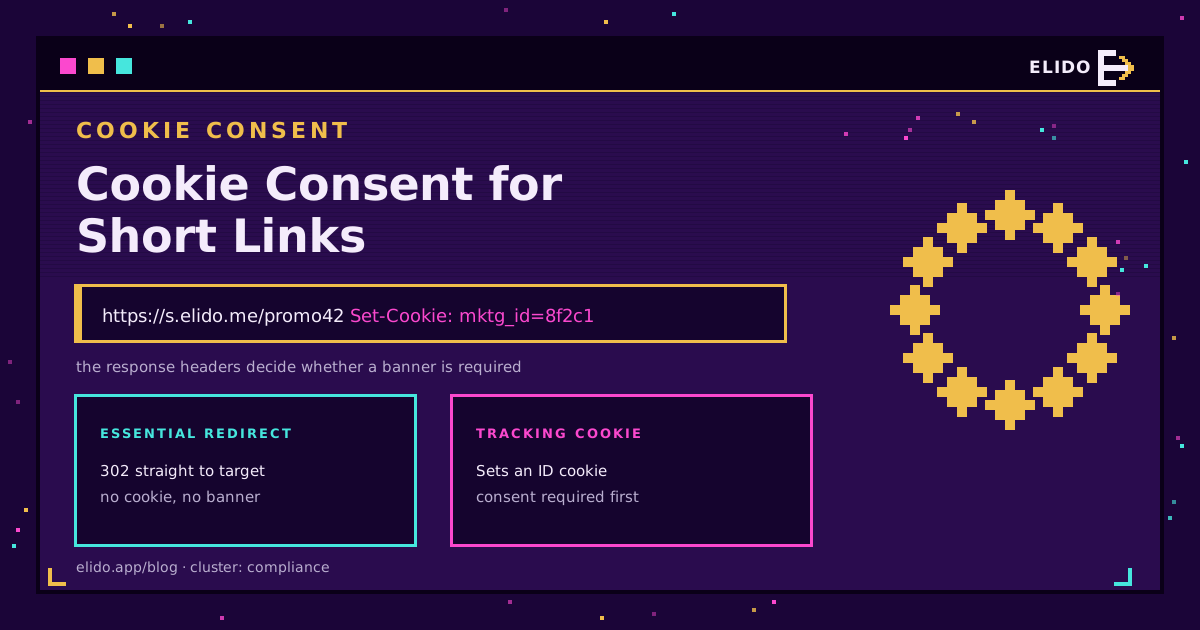
Do you need a cookie banner for a short link? For the redirect itself, no - a plain 301 or 302 that stores nothing on the device is a service the user asked for. You need consent the moment the short link sets or reads a non-essential cookie or device identifier, for retargeting or cross-site analytics, because the ePrivacy Directive requires that consent before the storage happens.
That single line hides two separate rules, and marketers keep merging them. The ePrivacy Directive governs storing or reading anything on a user's device (the cookie layer). The GDPR governs what you then do with the personal data (the legal-basis layer). A short link can trip one, both, or neither, and knowing which is what tells you whether a banner is legally required or just cargo-culted onto the page.
This is a compliance-cluster read, so the rules are cited and the sources are linked for your own counsel. For the full framework behind all of it - what the GDPR asks of any shortener - the GDPR for URL shorteners cornerstone walks the relevant Articles one at a time.
The Short Answer for Marketers and DPOs
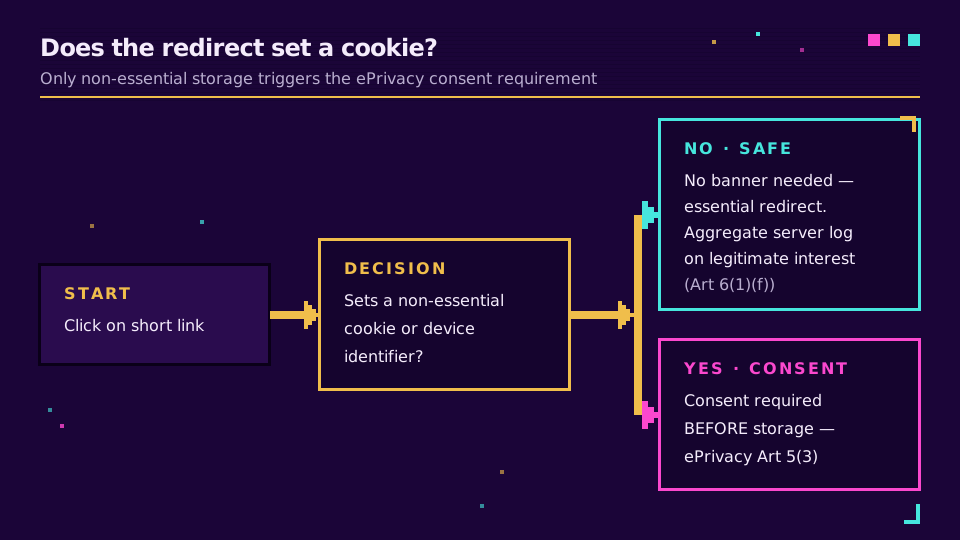
Consent is about storage on the device, not about the link. Ask one question: does clicking the short link cause anything to be written to or read from the user's browser that is not strictly necessary to perform the redirect?
- If no - the click just resolves a destination and, at most, increments a server-side counter - there is no ePrivacy consent trigger for the shortener.
- If yes - a tracking cookie, a pixel, a fingerprinting identifier fires on the redirect hop - consent is required, and it has to come before the storage.
The GDPR then adds a second question about the click log itself, which almost always contains personal data. Those two questions have different answers, and the rest of this piece takes them in turn.
When a Short Link Does Not Need Consent
A redirect that sets no cookie sits on the "strictly necessary" side of the ePrivacy Directive. Article 5(3) of Directive 2002/58/EC exempts storage that is "strictly necessary in order for the provider of an information society service explicitly requested by the subscriber or user to provide the service." Resolving a link the user deliberately clicked is that service. No banner is owed for the hop.
The GDPR layer still applies, though, because the click log is personal data. Every redirect can record an IP address and a user agent, and the Court of Justice held in Breyer (C-582/14) that a dynamic IP address is personal data for anyone able to identify the person behind it. So you need a lawful basis for the log, and for aggregate click counting that basis is usually legitimate interest under Article 6(1)(f) - provided you have run the balancing test, minimised what you keep, and set a short retention window.
In practice that means you can count clicks, see which campaign drove them, and report geography at country level without asking anyone to accept a cookie - as long as the analytics are aggregate and the identifiers are not built to single out one person. That is the lane most link tracking should live in, and it is a big part of what makes privacy-first click analytics workable at all.
When a Short Link Does Need Consent
The banner becomes mandatory the instant a non-essential cookie or similar identifier is stored. The Court of Justice settled the standard for that consent in Planet49 (C-673/17): a pre-ticked box is not consent, and the user has to take a clear affirmative action before the storage. The EDPB guidelines on consent tighten it further - consent must be freely given, specific, informed, and as easy to withdraw as to give.
Short links create a nasty timing problem here. If your shortener drops a retargeting cookie on its own redirect domain, that storage happens on the hop, before the user ever reaches your site and your consent banner. The cookie is already set by the time your consent management platform loads. Whoever set it is on the hook for having a valid consent, and in that architecture nobody collected one. That is not a paperwork gap, it is a cookie set without a lawful basis - the exact pattern regulators have fined.
So if a short link is doing any of the following, you are in consent territory and you need to prove it:
- Setting a tracking or retargeting cookie on the click.
- Reading or writing a device fingerprint or persistent identifier.
- Firing a third-party advertising pixel through the redirect.
- Building a cross-site profile of the individual for ad targeting.
Cookie Consent vs GDPR Legal Basis - Two Layers
The mistake I see most often is treating "we have a legal basis under the GDPR" as if it settled the cookie question. It does not. The two rules stack, and the ePrivacy one comes first in time.
The ePrivacy Directive asks: may you store or read this on the device? For anything non-essential, the answer is only yes with prior consent, and no GDPR legal basis substitutes for that consent. Legitimate interest cannot authorise setting a marketing cookie - the storage step needs consent regardless. Only after you have cleared the storage question does the GDPR ask its own: now that you hold this personal data, what is your lawful basis to process it, and have you met the transparency, retention, and transfer duties around it?
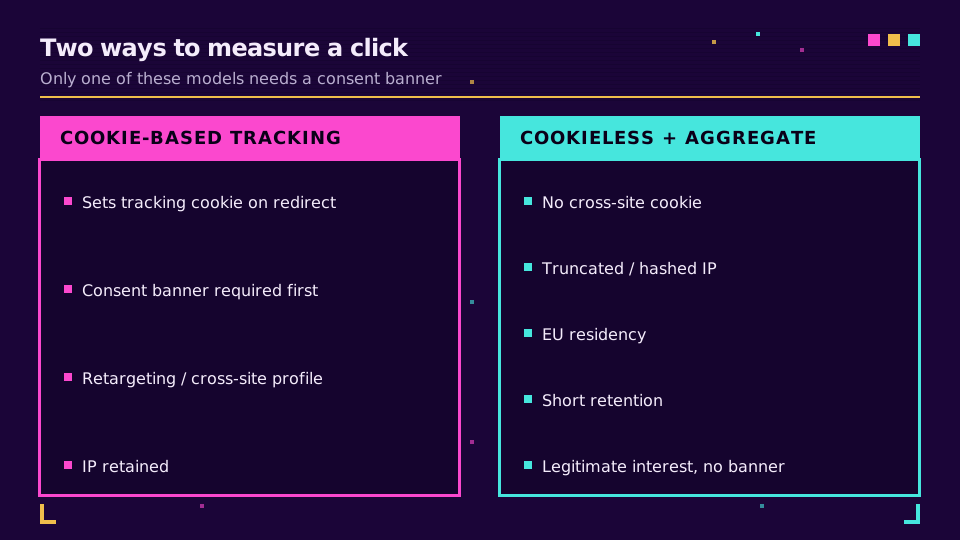
Read in that order, most link-tracking setups sort themselves quickly. Cookieless, aggregate click logging: one layer (GDPR legitimate interest), no banner. Cookie-based retargeting: both layers (ePrivacy consent to set the cookie, then GDPR consent as the processing basis), banner required and it must fire first.
If your current shortener forces the second pattern on you when all you wanted was campaign attribution, that is worth fixing at the tool level rather than papering over with a bigger banner. Elido keeps click analytics cookieless and EU-resident so the common case stays in the no-banner lane.
How to Keep Short Links Consent-Light
You cannot remove every obligation - if you retarget, you consent, full stop. But you can keep the ordinary case simple and shrink the surface that a banner has to cover.
- Prefer a shortener that records clicks server-side with no cookie on the redirect domain, so there is nothing to consent to on the hop.
- Keep analytics aggregate. Country-level geography and campaign counts do not need to single out a person; per-user profiles do.
- Minimise and shorten. Truncate or hash IP addresses where you can, and set a retention window measured in weeks, not years, backed by a documented balancing test.
- Keep the data in the EU. Residency does not remove the consent question, but it removes the separate transfer analysis that a US-based shortener adds on top - the gap the is Bitly GDPR compliant breakdown gets into, and the same reason Google Analytics raises its own GDPR questions.
- Put the honest disclosure in your privacy notice: what the redirect logs, on what basis, for how long.
None of this is legal advice for your specific stack, and a shortener that behaves well does not exempt the destination site from its own cookie duties. But it moves the shortener from "another vendor my banner has to account for" to "a redirect that logs a click and stops there." For the residency side of the same decision, EU data residency for marketing and the best EU URL shorteners roundup cover who commits to keeping the data in the EU.
Read the Cornerstone Series
This sits in the compliance cluster. The cornerstone is GDPR for URL shorteners: what your DPO actually wants to see - start there for the article-by-article framework, then use the trust page and solutions/compliance as the procurement-facing artefacts.
Related on the Blog
- GDPR for URL shorteners: what your DPO actually wants to see
- Is Bitly GDPR compliant? A DPO's honest answer
- Is Google Analytics GDPR compliant?
- EU data residency for marketing tools: what your DPO actually asks
- The best EU URL shorteners, ranked by residency posture
- QR codes and GDPR: what a scan collects and what you owe
Frequently asked questions
Do short links need a cookie banner?
The redirect itself does not - a plain 301 or 302 that sets no cookie is a service the user asked for. A banner becomes necessary when the shortener stores or reads a non-essential cookie or device identifier on the click, for example for retargeting or cross-site analytics, because the ePrivacy Directive requires consent before that storage happens.
Does a URL shortener set cookies?
Some do and some do not. Services built around retargeting and cross-campaign analytics typically drop a tracking cookie or identifier on the redirect domain. A privacy-first shortener can record a click server-side with no cookie at all, which is the difference between needing a consent banner and not.
Is link tracking allowed under GDPR without consent?
Aggregate, server-side click counting can rest on legitimate interest under Article 6(1)(f) if you run a balancing test and keep retention short, because a click log holds personal data such as IP addresses. Tracking that profiles an individual across sites, or that relies on a non-essential cookie, needs consent - both under the ePrivacy Directive for the storage and under the GDPR for the profiling.
Are short links personal data under GDPR?
The click events behind them usually are. Every redirect can log an IP address and a user agent, and the Court of Justice held in Breyer that a dynamic IP address is personal data in the hands of a party that can identify the person. So the click stream a shortener records is in scope for the GDPR even when the link text itself is anonymous.
Who is responsible for the consent, the marketer or the shortener?
Whoever sets the cookie is responsible for having consent for it. If your shortener drops a tracking cookie on its redirect domain before the user reaches your site, that storage happened outside your banner, which is the compliance gap. Using a shortener that does not set non-essential cookies keeps the responsibility where your consent management platform can actually cover it.
Try Elido
Paste a URL, get a working short link
No signup. Link lives for 30 days. Sign up to keep it forever.
Free, no signup required · 2 per day