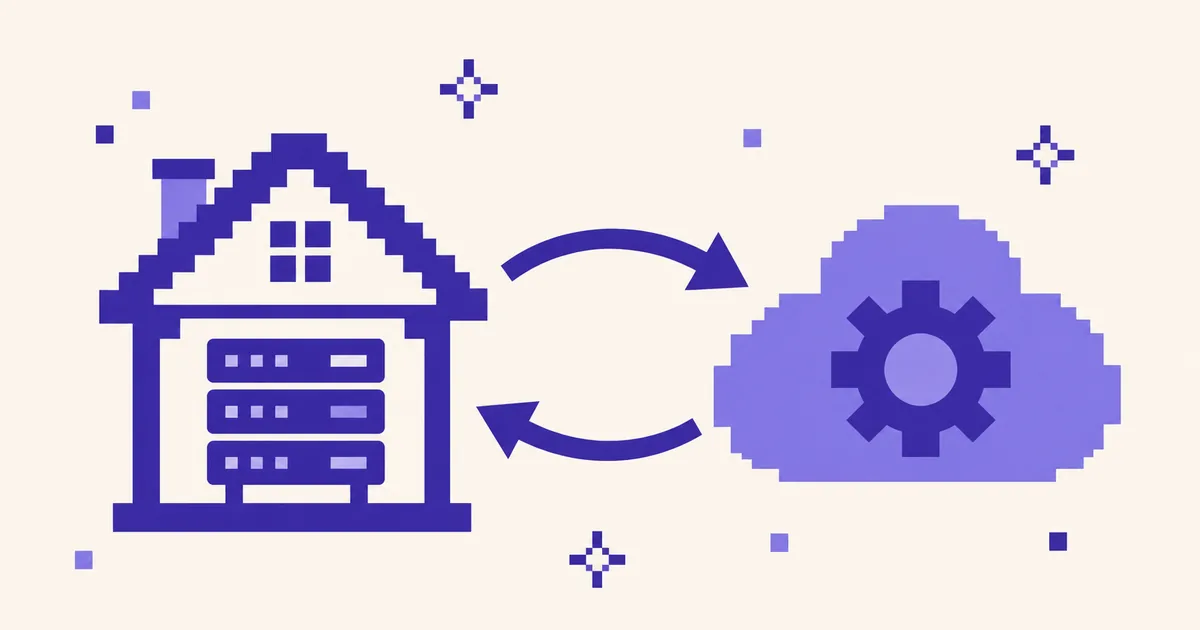
YOURLS is a free, MIT-licensed PHP shortener you install yourself. Elido is hosted, keeps its primary data in the EU, and isn't open source. That makes Elido vs YOURLS a question about who runs the thing. If you want the code on your own box, with plugins and full control, YOURLS wins and Elido isn't really in the race. If you'd rather not patch PHP and renew certificates, and you need teams, workspace analytics and a DPA on request, Elido is built for that.
I'm on the Elido team, so weigh my verdict accordingly. Every YOURLS fact below comes from yourls.org, its documentation and the GitHub repository, all accessed 2026-11-11.
YOURLS and Elido at a Glance
YOURLS (Your Own URL Shortener) dates from 2009. It's still maintained. The latest release, 1.10.6, shipped on 30 August 2026; it's a version-string fix on top of 1.10.5 from two days earlier. The repository had 12,305 stars and a push on 11 November 2026. For the wider self-hosted field, our self-hosted URL shorteners comparison sets it beside Shlink, Kutt, Dub and Polr, and the cornerstone on URL shorteners for marketers covers the hosted side.
| Question | Elido | YOURLS |
|---|---|---|
| Licence | Proprietary, hosted service | MIT (docs CC BY 4.0) |
| Where it runs | Elido's hosted service, primary data in the EU | Your server: PHP 8.1+, MySQL 5.5+ or MariaDB 10.0+ |
| Custom domains and TLS | Yes; certificate issued after the DNS check | One base URL per install; HTTPS is your web server's job |
| Click stats | Countries, devices, browsers, referrers, per link and campaign | Historical click reports, referrers, visitor geolocation |
| Users and roles | Workspaces with seats and roles; SSO and SCIM on Business | Logins listed in config; no per-user link ownership |
| Extensions | Webhooks on Pro and Business; REST API on every plan | Plugin architecture; 266 plugins in the community list |
| Cost | Free plan, paid plans in EUR | Free software; you pay for hosting and time |
Three rows go to YOURLS outright: licence, cost and extensibility. If those decide it for you, you can stop reading here.
What YOURLS Does Well
Quite a lot, and none of it is a consolation prize.
It's yours, completely. The MIT licence lets you fork it, rebrand it, ship it inside another product, or simply read every line before you trust it with your links. Your links live in your own MySQL database on your own domain, which is the "full control over your data" the YOURLS homepage promises. Elido can't offer that: you can't download it or read its code.
It runs on almost anything. The server requirements are PHP 8.1 or newer, MySQL 5.5+ or MariaDB 10.0+, and Apache 2.4 with mod_rewrite. Cheap shared hosting meets that. So does a spare VPS or an old office server, with no container runtime or orchestration layer anywhere.
The plugin ecosystem is huge. The community Awesome YOURLS list names 266 plugins in 15 categories, from two-factor login and LDAP to GeoIP updates, QR codes, 302 redirects and Google Safe Browsing checks. If you know PHP, you can write the missing one yourself in an afternoon.
The API is simple and old enough to be well understood. yourls-api.php takes an action (shorturl, expand, url-stats, stats, db-stats, version) and returns JSON, JSONP, XML or plain text, per the API docs. You can authenticate with a secret signature token instead of a password, or with a time-limited hash of it.
Where YOURLS Gets Hard for Teams
The design assumes one admin and one short domain. It starts to pinch when that stops being true.
Users are a list of usernames and passwords in config.php. Everyone who logs in sees and edits every link. There are no workspaces, no roles and no audit trail in core; plugins add some of this, and each plugin is one more thing to vet and update.
HTTPS is outside YOURLS. The config sets a single base URL (YOURLS_SITE), and the certificate for that domain comes from whatever your web server does, usually Certbot. That's fine for one domain. An agency onboarding a client domain every month ends up maintaining a pile of certificates and virtual hosts.
And the upkeep never ends. Short links get printed on packaging and posters, so the server has to stay up for years. Here's what someone has to keep doing:
- patching PHP, MySQL and Apache
- applying YOURLS releases and checking that your plugins still work with them
- renewing certificates and watching the renewal job
- backing up the database somewhere else
None of that is hard for someone who already runs servers. It just belongs to someone, permanently. If your team would rather run Node than PHP, Kutt fills the same niche, and if you want a more API-first PHP tool, Shlink is the closest relative.

What Elido Does Instead
Elido takes the server off your plate. You sign up, add a short domain, and Elido checks the DNS record and issues the certificate itself. The custom domains page explains the verification step. There's nothing for you to patch, back up or renew.
On top of that sit the things a team usually ends up assembling from YOURLS plugins:
- Workspaces with seats and four built-in roles (owner, admin, editor, viewer), plus an audit log. Business adds SSO, SCIM provisioning and custom roles.
- Analytics per link and across the workspace: clicks over time, countries, devices, browsers and referrers, sliced by campaign. The analytics page lists what's kept and for how long.
- Smart links that route by country, device, browser, OS or language, plus A/B variants, link expiry, password protection and QR codes.
- Webhooks for click and link events on Pro and Business, and a REST API on every plan, including Free. Official SDKs aren't public yet, so integrations call the HTTP API directly.
For EU teams, the legal paperwork matters as much as the features. Your link and click data sits with us in the EU, and our data processing agreement covers the GDPR Article 28 terms your DPO will ask about. That's a different promise from YOURLS on your own rack. With YOURLS, the data goes wherever you put the server; with Elido, you're trusting a processor. Our EU data residency guide spells out what that does and doesn't cover.
Prices, read from Elido's billing catalogue on 2026-11-11: Free is 50 links and 500 clicks a month with no branded domain; Pro starts at 3.50 EUR a month for 250 links, one branded domain and three seats; Business starts at 70 EUR a month. If the server is the part you want to stop running, compare the plans against what your YOURLS box costs in hours.
The Self-Hosting Question, Answered Plainly
Older versions of this post described an Elido self-hosted tier you could install yourself. That was wrong, and I've removed it. There's no Elido download, no public licence, and no self-hosted edition on the pricing page.
What does exist: for Enterprise customers with a hard requirement to keep the shortener inside their own infrastructure, a deployment can be arranged by contract. That's a sales conversation ([email protected]), not a product you can try this weekend. If "the code runs on my server" is a must-have and you aren't signing an Enterprise contract, pick YOURLS, Shlink or Kutt. The YOURLS alternatives roundup compares them side by side, and Elido vs Polr explains why Polr isn't on that list.
Moving From YOURLS to Elido
It's a CSV job. The order of steps is what keeps printed links working.
- Dump the YOURLS database. Click history doesn't move, so this dump is your archive.
- Export the
yourls_urltable (default prefix) withkeyword,urlandtitleas CSV. - Import it with the CSV import on a Pro or Business plan, keeping each keyword as the slug. There's no one-click YOURLS importer.
- Add your short domain to Elido and wait for the certificate, then switch the DNS record.
Do step 4 in the wrong order and every link shows a browser certificate warning until the certificate arrives. Slug and domain stay the same. QR codes already out in the world keep resolving. Leave YOURLS running read-only for a few weeks in case you missed something.
Verdict: Who Should Pick Which
Pick YOURLS if you want free, MIT-licensed software on your own server, if plugins and full control matter more than polish, or if one admin, one domain and basic stats cover you. It's mature and maintained, and the price is right. I'd still run it for a personal short domain.
Pick Elido if nobody wants to own a PHP server. It also fits if several people need their own roles and an audit log, if you're adding client domains often enough that certificates hurt, or if your legal team wants EU-stored data and a DPA from a processor, available on request. You give up the plugins and the source code; you get back the hours.
Related on the Blog
Frequently asked questions
Is YOURLS free?
Yes. YOURLS is MIT-licensed open-source software, so you can run, change and redistribute it at no cost. What you pay for is the server, the domain, and the time someone spends on PHP updates, backups and certificates.
What do I need to run YOURLS?
Per the YOURLS docs (accessed 2026-11-11): PHP 8.1 or newer, MySQL 5.5+ or MariaDB 10.0+, and Apache 2.4 or newer with mod_rewrite enabled. The API also needs the PHP cURL extension. The current release is 1.10.6, published on 30 August 2026.
Does YOURLS support multiple users?
Partly. A private install lists usernames and passwords in its config file, and each of them can log in to the admin area. Core YOURLS has no per-user link ownership, workspaces or roles, so everyone sees every link. Plugins such as LDAP login extend this.
Can I self-host Elido instead of YOURLS?
Not as a download. Elido is a hosted service and is not open source: the code has no public licence and there is no self-hosted edition you can install. Deployments in your own infrastructure exist only under an Enterprise contract ([email protected]). If you want free software on your own server, YOURLS, Shlink or Kutt are the right picks.
How do I move my links from YOURLS to Elido?
Export the yourls_url table (keyword, url, title) to CSV and import it with the keywords as slugs, using the CSV import on a Pro or Business plan. Elido has no one-click YOURLS importer. Click history stays behind, so keep a database dump, and add your short domain to Elido before you change DNS.
Is YOURLS still maintained in 2026?
Yes. Release 1.10.6 shipped on 30 August 2026, and the GitHub repository had commits as recently as 11 November 2026 (accessed 2026-11-11). People who leave YOURLS usually do so for missing team features or to stop running a server, not because the project is abandoned.
Try Elido
Paste a URL, get a working short link
No signup. Link lives for 30 days. Sign up to keep it forever.
No signup needed. Sign up free for 50 links a month.