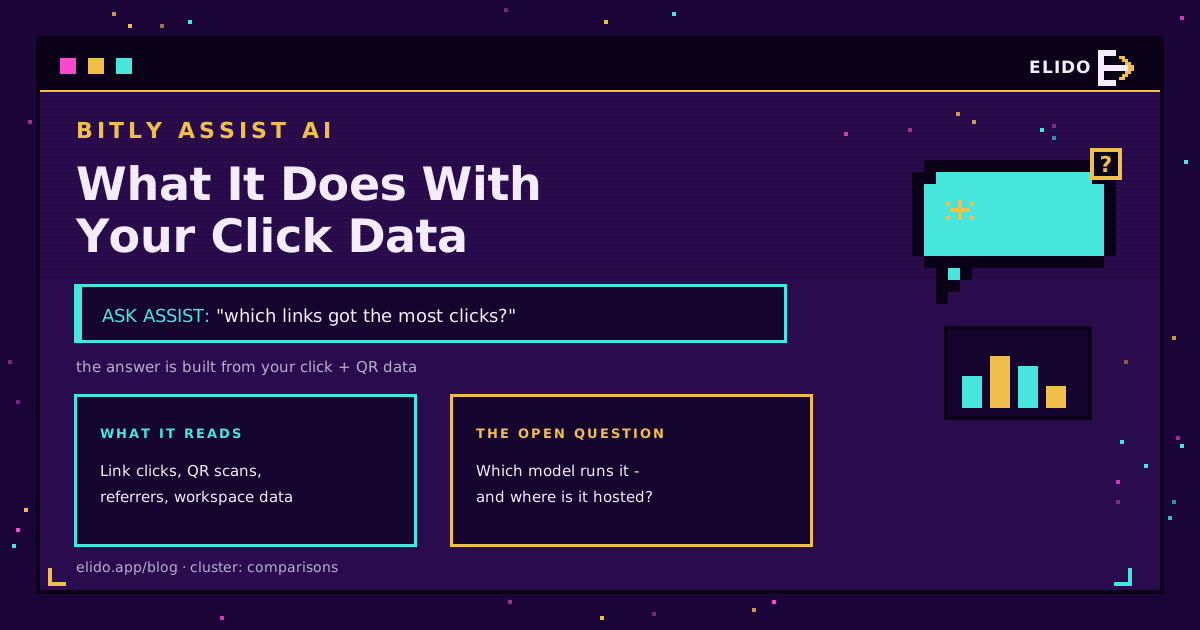
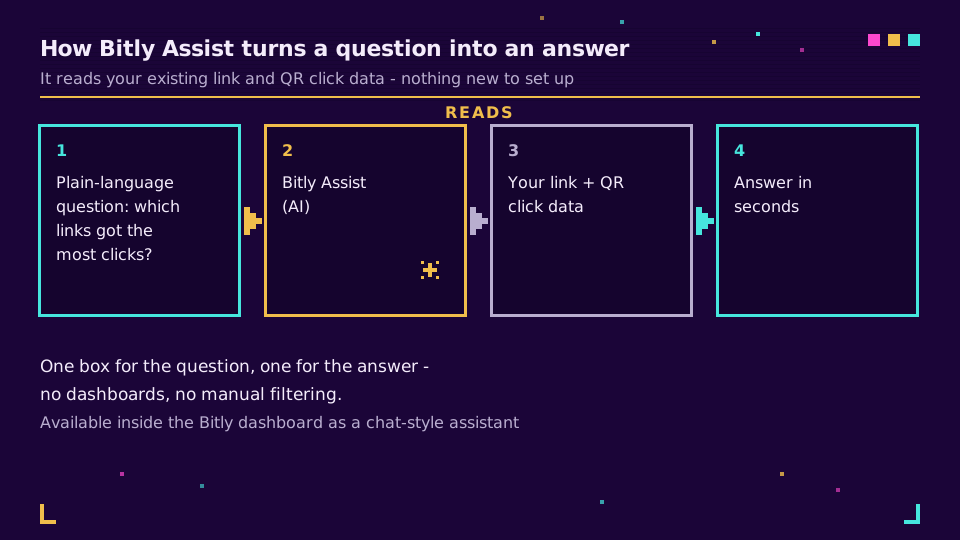
Bitly shipped an AI feature. Bitly Assist, announced on 2 April 2026, is a chat assistant built into the Bitly platform: you ask in plain language which links got the most clicks this week or which channels are driving engagement, and it answers in seconds instead of making you dig through dashboards. It is available across Bitly's paid plans, and it is a genuinely useful idea.
It also does something a DPO has to notice: it points an AI model at your click data. That is not a scandal, and this is not an article claiming Bitly broke a law. It is the same honest lens the is Bitly GDPR compliant piece used - the machinery is real, the question is how it works - applied to a feature that did not exist when that piece was written.
What Bitly Assist Actually Does
Strip the marketing and it is a natural-language layer over Bitly's own analytics. Instead of building a report, you ask a question, and the assistant reads your link and QR Code data to answer it. It is part of Bitly's broader 2026 repositioning as a "connection layer" spanning links, QR codes, and integrations with tools like Microsoft Copilot and Notion.
For a busy marketer, that is real time saved. The value is not in dispute. What changes, from a compliance seat, is the data path: your click stream now also flows to a model that turns it into answers, and a model is a processor doing something new with personal data.
The Question a DPO Asks Next
Click data is personal data more often than people assume - every redirect can log an IP address, which the Court of Justice has treated as personal data. So pointing an AI at it is a new processing purpose on personal data, and that is exactly the kind of change your DPA is supposed to govern.
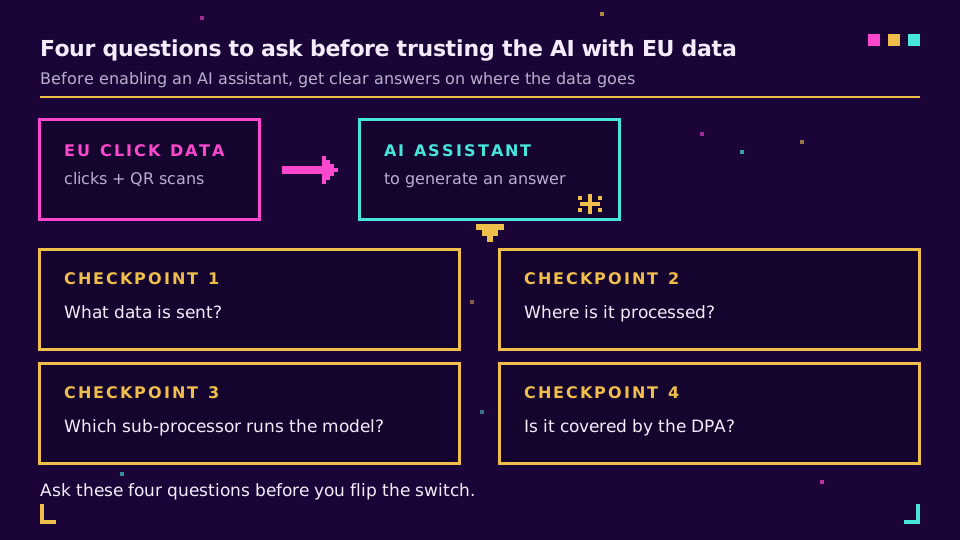
Bitly is US-headquartered and, as its own privacy terms set out, runs a transfer-based GDPR posture: EU personal data is covered by Standard Contractual Clauses and the EU-US Data Privacy Framework rather than kept in the EU. An AI feature layered on top inherits that posture and adds a question or two. Four things worth getting in writing before you rely on it:
- What data reaches the model. Aggregate counts, or individual click records with IPs?
- Where the model runs. In the same region as your account data, or somewhere else?
- Which sub-processor provides the model. A new sub-processor is a change you may have a right to be notified of, or to object to, under your DPA.
- Whether it is covered. Is the AI processing inside the existing DPA and transfer basis, or is it a new flow that needs its own assessment?
None of these have alarming answers by default. The point is that they are answerable, and that a serious buyer answers them before switching the feature on rather than after.
Why This Is a Residency Question, Not an AI-Panic Question
It is easy to turn "AI plus your data" into a moral panic, and that is not the useful framing. The useful framing is the same one that has decided shortener procurement for years: compliant-via-transfer versus resident-in-the-EU. An AI assistant does not change that axis; it just adds another place your data can travel to.
For a marketing team running public campaigns, a transfer-based AI feature is very likely fine, the same way a transfer-based shortener is. For a regulated or sovereignty-conscious team, an AI layer is one more transfer to document in the Transfer Impact Assessment you are already carrying - and the way to remove that work is not a better AI disclosure, it is a stack where the click data never leaves the EU in the first place.
That is the honest comparison, and I will hold our own product to it: any AI feature Elido adds runs on the same footing as its analytics, which stay in the EU region by default. The four questions above are the ones to ask any vendor, including us - the right answer is not "we don't use AI", it is "here is exactly where your data goes when we do." The Elido vs Bitly comparison lays the residency lines side by side, and the GDPR for URL shorteners cornerstone is the framework behind all of it.
The Bottom Line
Bitly Assist is a useful feature built on the posture Bitly already had. If you are comfortable with Bitly's transfer-based model for your click data, the AI layer does not change that calculus much - just confirm it is covered by the DPA and sub-processor list. If EU residency is your line, then the AI feature is one more reason the answer was already "keep the data in the EU", because now there is one more place it could otherwise go. Decide the residency question first; the AI feature follows from it.
Read the Cornerstone Series
This sits in the comparisons cluster but leans on the compliance cluster. Start with is Bitly GDPR compliant and the GDPR for URL shorteners cornerstone.
Related on the Blog
Frequently asked questions
What is Bitly Assist?
Bitly Assist is an AI chat assistant Bitly built into its platform, announced on 2 April 2026. You ask plain-language questions about your link and QR Code performance - which links got the most clicks this week, which channels are driving engagement - and it answers in seconds instead of you digging through dashboards. It is available across Bitly's paid plans.
Is Bitly Assist free?
It is included on Bitly's paid plans rather than sold separately, and is not part of the free tier. So the cost is effectively the cost of the paid plan you are on; there is no standalone Bitly Assist price.
Does Bitly Assist raise GDPR concerns?
It raises questions worth asking, not automatic violations. An AI assistant is a new processing purpose applied to click data that can include personal data such as IP addresses. The compliance questions are where the model processes that data, whether the processing is covered by Bitly's existing DPA and sub-processor list, and whether it stays within the transfer framework Bitly already relies on. Ask for those in writing.
Where does Bitly Assist process my data?
That is exactly the question to put to Bitly. Bitly is US-headquartered and runs a transfer-based GDPR posture, so an AI feature layered on top should be checked against the same Standard Contractual Clauses and Data Privacy Framework basis, and against whatever sub-processor (model provider) runs the assistant. Confirm it in the DPA and sub-processor list rather than assuming.
What should I ask before turning on any link-shortener AI feature?
Four things, in writing: what data the feature sends to the model, where that processing happens, which sub-processor provides the model, and whether it is covered by the existing DPA and transfer basis. These apply to any vendor's AI add-on, not just Bitly's - including ours.
Try Elido
Paste a URL, get a working short link
No signup. Link lives for 30 days. Sign up to keep it forever.
Free, no signup required · 2 per day