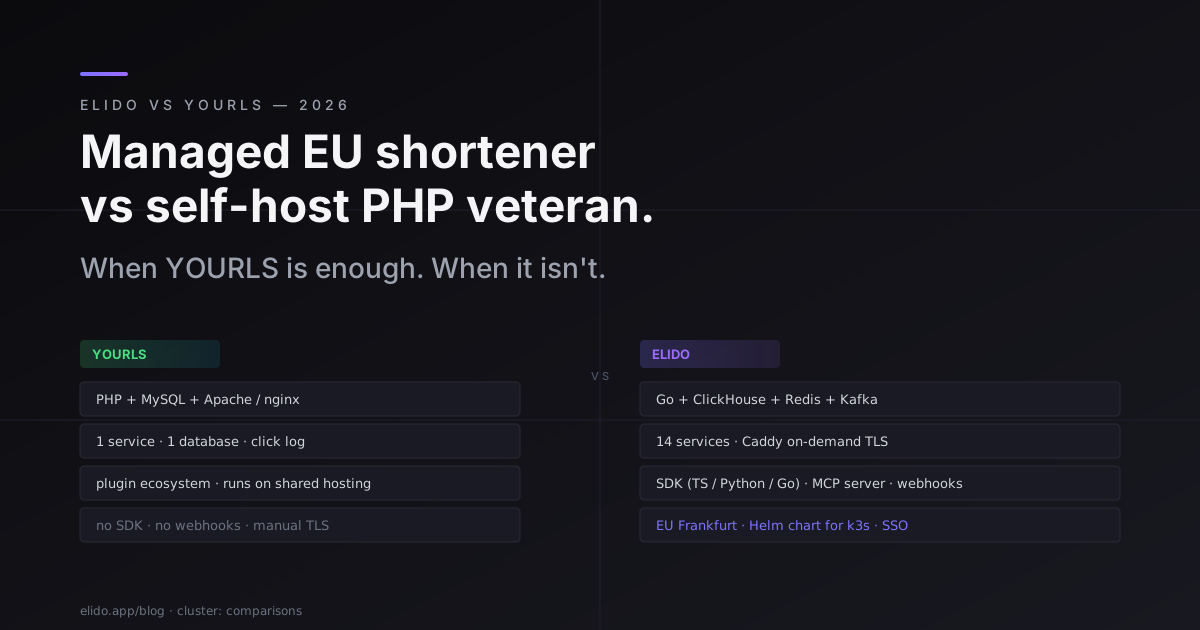
YOURLS ha sido una respuesta fiable a una pregunta específica durante más de quince años: "Quiero un acortador de URL que yo controle, no quiero pagar una tarifa mensual y estoy contento de ejecutar PHP." Si eso te describe, YOURLS sigue aguantando. El repositorio de GitHub está activo, el ecosistema de plugins es extenso y el código base es lo suficientemente directo como para que un desarrollador de PHP pueda hacer un fork un viernes por la tarde y tenerlo funcionando antes de cenar.
La comparación se vuelve interesante una vez que esa descripción deja de encajar. Los equipos que superan una sola tabla MySQL, las organizaciones con requisitos de residencia de datos en la UE que no pueden satisfacer con un VPS autogestionado y los desarrolladores que quieren un SDK y un pipeline de webhooks en lugar de un hook de plugin - para esos equipos, YOURLS es el punto de partida correcto y el punto de llegada incorrecto.
Este post mapea dónde se sitúa realmente cada herramienta, qué intercambias al elegir una sobre la otra y la respuesta honesta a la pregunta "¿debería autohospedar?" en 2026.
Todos los detalles de YOURLS están extraídos de el repositorio de YOURLS en GitHub y la documentación pública en yourls.org. La página yourls.org bloqueó la verificación automática de hechos en mayo de 2026 - verifica cualquier afirmación específica de YOURLS contra el sitio en vivo antes de usar. Los precios de Elido son de /en/pricing.
TL;DR
- YOURLS es gratis, basado en PHP, extensible por plugins y se ejecuta en cualquier lugar con un servidor web y MySQL. No tiene oferta gestionada, ni modelo de equipo integrado, y las analíticas se limitan a lo que proporcionan su registro básico de clic y los plugins de la comunidad.
- Elido incluye un stack a medida con analítica columnar, TLS automático bajo demanda, caché caliente en memoria, streaming de eventos compatible con Kafka, SSO, SDKs y un servidor MCP - como un servicio gestionado alojado en la UE o como un despliegue autohospedado de Helm chart.
- El argumento de "autohospedaje" no es YOURLS vs Elido gestionado: es YOURLS (PHP/MySQL, un servicio) vs Elido autohospedado (14 servicios en k3s, un Helm chart). Elige el presupuesto de complejidad que se ajuste a tu equipo de infraestructura.
- Ambos exportan CSV. La migración es directa si te estás moviendo en cualquier dirección.
Qué es YOURLS realmente
YOURLS - Your Own URL Shortener - apareció por primera vez alrededor de 2009. Es una aplicación PHP que almacena enlaces cortos en una base de datos MySQL, proporciona un panel de administración para gestionar enlaces y sirve redirecciones a través de una configuración Apache o nginx. El proyecto se mantiene en GitHub y tiene un registro saludable de plugins que cubren casos de uso desde la autenticación de API hasta la geolocalización de clic y los tipos de redirección personalizados.
Tres cosas hacen que YOURLS sea genuinamente bueno en lo que hace:
Es gratis. No gratis-con-topes, ni gratis-durante-prueba. Gratis. Pagas por el servidor en el que se ejecuta, lo que para una instalación de uso ligero puede significar $5/mes en un hosting compartido. Para individuos, organizaciones sin fines de lucro y pequeñas organizaciones con un administrador competente en PHP y sin requisitos de colaboración en equipo, YOURLS es difícil de superar en coste.
Se ejecuta en cualquier lugar donde se ejecute PHP. Hosting compartido, un VPS de $6, una Raspberry Pi en una red doméstica, un servidor on-premise corporativo detrás de un firewall - si PHP 7.4+ y MySQL están disponibles, YOURLS se instala en menos de 30 minutos. No se requiere runtime de contenedor, ni capa de orquestación, ni bloqueo de proveedor de nube. Esta es una ventaja real para organizaciones con infraestructura restringida o no estándar.
El ecosistema de plugins es real. El directorio de plugins de YOURLS y el ecosistema de GitHub cubren un rango significativo de extensiones: geolocalización IP para datos de clic, gestión de claves API, integración OAuth, tipos de redirección personalizados, filtrado de fraude de clic y más. Debido a que YOURLS expone hooks de plugin limpios, un desarrollador con experiencia en PHP puede escribir un plugin personalizado en una tarde. Para organizaciones con requisitos específicos que no encajan en un acortador de propósito general, esta extensibilidad tiene valor genuino.
Dónde YOURLS alcanza sus límites
YOURLS es una aplicación PHP respaldada por una base de datos. Esa arquitectura es apropiada para su alcance. Se convierte en una restricción cuando los requisitos crecen.
Profundidad de analíticas. YOURLS almacena los clics en la base de datos MySQL junto con los enlaces. Los recuentos básicos de clic, las marcas de tiempo y los datos IP están disponibles. El rendimiento de consulta en tiempo real a través de millones de filas de clic en MySQL no es lo mismo que consultar un almacén columnar diseñado para esa carga de trabajo. Construir el desglose por país, el desglose por dispositivo, la atribución UTM, la agregación de series temporales y el análisis de retención sobre un registro de clic MySQL es posible con los plugins adecuados - pero es trabajo de plugin, no capacidad de plataforma integrada. Para los equipos que necesitan analíticas de grado almacén columnar sin construirlas ellos mismos, YOURLS no es la respuesta.
Sin modelo de equipo. YOURLS no tiene un concepto nativo de workspaces, roles o permisos por usuario más allá de un simple modo multiusuario que separa la propiedad de enlaces. No hay registro de auditoría, ni aprovisionamiento SCIM, ni integración SSO en el producto principal. El ecosistema de plugins aborda esto parcialmente, pero ensamblar y mantener una configuración de control de acceso multiusuario a partir de plugins es sobrecarga operativa.
El TLS para dominios personalizados es tu problema. YOURLS maneja la lógica de redirección; el TLS es lo que proporcione tu servidor web y configuración de certificado. Aprovisionar HTTPS para un dominio corto personalizado significa configurar Let's Encrypt a través de Certbot, gestionar la renovación y manejar la capa del servidor web. Para un solo dominio esto es manejable. Para las organizaciones que ponen en línea múltiples dominios de cliente de forma continua, la gestión manual de TLS escala mal. El TLS automático bajo demanda de Elido aprovisiona un certificado para un nuevo dominio en la primera solicitud, sin paso manual requerido.
Sin webhooks, SDKs ni pipeline de eventos. YOURLS tiene una API, pero la experiencia de desarrollador circundante es mínima según los estándares modernos. No hay SDKs oficiales, ni sistema de entrega de webhooks, ni streaming de eventos a Kafka o cualquier otro bus. Integrar YOURLS programáticamente significa escribir contra la API en bruto tú mismo. Para los equipos cuya gestión de enlaces está incrustada en un flujo de ingeniería más amplio - creación de enlaces disparada por CI, herramientas LLM que consultan estadísticas de clic, reenvío de conversiones del lado del servidor - la historia de integración requiere código de pegamento personalizado.
El stack de Elido y lo que realmente ofrece
Entender la comparación Elido vs YOURLS requiere entender que Elido es arquitectónicamente diferente en tipo, no solo en pulido.
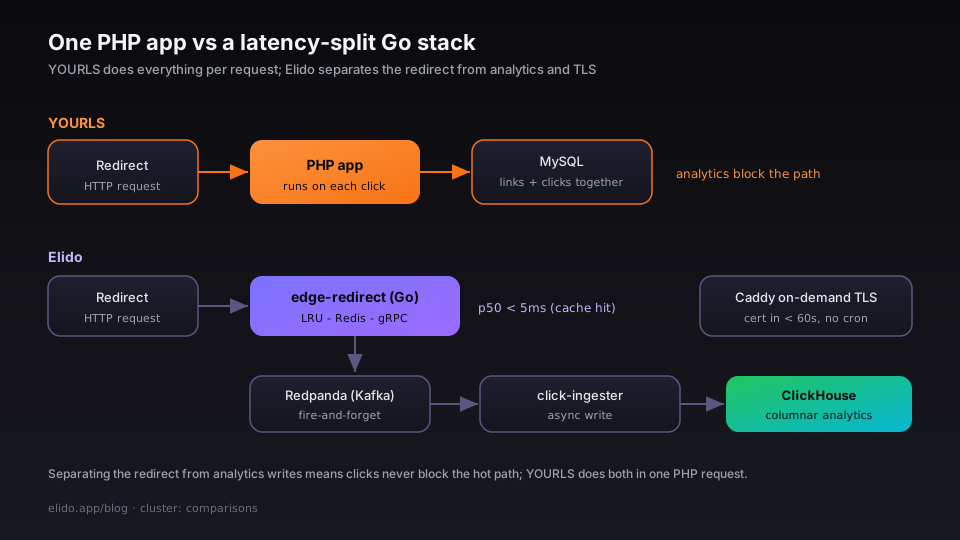
El hot path - resolución de enlaces - se ejecuta en nuestro servicio de edge a medida, con una caché de dos niveles: un LRU en proceso para los enlaces más calientes, luego la caché caliente en memoria, luego una llamada gRPC al servicio de origen como último recurso. La latencia p50 de redirección en cache hit está por debajo de 10 ms en la región. Las redirecciones de YOURLS pasan por PHP en cada solicitud; el perfil de rendimiento es diferente por diseño.
Los eventos de clic van fire-and-forget a nuestro flujo de eventos (compatible con Kafka), procesados asincrónicamente por nuestro servicio de ingestión en el almacén de analítica. Esta separación significa que la ruta de redirección nunca está bloqueada por escrituras de analíticas. El almacén de analítica es un almacén columnar construido exactamente para esta carga de trabajo - las consultas de país, dispositivo, SO, referente, atribución UTM y desglose de series temporales devuelven en milisegundos incluso a altos volúmenes de clic.
El TLS de dominios personalizados se ejecuta a través de TLS automático bajo demanda. Nuestro servicio de validación de dominios mantiene la lista de permitidos de nombres de host verificados; cuando llega una solicitud para un nuevo dominio verificado, el certificado se aprovisiona en menos de 60 segundos. Sin solicitud manual de certificado, sin cron de renovación.
Para los equipos que quieren ejecutar esto ellos mismos en lugar de usar el servicio gestionado: Elido incluye un Helm chart que despliega los 14 servicios - el tier de edge redirect, la API, analítica, facturación, ingestión, despacho de webhooks, escaneo de URLs, validación de dominios, generación de QR, obtención de metadatos y notificaciones, más el plano de datos (base de datos, caché en memoria, almacén de analítica columnar, flujo de eventos, almacenamiento de objetos y búsqueda) - en un cluster k3s. Un helm install y la plataforma completa se ejecuta en tu propia infraestructura. Consulta /en/pricing para el nivel Enterprise autohospedado.
La superficie de integración para desarrolladores son SDKs de TypeScript, Python, Ruby y Go, una CLI y un servidor MCP (código abierto, con licencia MIT en @elido/mcp-server) que expone la gestión de enlaces a Claude, Cursor y cualquier cliente compatible con MCP. Los webhooks se disparan en clic, creación de enlace, verificación de dominio y eventos de conversión con reintento automático y recibos de entrega. Nada de esto requiere búsqueda de plugins.
Comparación de características
| Capacidad | YOURLS | Elido (gestionado) | Elido (autohospedado) |
|---|---|---|---|
| Coste de ejecución | Solo coste del servidor | Suscripción | Servidor + licencia Enterprise |
| Lenguaje / stack | PHP + MySQL | A medida + analítica columnar + caché en memoria + flujo compatible con Kafka | Igual |
| Dominios personalizados | Sí (TLS manual) | Sí (TLS automático bajo demanda) | Sí (TLS automático bajo demanda) |
| Profundidad de analíticas | Registro básico de clic (plugins amplían) | Almacén columnar: desglose completo | Igual |
| Analíticas en tiempo real | Limitado | Sí | Sí |
| Desglose Geo / dispositivo / SO | Dependiente de plugin | Sí | Sí |
| Pruebas A/B | No | Sí | Sí |
| Expiración de enlaces | Plugin | Sí | Sí |
| Protección con contraseña | Plugin | Sí | Sí |
| Geo targeting (enrutamiento) | No | Sí | Sí |
| Códigos QR dinámicos | No | Sí | Sí |
| Workspaces de equipo | No (multiusuario limitado) | Sí | Sí |
| Roles / permisos | No | Sí | Sí |
| Registro de auditoría | No | Sí | Sí |
| SSO / SAML | No (existen opciones de plugin) | Sí (Business) | Sí |
| 2FA | Plugin | Sí | Sí |
| Webhooks | No | Sí | Sí |
| SDKs oficiales (TS / Python / Ruby / Go) | No | Sí | Sí |
| Servidor MCP | No | Sí | Sí |
| CLI | No | Sí | Sí |
| Residencia de datos en la UE | Donde alojes | UE por defecto | Donde despliegues |
| Carga operativa | Servidor web + PHP + MySQL | Ninguna (gestionado) | k3s + Helm |
| Ecosistema de plugins | Extenso | No aplicable | No aplicable |
| Se ejecuta en hosting compartido | Sí | No | No |
| Despliegue Helm chart / k3s | No | No | Sí |
Nota sobre las afirmaciones de plugins de YOURLS: La disponibilidad de plugins varía según el estado de mantenimiento y la compatibilidad de versiones de YOURLS. Las características marcadas como "dependientes de plugin" existen en el ecosistema pero requieren una evaluación independiente de la actividad y la postura de seguridad del plugin específico antes de desplegarlo en producción.
Carga operativa: la contabilidad honesta
La diferencia más grande entre YOURLS y Elido no son las características - es quién hace el trabajo de operaciones.
YOURLS es una aplicación PHP y una base de datos. Configurarlo lleva una tarde. Mantenerlo en funcionamiento significa parchar PHP, actualizar MySQL, gestionar la renovación de Let's Encrypt y aplicar actualizaciones de YOURLS cuando se envían. Para un individuo técnicamente capaz o un equipo pequeño con un sysadmin, esta es una superficie de mantenimiento pequeña y bien entendida. El riesgo es bajo porque el sistema es simple.
Elido gestionado es cero carga operativa por tu parte. Infraestructura en la UE, aprovisionamiento de certificados, HA de base de datos, gestión de la caché caliente, monitorización de lag del flujo de eventos, mantenimiento del almacén de analítica - nada de eso es tu problema. La compensación es que estás confiando en la infraestructura de Elido y aceptando que los datos viven en el plano de control de Elido (alojado en la UE, con un DPA que cubre las obligaciones del Artículo 28 - pero aún no en tus servidores).
Elido autohospedado en k3s es la tercera opción, y es genuinamente complejo. Catorce servicios, un plano de datos con cinco componentes, configuración Helm para coincidir con tu clase de almacenamiento y configuración de ingress. Esto no es un proyecto de fin de semana; es un proyecto de infraestructura que requiere un equipo cómodo con operaciones de Kubernetes. El beneficio es soberanía completa de datos combinada con el conjunto completo de características de Elido - residencia de datos en la UE porque es tu cluster en tu jurisdicción, no porque un proveedor lo prometa. Para organizaciones en industrias reguladas o con requisitos duros de soberanía de datos, esta combinación es el punto de la oferta. Consulta /en/pricing para el nivel Enterprise que incluye el Helm chart y el SLA de soporte.
Cuándo YOURLS es la respuesta correcta
YOURLS es la elección correcta cuando todo lo siguiente es cierto:
- Tienes una persona o un pequeño equipo que controla toda la creación de enlaces, y el control de acceso multiusuario no es un requisito.
- Tus requisitos de analíticas son "cuántas veces se hizo clic en este enlace" en lugar de "qué tipo de dispositivo, qué país y qué fuente UTM impulsaron las conversiones esta semana".
- Tienes un administrador competente en PHP disponible para manejar actualizaciones, renovación de certificados y mantenimiento de plugins.
- El presupuesto es una restricción dura y el coste del servidor ya está contabilizado (alojando otro servicio en un servidor existente, por ejemplo).
- Estás cómodo ensamblando características a través de plugins y aceptas el riesgo de dependencia y mantenimiento que viene con los plugins de la comunidad.
Desarrolladores que ejecutan un dominio corto personal para sus propios enlaces, pequeñas organizaciones sin fines de lucro con un voluntario de TI que sabe PHP, equipos de herramientas internas en organizaciones donde todo el tráfico es interno y la profundidad analítica es baja - estos son casos de uso legítimos de YOURLS. Elegir YOURLS para estos escenarios no es un compromiso; es la herramienta apropiada.
Cuándo YOURLS deja de ser suficiente
La decisión de moverse típicamente viene de uno de cuatro lugares.
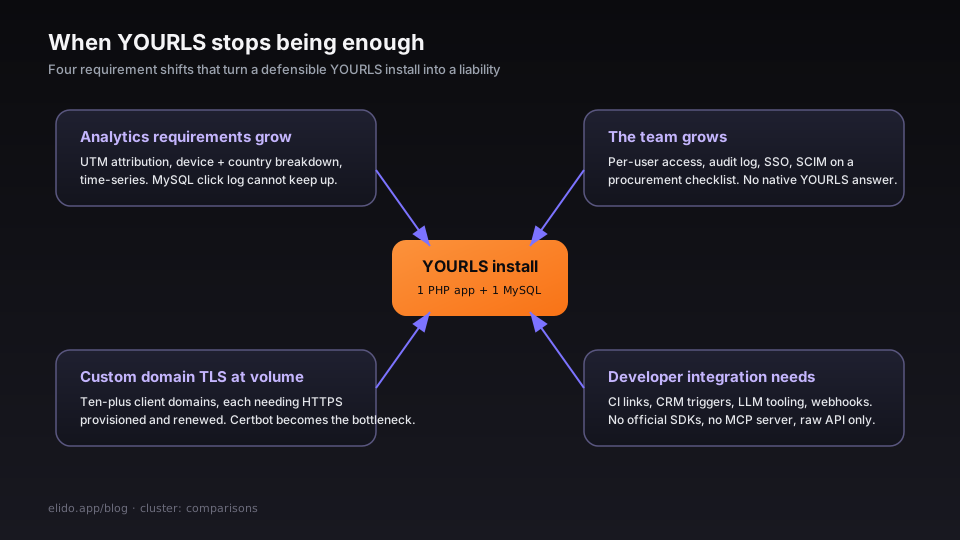
Los requisitos de analíticas crecen. En el momento en que necesitas atribución UTM, desglose por dispositivo, análisis de series temporales o seguimiento de conversiones, el registro de clic de YOURLS se convierte en una responsabilidad. Ensamblar esto a partir de plugins es posible pero requiere mantenimiento continuo de esos plugins, y el rendimiento de consulta en MySQL a escala no es lo que ofrece un almacén de analítica columnar. Las analíticas de Elido están construidas sobre el stack que fue diseñado para esta carga de trabajo desde el principio.
El equipo crece. Dos personas compartiendo un panel de administración de YOURLS es manejable. Cinco personas de diferentes departamentos, cada una necesitando acceso a sus propios enlaces pero no a los de las demás, con un requisito de InfoSec para el registro de auditoría y una lista de procurement que pregunta sobre SSO - YOURLS no tiene respuesta para esto. El modelo de workspace, RBAC, registro de auditoría y aprovisionamiento SCIM de Elido existen porque este es un requisito real a escala.
TLS de dominios personalizados a volumen. Un dominio con Certbot funciona. Diez dominios entre múltiples clientes, cada uno necesitando HTTPS aprovisionado y renovado, con nuevos dominios añadiéndose regularmente - la gestión manual de certificados se convierte en el cuello de botella. El TLS automático bajo demanda de Elido elimina esto por completo. La página de características cubre cómo funcionan la emisión de TLS automático y el pipeline de verificación de dominio.
Requisitos de integración para desarrolladores. La API de YOURLS es funcional pero el ecosistema circundante es mínimo. Cuando la gestión de enlaces necesita estar incrustada en pipelines de CI, disparada por eventos CRM, consultada por herramientas LLM o integrada con el reenvío de conversiones del lado del servidor, la ausencia de SDKs oficiales, webhooks y un servidor MCP significa escribir y mantener esa capa de integración tú mismo. Elido incluye esto.
Nota de migración
Tanto YOURLS como Elido admiten la exportación CSV. Una exportación de YOURLS contiene la URL corta, el destino, el título y la fecha de creación. El endpoint de importación masiva de Elido en /v1/links/bulk acepta slug, destino y etiquetas. Una migración mínima es un script que lee la exportación de YOURLS, mapea las URLs cortas a slugs y hace POST al endpoint de importación masiva.
Una cosa que no migra: el historial de clic. Las analíticas en Elido comienzan desde la fecha de migración. Si tus datos de clic de YOURLS necesitan ser preservados para informes, exporta y archiva por separado antes de cambiar.
Si estás moviendo un dominio corto personalizado de YOURLS a Elido, el orden importa: registra el dominio en tu workspace de Elido, deja que TLS se aprovisione, luego actualiza el CNAME de DNS para apuntar al borde de Elido. Desde el momento en que el DNS se propaga, las redirecciones se sirven desde Elido. Actualiza primero el DNS y obtendrás un error de certificado durante la ventana de propagación.
La pregunta de autohospedaje
El marco de "autohospedaje vs gestionado" oscurece lo que en realidad es una elección de tres vías en esta comparación:
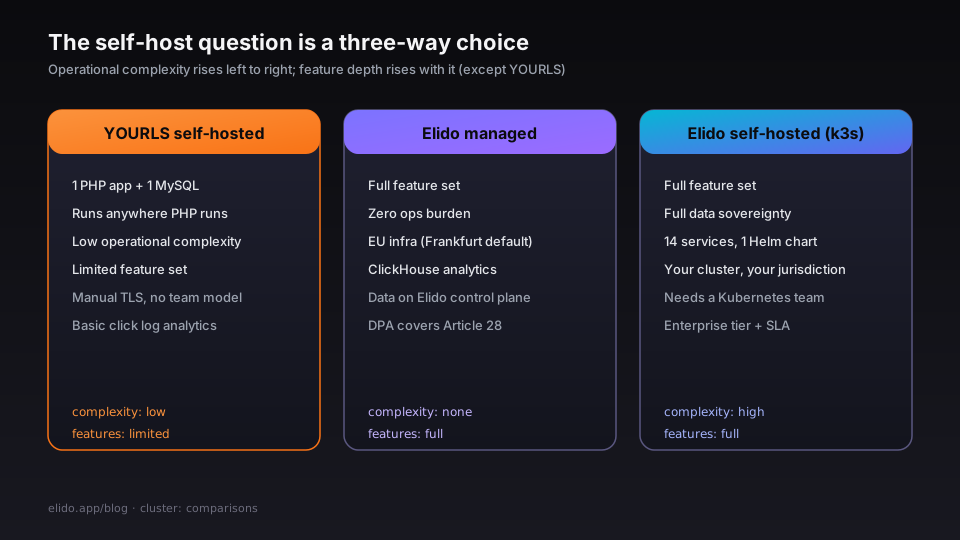
- YOURLS autohospedado - una aplicación PHP, una base de datos, se ejecuta en cualquier lugar, baja complejidad operativa, conjunto limitado de características.
- Elido gestionado - conjunto completo de características, cero carga operativa, datos en la infraestructura UE de Elido.
- Elido autohospedado en k3s - conjunto completo de características, soberanía completa de datos, alta complejidad operativa, requiere un equipo capaz de Kubernetes.
YOURLS no está compitiendo con el nivel gestionado de Elido en el eje de autohospedaje. Está compitiendo con la opción autohospedada de Elido en el eje de simplicidad operativa - y gana esa comparación para las organizaciones sin un equipo de Kubernetes. YOURLS está compitiendo con el nivel gestionado de Elido en el eje de características - y pierde la mayoría de esas comparaciones una vez que la profundidad analítica, las características de equipo o la integración para desarrolladores se convierten en requisitos.
El resumen honesto: si estás evaluando acortadores y el conductor principal es "quiero ejecutar esto yo mismo y no necesito analíticas de grado almacén columnar o un SDK de desarrollador", YOURLS sigue siendo una elección defendible en 2026. Si cualquiera de profundidad analítica, control de acceso en equipo, residencia de datos en la UE contractualmente garantizada o herramientas de integración para desarrolladores es un requisito, la brecha entre YOURLS y un despliegue gestionado o autohospedado en k3s de Elido es real y crece con el tiempo.
Para una comparación más amplia entre acortadores, el post de acortadores gratuitos de URL clasificados cubre el campo gestionado con una metodología consistente. Los precios actuales por nivel de Elido - incluido el nivel Enterprise autohospedado - están en /en/pricing.
Relacionado en el blog
Prueba Elido
Pega una URL, obtén un enlace corto
Sin registro. El enlace vive 30 días. Crea una cuenta para conservarlo.
Gratis, sin registro · 2 por día