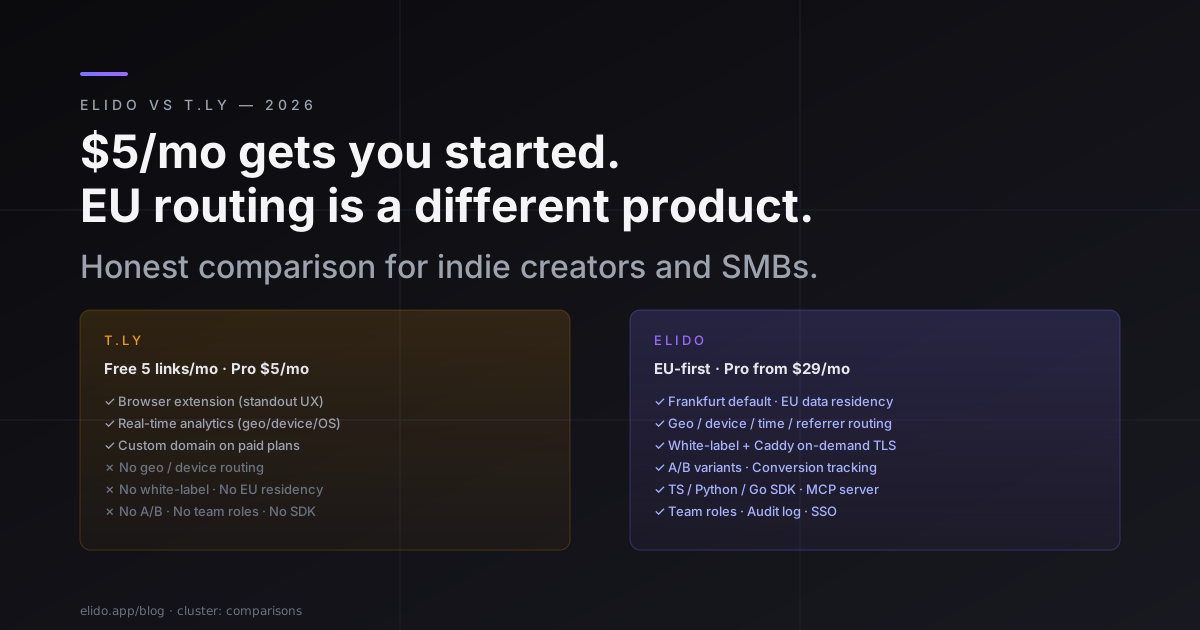
T.LY es un acortador de URL que ha encontrado una posición clara en un campo abarrotado: precio de entrada bajo, una extensión de navegador pulida y un nivel gratuito que es más funcional que la mayoría. Si necesitas acortar enlaces rápidamente desde dondequiera que estés en la web y mantener la factura mensual baja, T.LY es una elección coherente.
Ese posicionamiento también describe su techo. Este post cubre dónde T.LY hace el trabajo bien, dónde cae el suelo y qué cuesta realmente la decisión cuando tus requisitos crecen más allá de lo básico. Todas las referencias de precios y características de T.LY están extraídas de la investigación competitiva de abril de 2026. La página t.ly/pricing bloqueó la verificación automática de hechos en mayo de 2026 - verifica los números actuales en t.ly/pricing antes de cualquier conversación de procurement.
TL;DR
- El nivel gratuito de T.LY tiene un tope de 5 enlaces por mes, lo que es ajustado. Su nivel Pro a $5/mes es uno de los puntos de entrada más bajos del mercado para una plataforma con analíticas reales y dominios personalizados.
- La extensión del navegador es la característica destacada de UX de T.LY - maneja el flujo de "acortar desde cualquier lugar" mejor que la mayoría de los competidores.
- Las brechas de T.LY son consistentes: sin enrutamiento geográfico o de dispositivo, sin variantes A/B, sin white-label, sin residencia de datos en la UE, registro de auditoría ausente, SSO limitado. Estos no son casos extremos para una pyme en crecimiento - aparecen uno por uno a medida que el equipo escala.
- Elido cubre esas brechas directamente: infraestructura por defecto en la UE, white-label con automatización completa de TLS para dominios personalizados, enrutamiento inteligente de seis dimensiones, variantes A/B de enlaces, SDKs de TS/Python/Go y un servidor MCP para flujos de trabajo de herramientas para desarrolladores.
- Si estás comparando en todo el panorama de acortadores, el post de acortadores gratuitos de URL clasificados compara T.LY con ocho otras plataformas en una metodología consistente. Los precios actuales por nivel de Elido están en /en/pricing.
Dónde gana T.LY
Precio de entrada. T.LY Pro a $5/mes es genuinamente bajo para un plan que incluye dominios personalizados, analíticas en tiempo real y una extensión de navegador. La tabla de investigación de competidores muestra que la mayoría de los planes comparables comienzan en $8–$24. Para un creador en solitario o un equipo de dos personas con volumen moderado de enlaces y sin requisitos de cumplimiento, el punto de precio de $5 es la decisión correcta. El post de acortadores gratuitos de URL clasificados compara esto directamente.
UX de extensión del navegador. T.LY incluye una extensión del navegador que maneja el flujo de acortamiento principal sin salir de tu pestaña actual. Resaltas una URL, haces clic en la extensión, opcionalmente editas el slug y copias el resultado. Para un creador o marketer que acorta enlaces mientras trabaja en el navegador - escribiendo un boletín, componiendo una publicación social, curando una lista de lectura - este flujo es más rápido que cambiar a una pestaña y usar un panel. La matriz de competidores marca la extensión del navegador de T.LY como presente (y la marca también para Bitly, Rebrandly, Short.io, Dub.co y otros), pero el posicionamiento de T.LY se ha inclinado más fuertemente hacia la extensión que la mayoría, y la UX refleja ese énfasis.
Onboarding simple. La ruta de T.LY desde el registro hasta el primer enlace es corta. El panel es escaso por diseño. Para un usuario que quiere estar funcionando en cinco minutos sin leer documentación, el alcance del producto es lo suficientemente estrecho como para que la orientación sea rápida. Esto no es un cumplido tibio - la fatiga por complejidad es real, y una herramienta que hace menos cosas pero las hace sin fricción sirve mejor a ese usuario que una plataforma más capaz que tarda más en entenderse.
Analíticas en planes de pago. Los niveles de pago de T.LY incluyen analíticas en tiempo real con desgloses geográficos, de dispositivo y de SO - la matriz de competidores marca los tres como presentes. Para el precio, esta es una cobertura sólida. Obtienes el panel de clics que necesitas para entender qué enlaces están rindiendo y de dónde viene el tráfico.
Dónde se detiene T.LY
La matriz de competidores es directa sobre las brechas. Estas son las celdas que devuelven vacío para T.LY:
- Geo targeting (enrutamiento)
- Device targeting (enrutamiento)
- Pruebas A/B / rotación de enlaces
- Seguimiento de conversiones
- Píxeles de retargeting
- White-label
- Roles y permisos
- Registro de auditoría
- SSO / SAML (marcado como limitado,
⚠️) - QR dinámico (marcado como limitado,
⚠️) - Workspaces / equipos (marcado como limitado,
⚠️) - Protección con contraseña (marcado como limitado,
⚠️) - Webhooks (marcado como limitado,
⚠️)
Vale la pena separar la brecha de analíticas de la brecha de enrutamiento, porque parecen similares en una lista de verificación de características pero significan cosas diferentes operativamente. T.LY puede decirte que un enlace obtuvo 400 clics desde Alemania en móvil. No puede enrutar a esos visitantes móviles alemanes a un destino diferente que a los visitantes de escritorio estadounidenses. Las analíticas en tiempo real y el enrutamiento condicional son capacidades distintas - T.LY incluye lo primero, no lo segundo.
La brecha de white-label importa para una categoría específica de usuario de T.LY: freelancers y pequeñas agencias que gestionan enlaces en nombre de clientes. Si el entregable del cliente incluye un dominio corto de marca bajo su propio nombre, la arquitectura de T.LY no admite la capa white-label. Siempre eres cliente de T.LY, no la infraestructura invisible de tu cliente.
Matriz de características
La matriz a continuación usa la investigación de competidores de abril de 2026. Los elementos marcados ⚠️ están documentados como limitados en la investigación - presentes de alguna forma pero no a capacidad completa o restringidos a niveles superiores. Verifica el estado actual del producto antes de usar esto en una comparación de procurement.
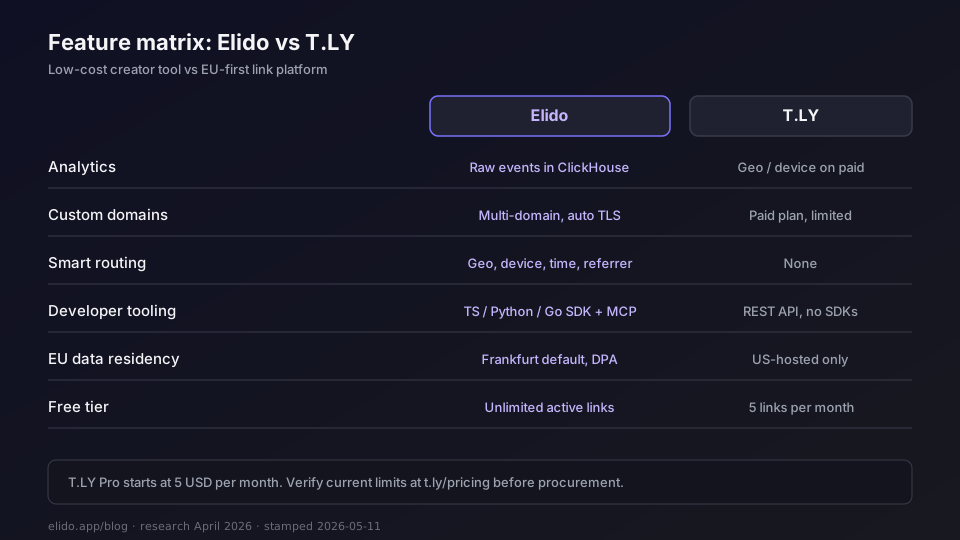
| Característica | T.LY Free | T.LY Pro ($5/mo) | Elido Free | Elido Pro |
|---|---|---|---|---|
| Enlaces por mes | 5 | Generoso (tope no verificado) | Activos ilimitados | Activos ilimitados |
| Slug personalizado | Sí | Sí | Sí | Sí |
| Dominio personalizado | No | Sí (limitado ⚠️) | No | Sí |
| Múltiples dominios | No | Limitado ⚠️ | No | Sí |
| TLS bajo demanda para dominio personalizado | - | SSL automático (mecánica no verificada) | - | Sí (automático, <60s) |
| Analíticas en tiempo real | Sí | Sí | 500 clics/mes | Completa (eventos de clic en bruto) |
| Analíticas Geo / dispositivo / SO | Sí | Sí | No | Sí |
| Geo targeting (enrutamiento) | No | No | No | Sí |
| Device targeting (enrutamiento) | No | No | No | Sí |
| Variantes A/B de enlaces | No | No | No | Sí |
| Rotación de enlaces | No | No | No | Sí |
| Expiración de enlaces | Sí | Sí | No | Sí |
| Protección con contraseña | Limitado ⚠️ | Limitado ⚠️ | No | Sí |
| Códigos QR dinámicos | Limitado ⚠️ | Limitado ⚠️ | No | Sí |
| Marca QR + logo + exportación vectorial | Limitado ⚠️ | Limitado ⚠️ | No | Sí |
| Constructor UTM | Limitado ⚠️ | Limitado ⚠️ | No | Sí |
| Seguimiento de conversiones | No | No | No | Sí |
| Píxeles de retargeting | No | No | No | Sí |
| Webhooks | Limitado ⚠️ | Limitado ⚠️ | No | Sí |
| Extensión del navegador | Sí | Sí | No | No |
| Workspaces / equipos | Limitado ⚠️ | Limitado ⚠️ | No | Sí |
| Roles / permisos | No | No | No | Sí |
| SSO / SAML | Limitado ⚠️ | Limitado ⚠️ | No | Sí (Business) |
| Registro de auditoría | No | No | No | Sí |
| 2FA | Limitado ⚠️ | Limitado ⚠️ | No | Sí |
| White-label | No | No | No | Sí |
| SDK TypeScript / Python / Ruby / Go | No | No | No | Sí |
| Servidor MCP | No | No | No | Sí |
| Residencia de datos en la UE | No | No | No | Sí (por defecto) |
| Opción de autohospedaje | No | No | No | Sí (Enterprise) |
Nota de verificación: La mecánica de dominios personalizados de T.LY, los límites exactos en las características "limitadas" y los detalles de lo que añaden los niveles Premium ($19/mes) y Custom no están completamente documentados en la investigación de abril de 2026. Las entradas ⚠️ reflejan la clasificación de la investigación - presente de alguna forma, no totalmente verificada a nivel de capacidad. No uses las columnas de T.LY como referencia de procurement sin verificar el producto actual.
Dónde gana Elido
Residencia de datos en la UE como predeterminada, no como opción. La infraestructura de T.LY tiene sede en EE. UU. Los eventos de clic - que incluyen direcciones IP y cadenas de agente de usuario, ambos datos personales según GDPR Recital 30 - se procesan en EE. UU. Para los equipos de marketing de la UE, esto requiere Cláusulas Contractuales Tipo y, en industrias reguladas, una Evaluación de Impacto de Transferencia. Para los compradores del sector público de la UE, fintech o salud, esto no es un matiz de papeleo; es un bloqueador de procurement.
El plano de datos primario de Elido es la región de la UE. Los eventos de clic no abandonan el EEE por defecto. El DPA se envía con obligaciones del Artículo 28 pre-firmadas en el contrato estándar - sin negociación personalizada para la mayoría de los compradores de la UE. El anclaje regional (EE. UU. Este, Asia-Pacífico) está disponible como opt-in de nivel Business si lo necesitas en la otra dirección.
Profundidad de white-label con TLS automatizado de dominio. White-label en Elido significa que tus usuarios finales ven tu dominio, tu marca y ninguna huella de Elido. El stack de dominios personalizados está construido sobre TLS automático bajo demanda: apuntas un CNAME, Elido sondea la propagación y el certificado se aprovisiona en la primera solicitud - en menos de 60 segundos desde la propagación del DNS, sin disparador manual. Para las agencias que gestionan subdominios por cliente, el soporte de dominio wildcard del plan Business cubre todas las variaciones de subdominio bajo una sola entrada CNAME. La página de características tiene la mecánica de DNS y TLS en detalle.
T.LY no ofrece white-label. El soporte de dominios personalizados en sus planes de pago está presente pero descrito como limitado en la investigación; la mecánica de aprovisionamiento TLS no está detallada públicamente.
Enrutamiento inteligente: geo, dispositivo, tiempo, referente. El enrutamiento de enlaces de Elido cubre seis dimensiones: país, tipo de dispositivo, sistema operativo, idioma, hora del día y referente. Puedes construir un enlace que envíe a los usuarios móviles alemanes a la página de la App Store en alemán, envíe a los usuarios de escritorio a la landing page web y envíe todo lo demás a un destino predeterminado. T.LY no tiene capacidad de enrutamiento condicional. Las analíticas te muestran el desglose; el enrutamiento no está ahí.
Para una pyme que ejecuta un lanzamiento de producto en mercados, esta diferencia es la brecha entre una herramienta que informa sobre lo que pasó y una herramienta que participa en lo que pasa.
Variantes A/B de enlaces. Elido admite pruebas A/B a nivel de enlace: divide el tráfico entre dos URLs de destino, mide qué variante impulsa más conversiones aguas abajo. T.LY no tiene capacidad de pruebas A/B. La matriz de competidores lo confirma para T.LY y lo marca como ausente para la mayoría de los acortadores - Short.io, Dub.co y Elido son los acortadores en el conjunto de comparación que lo incluyen.
Historia del servidor MCP y SDK. Elido incluye SDKs de TypeScript, Python, Ruby y Go mantenidos contra la especificación OpenAPI 3.1, además de un servidor MCP de código abierto con licencia MIT que conecta Elido con Claude, Cursor o cualquier cliente compatible con MCP. Para un equipo de ingeniería de desarrollador o plataforma que gestiona infraestructura de enlaces programáticamente - importaciones masivas, creación de enlaces disparada por CI, consultas analíticas con herramientas LLM - la brecha de herramientas entre T.LY y Elido es el factor decisivo. T.LY tiene una API REST pero ningún SDK publicado o integración MCP. Consulta /en/features para una visión general de las herramientas para desarrolladores.
Escenarios honestos
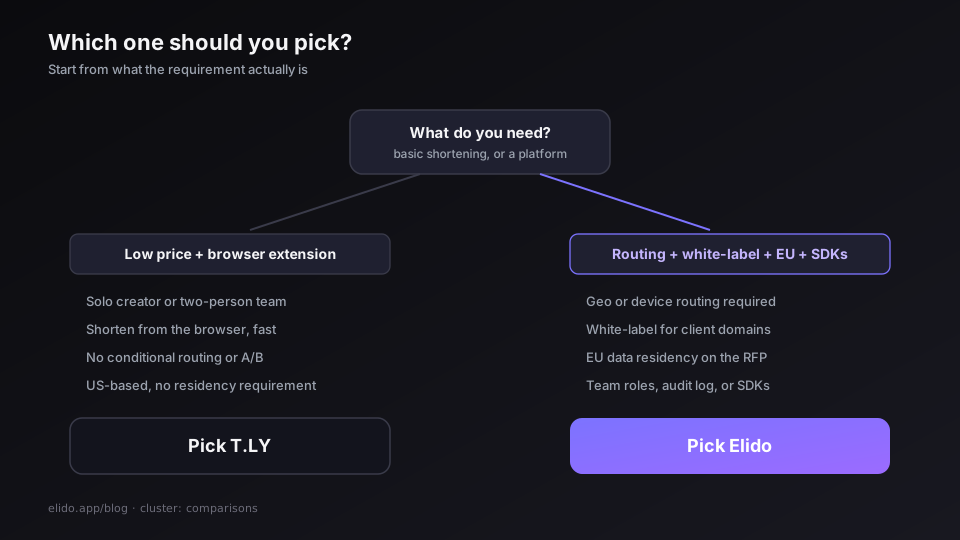
Cuándo T.LY es la herramienta correcta
T.LY encaja cuando todo lo siguiente es cierto:
- Necesitas acortar enlaces rápidamente desde el navegador, y el flujo de la extensión vale más que un conjunto de características más rico que no usarás.
- Tu volumen es bajo (T.LY Pro a $5 es difícil de superar a este punto de precio para analíticas básicas + dominio personalizado).
- No tienes razón de cumplimiento para controlar dónde se procesan los metadatos de clic - tu audiencia tiene sede en EE. UU., o tu categoría está fuera de las industrias reguladas.
- No necesitas enrutar tráfico condicionalmente, ejecutar pruebas A/B o gestionar enlaces a través de un equipo con roles distintos.
- Eres un creador, freelancer o equipo de dos personas donde las características adicionales que incluye Elido son sobrecarga, no valor.
T.LY es la herramienta correcta en estos escenarios. El precio es justo, la extensión es genuinamente útil y las analíticas en los planes de pago cubren bien lo básico.
Cuándo has superado T.LY
El disparador suele ser una de cuatro cosas:
Aparece un requisito de enrutamiento. Quieres enviar a los usuarios móviles a un lugar diferente que a los usuarios de escritorio, o quieres ejecutar una campaña geo-dirigida que apunte a los visitantes franceses a una landing page en francés. T.LY no tiene capa de enrutamiento. Este requisito por sí solo es suficiente para mover plataformas - no puedes solucionar su ausencia.
El equipo crece. El modelo de workspace y permisos de T.LY es limitado. Una vez que una segunda o tercera persona necesita acceso gestionado a la misma biblioteca de enlaces - con roles distintos, un rastro de auditoría de quién creó qué y una ruta de desaprovisionamiento cuando alguien se va - T.LY no tiene el modelo para soportarlo.
Un cliente quiere su propia marca. Los freelancers y agencias chocan con esto primero: el cliente espera un dominio corto que diga links.theirclient.com, no t.ly. T.LY no tiene capa white-label. La única ruta adelante desde este requisito es una plataforma que admita dominios personalizados bajo la marca del cliente, con la automatización de TLS para hacerlo operativamente manejable.
Aparece el cumplimiento de la UE. Si una lista de procurement incluye una cláusula de residencia de datos - RFP del sector público de la UE, revisión de proveedor fintech, BAA de salud - la infraestructura estadounidense de T.LY es un no-arranque. La conversación termina antes de que comience la comparación de características.
Migración desde T.LY
El formato de exportación de T.LY es CSV. Cada fila contiene la URL corta, el destino, el dominio y el slug. El endpoint de importación masiva de Elido en /v1/links/bulk acepta el slug y las etiquetas de esta exportación y los preserva tal cual. La secuencia práctica:
- Exporta tu biblioteca de enlaces de T.LY como CSV.
- Registra tu dominio de marca en tu workspace de Elido y deja que TLS se aprovisione (apunta el CNAME, Elido se encarga del resto en 60 segundos desde la propagación del DNS).
- Ejecuta la importación masiva con tu dominio y slugs. Desde el momento en que el DNS se propaga, los antiguos slugs en tu dominio se resuelven a través de Elido.
Los datos históricos de clic de T.LY no se transfieren - las analíticas desde el día de la migración en adelante son frescas en el almacén de analítica de Elido. Si has acumulado meses de historial de clic de T.LY que importa para informes, exporta y archiva por separado antes de cerrar la cuenta. La mecánica de migración es la misma que la ruta de migración de Rebrandly documentada en el post elido-vs-rebrandly.
La decisión
T.LY se gana su posición. El nivel Pro de $5 es valor honesto para un creador o marketer en solitario que quiere analíticas de dominio personalizado sin una gran factura mensual. La extensión del navegador es el mejor diferenciador de característica única entre los acortadores de bajo coste.
Los límites de la plataforma también son honestos. No hay motor de enrutamiento, ni white-label, ni residencia en la UE, ni pruebas A/B, ni modelo de equipo que escale más allá de dos o tres personas en un inicio de sesión compartido. Estas no son características faltantes esperando ser enviadas - reflejan una decisión deliberada de alcance. T.LY está construido para uso individual, con precios acordes, y funciona bien dentro de ese alcance.
Elido está construido para la capa superior: gestión de enlaces con atribución, estructuras de equipo y permisos, manejo de datos centrado en la UE y profundidad de integración para desarrolladores. La superposición es real - ambos productos acortarán una URL y te mostrarán recuentos de clic - pero los escenarios donde importan las capacidades de Elido son los escenarios donde T.LY no proporciona camino adelante.
Ejecuta T.LY mientras el flujo de la extensión, el precio y la profundidad analítica sean suficientes. Cambia cuando la lógica de enrutamiento, los requisitos de cumplimiento, las necesidades de white-label o la escala del equipo empujen más allá del techo de T.LY.
Para la comparación más amplia entre acortadores, el post de acortadores gratuitos de URL clasificados cubre el campo completo. Los precios actuales por nivel de Elido están en /en/pricing.
Relacionado en el blog
- Acortadores de URL para marketers: la matriz comparativa 2026
- Pruebas A/B en landing pages con enlaces cortos - sin herramienta CRO requerida
- Acortadores de URL para influencers: dominio de marca, slugs y rastros de auditoría
- Residencia de datos en la UE para herramientas de marketing: lo que realmente pregunta tu DPO
Prueba Elido
Pega una URL, obtén un enlace corto
Sin registro. El enlace vive 30 días. Crea una cuenta para conservarlo.
Gratis, sin registro · 2 por día