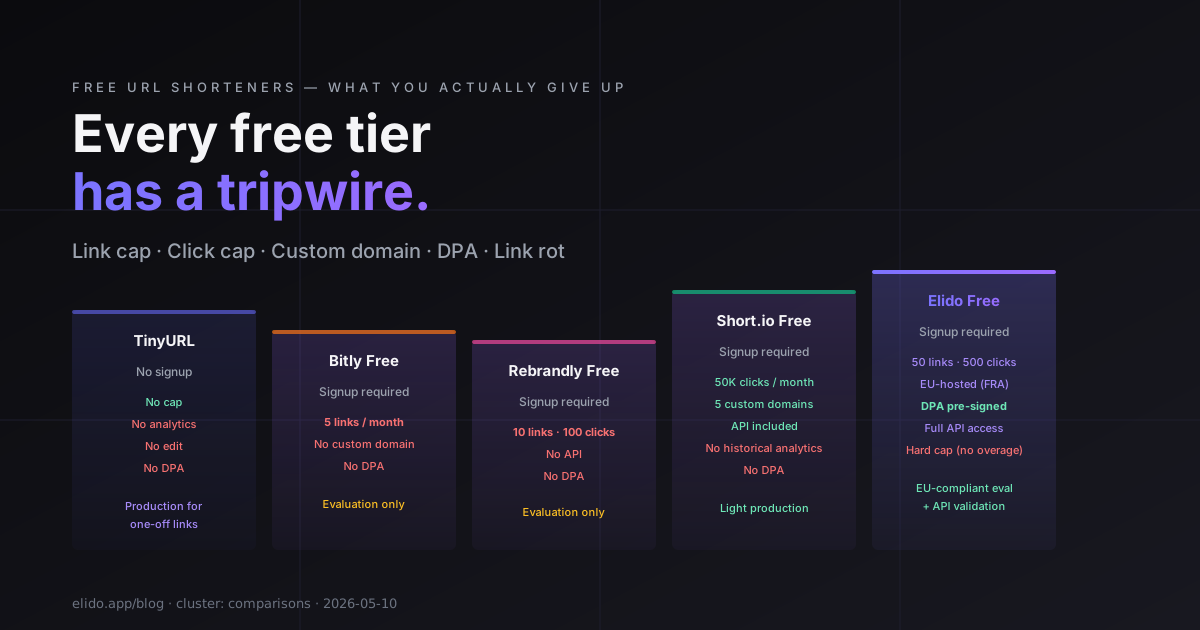
Chaque raccourcisseur gratuit se paie d'une manière ou d'une autre. La question est de savoir si vous payez en friction (des plafonds qui mordent dès que vous grandissez), en données (vos journaux de clics sont le produit), ou en temps (lorsque le service ferme et que vos liens pourrissent). Aucun de ces scénarios n'est hypothétique : Goo.gl a fermé en 2019. OW.LY n'est pratiquement plus maintenu. Le dernier commit de Polr remonte à des années. Le cimetière des raccourcisseurs de liens « gratuits pour toujours » est plus grand que la liste de ceux qui fonctionnent encore.
La question de l'évaluation n'est pas « quel raccourcisseur gratuit a le plus de fonctionnalités » - c'est « quel piège du raccourcisseur gratuit est le plus compatible avec ma manière réelle de l'utiliser ».
TL;DR
- TinyURL est la seule option réellement sans friction : pas d'inscription, pas de plafond, pas d'expiration. Mais aussi pas d'analytique, pas d'édition, pas de DPA RGPD.
- Bitly Free mord immédiatement : 5 liens par mois au 10/05/2026. L'offre gratuite est à peine fonctionnelle pour une évaluation.
- Rebrandly Free permet 10 liens/mois avec 100 clics suivis - également en pratique réservé à l'évaluation.
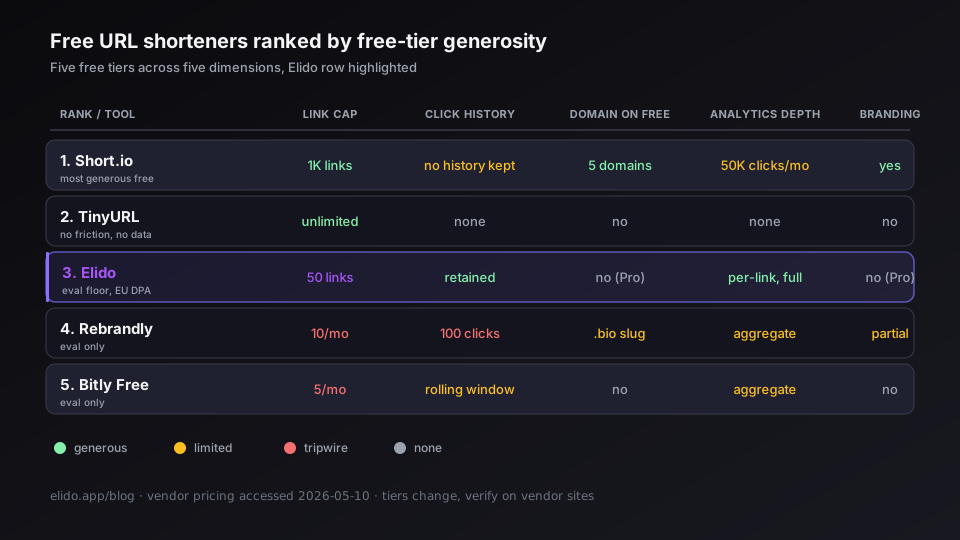
- Short.io Free offre la structure de plafonds la plus généreuse des cinq : 50K clics/mois, 5 domaines personnalisés, 1K liens. Le piège est qu'elle est assez généreuse pour ressembler à de la production tout en ayant des limites significatives.
- Elido Free propose 50 liens et 500 clics/mois - un plancher d'évaluation délibéré, hébergé dans l'UE, avec un plafond strict et sans surprise de dépassement.
Ce que « gratuit » coûte réellement
Trois structures de coûts distinctes se cachent derrière le mot :
Le déclencheur de plafonnement. L'offre gratuite est assez fonctionnelle pour évaluer le produit, assez basse pour forcer une mise à niveau dès que l'usage devient réel. Bitly et Rebrandly utilisent ce modèle. La logique commerciale est saine : l'offre gratuite est une usine à prospects qualifiés pour les ventes, pas une ligne de produits. Rien de mal à cela - tant que vous savez ce que c'est.
Les données comme paiement. Pas de plafond, pas d'analytique, pas de DPA. TinyURL est l'exemple canonique. Les liens fonctionnent. Vos données de clics sont, selon la juridiction et le cas d'usage, un problème RGPD. Les conditions de TinyURL (tinyurl.com/app/terms, consultées le 10/05/2026) régissent ce qu'ils font des données de redirection. Pour des outils internes ou des liens personnels, c'est probablement acceptable. Pour des liens de campagne sur une landing page produit SaaS B2B, ça ne l'est peut-être pas.
Généreux jusqu'à la production. L'offre gratuite de Short.io est assez vaste pour gérer un trafic de production léger. Ce n'est pas une critique - c'est utile. Mais le plafond d'analytique de clics signifie que vous perdez la visibilité dès que le trafic décolle, ce qui est précisément le moment où vous en avez le plus besoin.
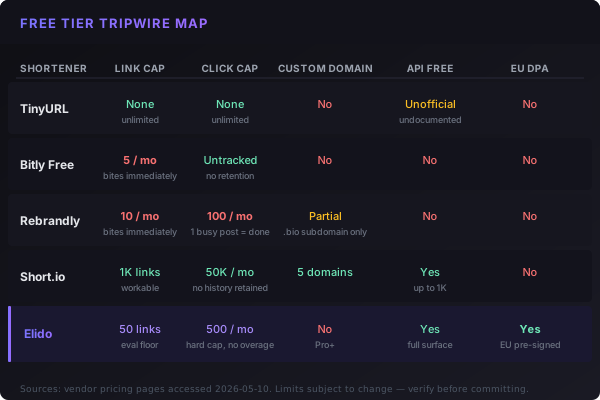
La matrice
TinyURL
Aucune inscription requise. Collez une URL, obtenez un lien court, il fonctionne indéfiniment. Ce n'est pas anodin - TinyURL existe depuis 2002 et les liens de cette époque se résolvent encore.
Ce qui fonctionne : La plus faible friction de cette liste. Vous pouvez l'intégrer à des outils sans compte. Le point de terminaison tinyurl.com/api-create.php?url=<url> est techniquement disponible sans clé (non documenté, à débit limité). Pour un usage personnel, des redirections d'outils internes, ou des partages ponctuels où l'analytique est sans pertinence, TinyURL est la bonne réponse.
Ce qui mord : Pas d'édition. Pas d'analytique. Pas de DPA RGPD couvrant votre usage. Pas de domaine personnalisé en gratuit. Si vous avez besoin de changer la destination d'un lien après l'avoir publié, vous ne pouvez pas. Si un audit de conformité demande « quels liens TinyURL avez-vous distribués, quand, à qui, et vers où redirigeaient-ils », la réponse côté TinyURL est : rien.
À qui ça s'adresse : Usage personnel. Outils internes. Tout cas d'usage où l'URL est la seule chose qui compte et où la piste des clics est sans pertinence.
Bitly Free
L'offre gratuite de Bitly est, selon la page tarifaire publique consultée le 10/05/2026, de 5 liens par mois. Plus 2 codes QR et 3 alias personnalisés. Pas de domaine de marque - ça commence avec le plan Growth (29 $/mois). L'analytique est disponible mais sans fenêtre de rétention.
Ce chiffre mérite d'être dit clairement : cinq liens par mois. L'offre gratuite de Bitly n'est pas un outil utilisable pour une équipe marketing, ni même pour un marketeur solo. C'est une démo produit avec des liens partageables.
Ce qui fonctionne : La reconnaissance de la marque. Si votre équipe a déjà la mémoire musculaire Bitly et que vous évaluez une mise à niveau, l'offre gratuite vous permet de naviguer dans l'interface. L'UX de gestion des liens est solide.
Ce qui mord : Le plafond est le produit. Cinq liens par mois, c'est moins que ce que la plupart des équipes créent pour une seule campagne. Et dès que vous passez à un plan payant, vous entrez dans le décompte des BSU - chaque lien, chaque code QR, chaque smart link est une Branded Short Unit, et l'allocation BSU du plan Growth a une courbe de dépassement qui s'aggrave. L'arithmétique tarifaire face au modèle plat d'Elido est détaillée dans l'article Elido vs Bitly.
À qui ça s'adresse : Évaluation uniquement. Si vous faites autre chose que tâter le terrain, vous êtes sur un plan payant en moins d'une semaine.
Rebrandly Free
10 liens par mois, 10 codes QR, 100 clics suivis - selon la page tarifaire Rebrandly consultée le 10/05/2026. Un domaine de marque (un alias votremarque.bio plutôt qu'un CNAME personnalisé). Pas d'accès API sur l'offre gratuite. Pas de smart links, pas de protection par mot de passe, pas de routage de trafic.
Le plafond de 100 clics suivis est la contrainte bloquante. Vous pouvez créer 10 liens ; vous pouvez voir l'analytique sur 100 des clics qu'ils génèrent avant la réinitialisation mensuelle. Un seul post social peut tout consommer en une heure.
Ce qui fonctionne : Le concept de domaine de marque - même le domaine .bio de l'offre gratuite - est plus propre que l'offre gratuite de Bitly, qui ne propose aucun domaine personnalisé. Si vous évaluez les liens courts de marque comme concept et voulez montrer à un décideur à quoi ressemble un lien de marque sur le terrain, l'offre gratuite de Rebrandly le fait.
Ce qui mord : Pas d'API, donc pas d'automatisation. Pas de smart links. La fenêtre d'analytique de 100 clics signifie que les données d'évaluation sont quasi inutiles si le lien voit du trafic réel. L'offre gratuite de Rebrandly est plus étroite que celle de Bitly de manières significatives - moins de liens, plafond d'analytique plus dur. Si votre cas d'usage implique de l'automatisation ou de la création programmatique de liens, il vous faut un plan Rebrandly payant ou un autre outil.
À qui ça s'adresse : Évaluation de l'UX des liens de marque. Pas évaluation de l'ensemble des fonctionnalités de Rebrandly, qui est majoritairement derrière des paliers payants.
Short.io Personal
L'offre gratuite de Short.io est nettement plus généreuse que les autres de cette liste. La page tarifaire publique (short.io/pricing, consultée le 10/05/2026) affiche : 50K clics suivis/mois, 5 domaines personnalisés, 1K liens, API et import en masse inclus jusqu'à 1K liens.
C'est une charge de travail réelle. Une équipe marketing gérant 20-30 campagnes actives avec un domaine de marque et une analytique légère y trouve son compte sans avoir besoin de mettre à niveau.
Ce qui fonctionne : Cinq domaines personnalisés sur l'offre gratuite, c'est exceptionnel - tous les autres raccourcisseurs de cette liste vous en donnent zéro (TinyURL, Bitly) ou un sous-domaine propriétaire (Rebrandly) en gratuit. L'accès API met l'automatisation à portée. La fenêtre de 50K clics est viable pour des équipes gérant des campagnes légères.
Ce qui mord : La fenêtre d'analytique de 1K clics se réinitialise mensuellement, pas cumulativement. L'analytique historique au-delà de la fenêtre courante n'est pas accessible sur l'offre gratuite. Pour l'analyse de performance de campagne - « qu'ont fait nos liens de campagne T1 sur l'ensemble du trimestre » - les données existent dans le système mais l'offre gratuite ne les expose pas. Short.io est basé en Estonie, qui est dans l'UE (juridiction native RGPD), mais le contrat gratuit standard n'inclut pas de DPA RGPD. La conformité de résidence UE nécessite une conversation sur un plan payant.
À qui ça s'adresse : Petites équipes qui veulent une véritable infrastructure de liens de marque sans payer. L'offre gratuite est proche d'un niveau de production pour des cas d'usage à faible trafic. Les déclencheurs de mise à niveau sont le mur de rétention analytique et l'absence de DPA.
Elido Free
50 liens. 500 clics par mois. Hébergement UE (la région UE). Plafond strict - pas de dépassement, les liens continuent de rediriger mais l'analytique cesse de s'accumuler. Aucune carte de crédit requise.
Le plafond est volontairement petit. L'offre gratuite d'Elido est un plancher d'évaluation, pas une offre de production. L'intention explicite est : si 50 liens et 500 clics suffisent à votre cas d'usage indéfiniment, vous n'aviez probablement pas besoin d'un SaaS de raccourcissement d'URL.
Ce qui fonctionne : Les liens sont hébergés dans l'UE avec la même infrastructure que les paliers payants. Il n'y a pas d'ambiguïté sur la résidence des données dans l'offre gratuite - le DPA RGPD est pré-signé dans le contrat standard, y compris pour les comptes gratuits. La page tarifaire et la page de confiance couvrent la liste des sous-traitants (cinq fournisseurs, tous nommés). Pour un développeur évaluant si l'API Elido convient à un cas d'usage, l'offre gratuite couvre l'intégralité de la surface API - les limites de débit s'appliquent, mais les points de terminaison et le modèle d'authentification sont identiques à Pro. Les SDK en TypeScript, Python et Go fonctionnent contre l'API gratuite sans modification.
Ce qui mord : 500 clics par mois est un plafond strict véritable. Une seule campagne email à une liste de 5K l'atteindra. L'offre gratuite n'est pas conçue pour du trafic de liens en production. Les domaines personnalisés ne sont pas disponibles en Free - c'est une fonctionnalité Pro. Le chemin de mise à niveau est clair et le palier tarifaire est documenté sur /pricing.
À qui ça s'adresse : Développeurs évaluant l'API et le comportement de redirection. Équipes validant les exigences de conformité de résidence UE avant de s'engager sur un plan. Toute personne qui veut la posture contractuelle complète en gratuit avant de confier à un fournisseur un trafic de liens en production.
Gratuit pour évaluation vs gratuit pour production
Ce sont des questions différentes et la plupart des articles de comparaison de raccourcisseurs les confondent.
Gratuit pour évaluation est une offre gratuite conçue pour vous laisser tester le produit. Bitly Free (5 liens/mois), Rebrandly Free (10 liens/100 clics suivis), et Elido Free (50 liens/500 clics) sont tous d'évaluation. Le plafond est le but - ils veulent que vous passiez à un plan supérieur.
Gratuit pour production est une offre gratuite où vous pouvez faire tourner des charges réelles sans payer. Le palier Personal de Short.io est le plus proche de ça dans la liste. TinyURL est de qualité production pour le cas d'usage qu'il sert - liens illimités, pas d'analytique, pas d'expiration. YOURLS et Shlink (auto-hébergés, voir ci-dessous) sont gratuits niveau production si vous comptez vos propres coûts d'hébergement.
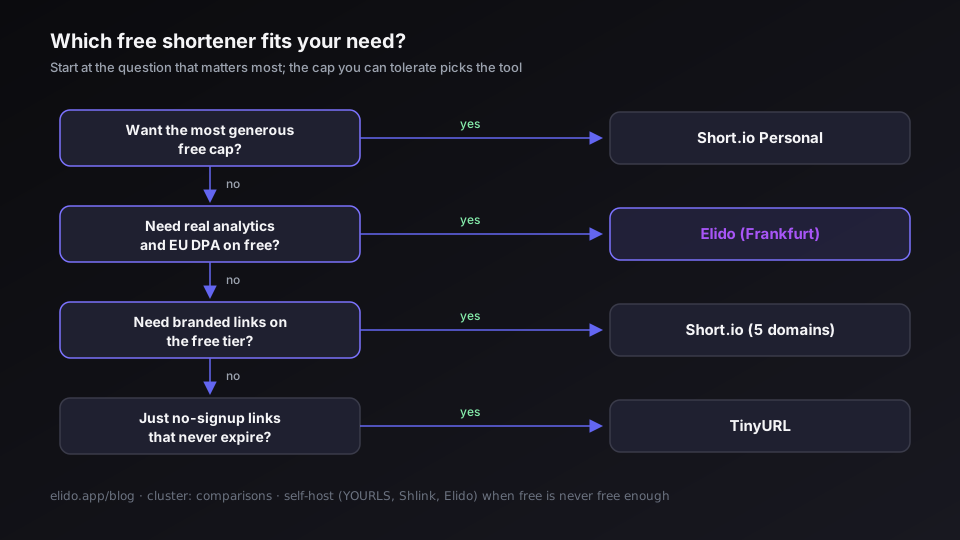
Le piège est de traiter une offre gratuite d'évaluation comme une offre de production et d'être ensuite surpris quand le plafond mord au pire moment - le vendredi avant le lancement d'une campagne, ou le mois où votre contenu devient viral. Si vous allez faire tourner du trafic de liens en production, choisissez soit une offre gratuite explicitement conçue pour ça (Short.io Personal, TinyURL avec ses limites), soit payez pour un plan qui correspond à la charge.
Coûts cachés que personne ne mesure
La pourriture des liens. Le domaine du raccourcisseur est la responsabilité, pas l'URL longue. Si le raccourcisseur change de propriétaire, pivote sa tarification, ou ferme, chaque lien que vous avez distribué devient une redirection morte. La fermeture de Goo.gl a donné aux utilisateurs une période d'avertissement ; toutes les fermetures ne le feront pas. TinyURL existe depuis 2002 et ne montre aucun signe d'arrêt - mais c'est toujours un point unique de défaillance pour chaque lien que vous lui avez confié.
La résidence des données. Sur la plupart des offres gratuites, la question du DPA est sans objet - il n'y en a pas. Pour des liens de campagne B2C, c'est souvent tolérable. Pour des liens B2B distribués à des clients UE, un journal de clics contenant des données personnelles de sujets UE (adresses IP, user-agents) traités par un raccourcisseur hébergé aux États-Unis sans DPA est une exposition RGPD. L'aperçu des raccourcisseurs d'URL UE couvre cela plus en détail ; la version courte est que les clauses de résidence ne sont une fonctionnalité gratuite nulle part sauf chez Elido.
Rétention analytique. Bitly abandonne l'analytique historique pour les comptes gratuits - l'enregistrement des événements de clic n'est pas persisté au-delà d'une fenêtre glissante. Cela était documenté dans le centre d'aide de Bitly au 10/05/2026 ; vérifiez avec leurs conditions actuelles avant de vous fier à des données historiques pour l'attribution. Si votre reporting de campagne nécessite des données de clics d'il y a trois mois, les données conservées de l'offre gratuite peuvent ne pas couvrir cela. C'est exactement le sujet de Raccourcisseur d'URL gratuit avec analytics : le vrai bilan.
La dépendance au domaine. Si vos liens utilisent le domaine du raccourcisseur (bit.ly, tinyurl.com, rebrand.ly) plutôt que votre propre domaine de marque, chaque lien dans chaque email, chaque support imprimé, chaque post social devient dépendant du fournisseur. La migration impose soit d'accepter des redirections mortes, soit de monter vous-même une infrastructure de redirection. L'article sur les domaines personnalisés explique pourquoi posséder le domaine dès le départ vaut la friction.
Quand l'auto-hébergement bat le SaaS gratuit
Pour les équipes ayant la capacité opérationnelle de faire tourner leur propre infrastructure, auto-héberger un raccourcisseur est la seule réponse où « gratuit » est réellement gratuit.
L'édition auto-hébergée d'Elido est Apache 2.0, disponible sous forme de chart Helm, avec votre propre base de données et entrepôt d'analytique en colonnes. Le même code qui fait tourner le service hébergé fait tourner l'auto-hébergé - même moteur de redirection, même API, même pipeline d'analytique. Les docs d'auto-hébergement couvrent le déploiement ; le point pertinent pour la conversation sur l'offre gratuite est que le plan de données est entièrement sous votre contrôle.
YOURLS (yourls.org) est le vétéran PHP des raccourcisseurs auto-hébergés. Maintenu, riche en plugins, backend MySQL. La couche d'analytique est rudimentaire et l'architecture date de 2009, mais si votre cas d'usage est « infrastructure minimale de liens courts sous notre contrôle », il est solide et ne coûte rien au-delà de l'hébergement.
Shlink (shlink.io) est l'alternative moderne - PHP/Symfony, maintenance active, API REST, smart links, licence MIT. Plus proche d'un raccourcisseur de production que YOURLS en termes de surface fonctionnelle.
Le compromis de l'auto-hébergement est la surcharge opérationnelle contre la souveraineté des données. Une installation YOURLS via Docker-compose prend un après-midi. Un déploiement Shlink de qualité production avec Postgres HA, Redis, et une infrastructure de sauvegarde correcte prend une semaine et un budget de maintenance continu. Ni l'un ni l'autre n'est « gratuit » une fois que vous comptez le temps d'ingénierie. Mais si l'alternative est une offre SaaS gratuite qui mord à 500 clics/mois et stocke vos événements de clics sur l'infrastructure de quelqu'un d'autre, le calcul change.
Verdict
| Raccourcisseur | Idéal pour | Piège principal | DPA UE en gratuit |
|---|---|---|---|
| TinyURL | Liens ponctuels, pas d'analytique nécessaire | Pas d'édition, pas d'analytique, pas de DPA | Non |
| Bitly Free | Exploration de l'UI uniquement | 5 liens/mois - évaluation uniquement | Non |
| Rebrandly Free | Démo du concept de lien de marque | 10 liens, 100 clics - évaluation uniquement | Non |
| Short.io Personal | Production légère, domaines de marque | Pas d'analytique historique, pas de DPA | Non |
| Elido Free | Évaluation API, tests conformes UE | 50 liens, 500 clics - plafond strict | Oui |
TinyURL - le seul raccourcisseur gratuit qui soit significativement de qualité production pour son cas d'usage, parce que son cas d'usage est suffisamment étroit pour que « production » signifie « des liens qui se résolvent ».
Short.io Personal - l'offre gratuite la plus fonctionnelle pour les équipes qui veulent des domaines de marque et une analytique légère sans payer. Les données historiques et le DPA UE nécessitent une mise à niveau.
Elido Free - la seule offre gratuite avec un DPA pré-signé et une infrastructure hébergée dans l'UE. Véritablement d'évaluation, honnêtement délimitée, utile pour les équipes axées sur la conformité qui veulent valider la posture contractuelle complète avant de s'engager.
Rebrandly Free et Bitly Free - outils d'évaluation uniquement. Le plafond analytique de 100 clics de Rebrandly et le plafond mensuel de 5 liens de Bitly sont des fils déclencheurs, pas des fonctionnalités. Utilisez-les pour évaluer l'UX ; n'essayez pas de faire passer quoi que ce soit de réel à travers eux.
La conclusion honnête
Le seul raccourcisseur gratuit qui soit gratuit au sens où le mot l'implique est celui où vous contrôlez le domaine et l'infrastructure. Tout le reste est une négociation de palier déguisée - soit le plafond exigera finalement une mise à niveau, soit le service cessera finalement d'être gratuit, soit le service cessera finalement d'être un service.
Ce n'est pas une critique. C'est l'économie. Faire tourner une infrastructure de redirection à grande échelle coûte de l'argent. La question est de savoir quel compromis vous signez dès le premier jour, avant que le plafond ne morde ou que l'email de renouvellement n'arrive.
Pour évaluer : choisissez l'offre gratuite dont vous pouvez tolérer le piège. Pour la production : payez le palier qui correspond à votre charge réelle, ou auto-hébergez et assumez la surcharge opérationnelle. Pour la conformité UE : la conversation contractuelle commence au jour un, pas quand votre première demande de DPA arrive. Vous débutez dans la création de liens ? Comment raccourcir une URL : liens gratuits, personnalisés et en masse détaille les parcours gratuits et personnalisés étape par étape.
Le cluster comparaisons contient le contexte complet : meilleurs raccourcisseurs d'URL UE si la résidence est le filtre, alternatives Bitly - l'écart de fonctionnalités si vous êtes déjà au-delà de la gratuité et évaluez des paliers payants, et Elido vs Bitly si vous voulez l'arithmétique tarifaire face au raccourcisseur le plus connu du marché. Si vous gérez une opération marketing ou agence, la page agences couvre les spécificités du workflow.
À lire aussi sur le blog
- URL shorteners for marketers: the 2026 comparison matrix
- EU data residency for marketing tools: what your DPO actually asks
- Self-hosting Elido on k3s - a complete playbook
- Schrems II and tracking pixels: where the DPF leaves you in 2026
- Comment raccourcir une URL : liens gratuits, de marque et en masse
- Raccourcisseur d'URL gratuit avec statistiques : ce que vous obtenez vraiment
- Meilleurs raccourcisseurs d'URL : 6 outils classés et comparés
Essayer Elido
Collez une URL, obtenez un lien court
Sans inscription. Lien actif 30 jours. Inscrivez-vous pour le garder pour toujours.
Gratuit, sans inscription · 2 par jour