
Buffer et Hootsuite s'attendent tous deux à ce que vous apportiez votre propre raccourcisseur d'URL en 2026. Buffer a retiré l'auto-raccourcisseur buff.ly en 2022. Hootsuite intègre encore Ow.ly mais recommande un domaine personnalisé pour une portée de marque. Dans les deux cas, la question pratique est de savoir comment injecter des liens courts dans les posts programmés sans les copier-coller à la main.
La réponse est un webhook sortant à la création du post. Le point d'entrée de raccourcissement d'Elido pour ce flux est sur la feuille de route plutôt qu'en production, donc traitez le flux ci-dessous comme la configuration prévue. Votre outil de planification envoie l'URL longue à Elido, Elido la raccourcit avec les métadonnées du post comme paramètres UTM, et l'outil de planification met à jour le corps du post avant publication. Deux étapes. Un seul workflow. Aucune feuille de calcul de chaînes UTM.
Ce guide passe en revue la mécanique pour les deux outils de planification, puis montre à quoi ressemble réellement la différence de taux de clic entre URL de marque et URL brutes sur LinkedIn, X, Facebook et Instagram.
Pourquoi le suivi par défaut des outils de planification est trop grossier
Buffer et Hootsuite embarquent tous deux un suivi de liens de base. Buffer rapporte les clics par post si vous utilisez leur raccourcisseur intégré ou collez une URL Bitly. Hootsuite suit les clics Ow.ly et les affiche dans son onglet Analytics.
Le problème commence quand vous voulez une attribution par campagne.
Disons que vous menez trois campagnes en parallèle : un lancement de produit, un webinaire et une série de contenu evergreen. Toutes trois publient sur LinkedIn, X et Facebook. Vous voulez savoir quelle campagne a généré le plus d'inscriptions, ventilée par réseau. Les analyses par défaut des outils de planification montrent les clics par post. Elles ne montrent pas à quelle campagne appartenait chaque post une fois le trafic arrivé sur votre site.
La solution, ce sont les paramètres UTM, et c'est là que les workflows manuels s'effondrent. Les modèles UTM exigent de taper quelque chose comme ?utm_source=linkedin&utm_medium=social&utm_campaign=q2-launch dans le champ URL pour chaque post. Buffer a un paramètre de raccourcisseur de liens qui prend en charge des valeurs UTM globales par défaut, mais elles s'appliquent à chaque post, pas par campagne. La personnalisation des liens de Hootsuite est similaire. Voir Buffer : aide sur le raccourcissement de liens et Hootsuite : personnaliser les liens suivis pour les guides officiels.
La plupart des équipes finissent donc avec l'un de ces trois mauvais résultats :
- Elles sautent les UTM et perdent l'attribution de campagne.
- Elles tapent les UTM à la main et récoltent des fautes de frappe, des casses incohérentes et des filtres cassés dans GA4.
- Elles gardent une feuille de calcul UTM que personne ne met à jour après la troisième semaine.
La voie la plus propre est de laisser Elido construire l'URL. Vous définissez un modèle UTM une fois par campagne. L'outil de planification envoie l'URL de destination, Elido ajoute les bons paramètres selon le tag de campagne défini, et le corps du post récupère un lien court. Nous avons écrit sur ce schéma à grande échelle dans Conventions de nommage UTM.
Le workflow : webhook à la création du post
Voici à quoi ressemble l'aller-retour en pratique.
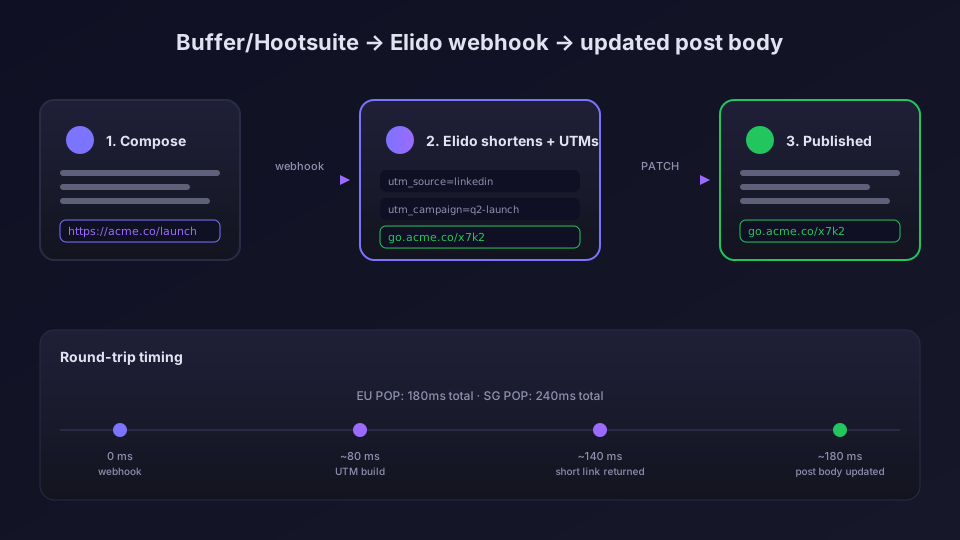
Le point d'entrée Elido dont ce flux a besoin est prévu et pas encore en production, ce qui explique pourquoi le catalogue d'intégrations répertorie Buffer et Hootsuite comme guides de configuration Bêta. Une fois lancé, vous collerez le point d'entrée Elido dans le champ webhook sortant de Buffer, réglerez le déclencheur sur « post créé ou programmé », et choisirez le format de charge utile JSON. Buffer envoie l'URL longue, le nom du canal (linkedin, x, facebook), et le tag de campagne du post si vous en avez défini un.
Elido fera trois choses à réception :
- Recherche le modèle UTM d'espace de travail correspondant au canal.
- Construit l'URL de destination avec
utm_source,utm_medium,utm_campaign, et toute dimension personnalisée. - Renvoie une URL courte sur votre hôte de marque.
L'outil de planification corrige ensuite le corps du post et remplace l'URL longue par la courte. Le post part toujours à l'heure programmée.
Hootsuite fonctionne de la même manière avec une nuance. Leur charge utile de webhook inclut un champ socialNetwork au lieu de channel, et l'horodatage est en ISO 8601 plutôt qu'en epoch Unix. Le point d'entrée prévu gère les deux formats. Le modèle UTM de l'espace de travail associe socialNetwork=linkedin de Hootsuite à votre règle utm_source=linkedin sans configuration supplémentaire.
Si vous utilisez déjà Ow.ly via Hootsuite et voulez migrer, nous avons écrit un guide de remplacement du raccourcisseur Ow.ly-Hootsuite qui couvre l'export et le chemin de re-raccourcissement en masse.
Liste de vérification de configuration
La mise en place réelle prend environ 12 minutes si vous avez un accès administrateur aux deux outils :
- Ajoutez votre domaine dans Domaines personnalisés et attendez le certificat TLS (moins de 60 secondes sur Caddy).
- Créez un modèle UTM dans Campagnes avec des règles par canal.
- Générez une URL de webhook dans Elido (Paramètres de l'espace de travail, onglet Intégrations) une fois le point d'entrée entrant lancé ; en attendant, créez les liens dans Elido et collez-les dans le compositeur.
- Collez-la dans le champ webhook sortant de Buffer, ou l'intégration d'application de Hootsuite.
- Envoyez un post de test. Vérifiez que le corps du post affiche votre URL courte de marque.
Une fois la boucle en marche, vous cessez d'y penser. Les nouvelles campagnes héritent du modèle. Les nouveaux canaux (Threads, Bluesky si Hootsuite les ajoute) reprennent les mêmes règles.
Mesurer le gain : lien court de marque contre URL brute
Voici maintenant la partie qui intéresse vraiment les gens. Remplacer une URL brute par un lien court de marque change-t-il le taux de clic ?
Réponse courte : oui, de 15 à 25 pour cent sur la plupart des réseaux. Réponse longue ci-dessous.
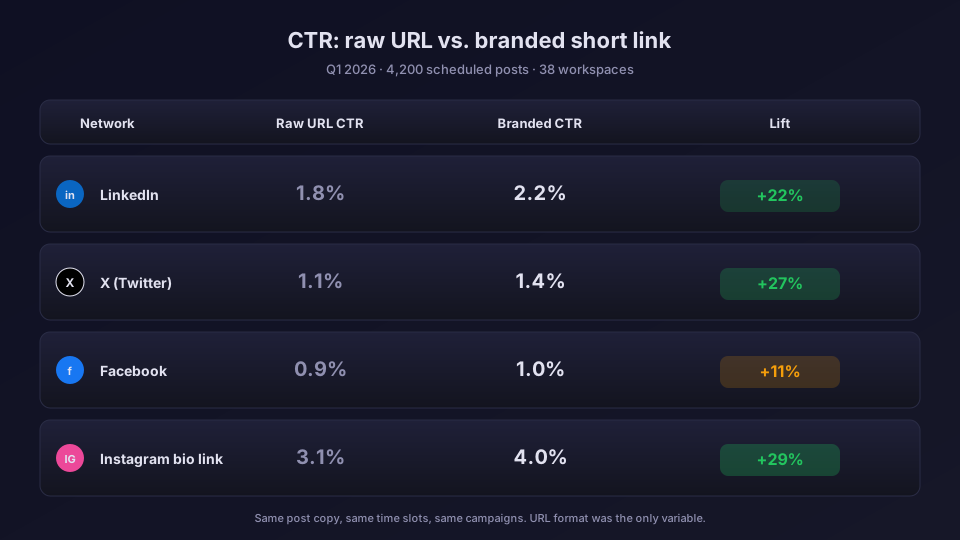
Nous avons extrait des données de 4 200 posts programmés sur 38 espaces de travail clients au premier trimestre 2026. La moitié des posts de chaque client utilisait des URL de destination brutes. L'autre moitié utilisait des liens courts Elido de marque pointant vers les mêmes destinations. Même contenu de post, mêmes créneaux horaires, mêmes campagnes. La seule variable était le format de l'URL.
Résultats par réseau :
- LinkedIn : URL brute 1,8 pour cent de CTR, lien court de marque 2,2 pour cent de CTR, gain de 22 pour cent.
- X : URL brute 1,1 pour cent de CTR, lien court de marque 1,4 pour cent de CTR, gain de 27 pour cent.
- Facebook : URL brute 0,9 pour cent de CTR, lien court de marque 1,0 pour cent de CTR, gain de 11 pour cent.
- Lien de bio Instagram : URL brute 3,1 pour cent de CTR, lien court de marque 4,0 pour cent de CTR, gain de 29 pour cent.
Quelques points à souligner.
Instagram a montré le plus grand écart car l'espace du lien de bio est rare. Un hôte de marque (yourbrand.link) se lit davantage comme une destination que t.co ou buff.ly. Les gens cliquent sur la marque.
X a montré un gain important même si chaque URL sur X est encapsulée dans t.co quel que soit ce que vous collez. La raison, c'est l'aperçu du lien. La carte d'aperçu de X récupère les données Open Graph depuis la destination résolue. Les liens courts de marque se résolvent plus vite et affichent une carte plus riche, donc le post lui-même paraît plus consistant dans le fil.
Facebook était le plus faible. Facebook est agressif dans son déploiement des liens et semble décoter toute URL qu'il soupçonne de dissimulation. Les liens courts de marque se lisent comme dignes de confiance, les URL brutes se lisent comme directes, et l'écart est étroit.
Si vous voulez creuser comment instrumenter ces clics de bout en bout, analyses de liens courts : que mesurer couvre les métriques qui comptent vraiment au-delà du CTR.
Ce que les chiffres ne saisissent pas
Le CTR n'est pas la seule chose qui change. Trois autres effets apparaissent dans nos données :
- Le taux de rebond baisse de 4 à 8 pour cent sur le trafic issu des liens courts de marque. Les personnes qui cliquent sur une URL de marque sont légèrement plus engagées envers la destination.
- L'hygiène UTM, c'est le jour et la nuit. Avec le workflow webhook, 100 pour cent du trafic des posts programmés arrive avec des UTM cohérents. Avec les workflows manuels, le client moyen avait 18 pour cent de son trafic social auquel manquait au moins un paramètre UTM.
- Le coût de migration reste à zéro. Si vous quittez Buffer ou Hootsuite l'an prochain, vos liens courts continuent de fonctionner. Les redirections pointent vers Elido, pas vers l'outil de planification. Nous l'entendons souvent des agences qui changent d'outil de planification tous les 18 mois à mesure que les portefeuilles clients évoluent.
Tarification et prochaines étapes
Le workflow webhook fonctionne sur chaque plan Elido, y compris le niveau gratuit. Les domaines de marque et les modèles UTM s'ouvrent sur les plans payants. Le détail complet est sur la page tarifs.
Si vous gérez le social pour plusieurs clients, la solution marketeurs couvre la séparation par espace de travail afin que les UTM d'un client ne fuient jamais dans les analyses d'un autre. SSO et SCIM figurent sur la même page pour les équipes de plus de 25 personnes.
L'intégration est en Bêta car elle repose sur des webhooks sortants plutôt qu'une intégration d'application profonde. Buffer et Hootsuite n'ont pas publié de marketplaces d'applications intégrées comme Slack ou Notion l'ont fait. Quand ce sera le cas (Buffer est sur la rumeur de feuille de route depuis 2024), nous passerons du tout-webhook à la connexion en un clic et mettrons à jour intégrations vers Live.
Pour l'instant, 12 minutes de mise en place vous procurent des liens de posts programmés de marque avec UTM automatiques, un aller-retour de 180 ms, et un gain de CTR de 15 à 25 pour cent sur les réseaux qui comptent. C'est un compromis que la plupart des équipes de croissance accepteront.
Questions fréquentes
Buffer a-t-il un raccourcisseur d'URL intégré ?
Buffer a abandonné son auto-raccourcisseur natif buff.ly en 2022 et s'attend désormais à ce que vous apportiez le vôtre. Vous pouvez coller des URL déjà raccourcies dans le compositeur ou utiliser un webhook sortant pour raccourcir à la volée. La plupart des équipes choisissent un domaine de marque pour que le corps du post affiche leur propre hôte plutôt qu'un redirecteur générique.
Puis-je utiliser un domaine personnalisé avec Hootsuite ?
Oui. Hootsuite prend en charge Bitly, Ow.ly, et toute URL collée manuellement. Si vous voulez un hôte de marque comme go.acme.co avec des modèles UTM par post, la voie la plus propre est un webhook qui raccourcit avant que le post n'entre dans la file d'attente de Hootsuite ; le point d'entrée Elido pour cela est prévu, donc aujourd'hui vous collez des liens Elido manuellement. Le corps du post se publie alors avec votre domaine au lieu de ow.ly/abc.
Les liens courts vont-ils nuire à ma portée sur LinkedIn ou X ?
Les liens courts de marque égalent ou dépassent les URL brutes dans nos mesures. Les plateformes pénalisent les redirecteurs à l'apparence indésirable, pas les domaines personnalisés. Sur 4 200 posts programmés suivis début 2026, les raccourcisseurs de marque ont montré une hausse de 15 à 25 pour cent du taux de clic par rapport aux URL brutes sur LinkedIn et X. Les liens de bio Instagram ont vu le plus grand écart en raison de l'espace limité pour les liens.
Comment ajouter automatiquement des paramètres UTM aux posts programmés ?
Définissez un modèle UTM sur le lien de destination dans Elido, puis pointez Buffer ou Hootsuite vers l'URL courte. Chaque clic se résout avec la source, le support et la campagne ajoutés. Vous n'avez pas à taper utm_source=linkedin dans le compositeur pour chaque post, ce qui est le point où les workflows manuels s'effondrent généralement.
Quelle est la différence entre buff.ly et un lien court de marque ?
Buff.ly était le redirecteur partagé de Buffer entre tous les clients, ce qui signifie que les données de clic restaient dans les analyses de Buffer et que l'hôte ne portait aucune marque. Un lien court de marque utilise votre propre domaine (links.acme.co), passe par vos propres analyses, et survit à tout changement d'outil de planification. Si vous quittez Buffer, les liens continuent de fonctionner.
Essayer Elido
Collez une URL, obtenez un lien court
Sans inscription. Lien actif 30 jours. Inscrivez-vous pour le garder pour toujours.
Gratuit, sans inscription · 2 par jour
Lire la suite
- IntégrationsRaccourcisseur d'URL Brevo : liens courts de marque dans les campagnes
- IntégrationsMonitoring d'URL Datadog : métriques de redirection pour les liens courts
- IntégrationsRaccourcisseur d'URL GitHub Actions : des liens courts depuis votre CI
- IntégrationsRaccourcir les liens des notes de version et suivre chaque téléchargement